Thinking Process
PHASE 1: VISUAL DECONSTRUCTION
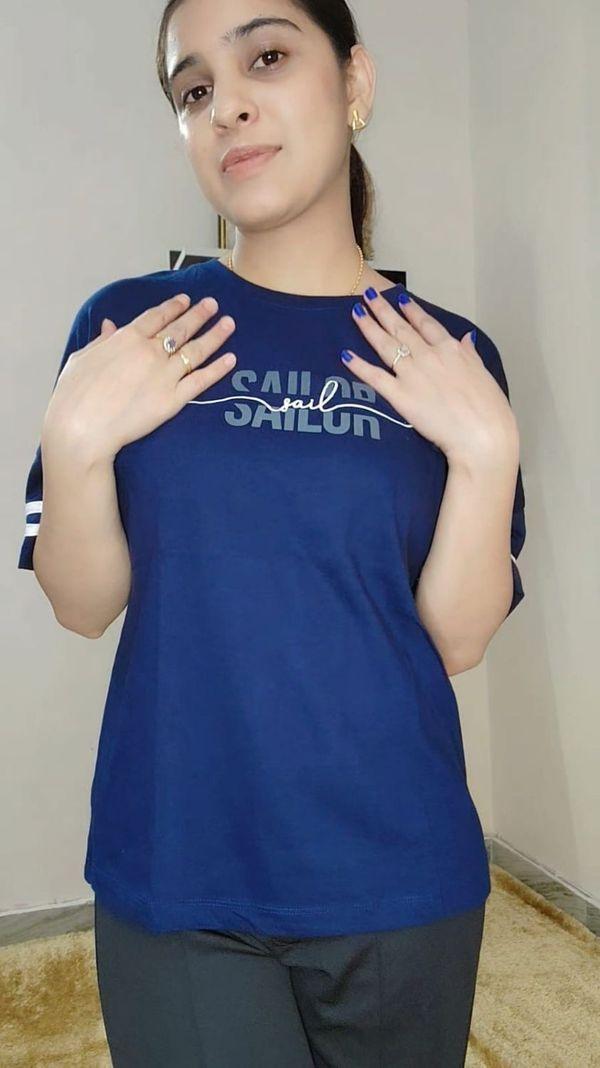
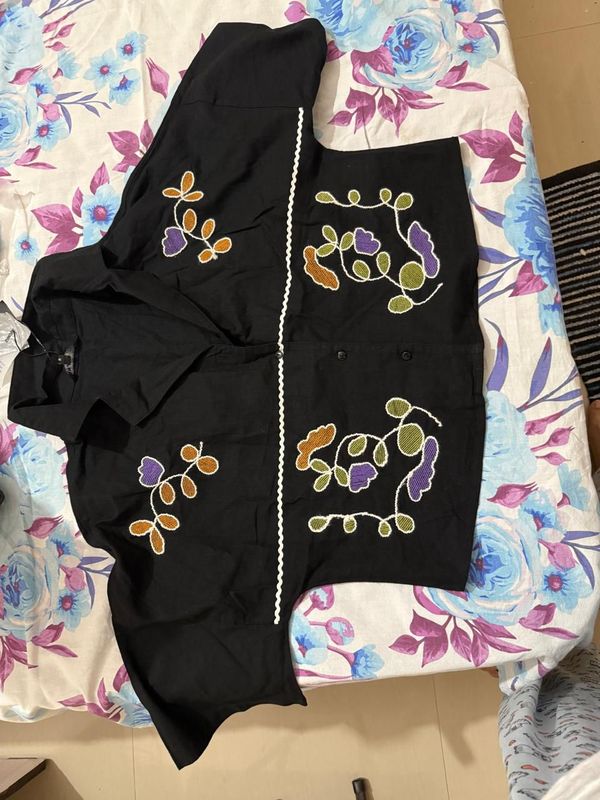
- **Fabric Physics:** The source garment is a structured woven cotton or poplin blend. It has a matte finish with very low specular highlights (unlike the shiny floral background). The material has moderate stiffness, meaning it should hold its shape around the collar and placket rather than clinging tightly to the skin like the user's current jersey knit t-shirt.
- **Key Features:** The vertical white ric-rac (wavy) piping along the button placket is the defining geometric feature and must remain continuous. The four distinct quadrants of floral embroidery (purple, olive, and brown threads) must be preserved in high fidelity. The black buttons and the pointed collar structure must be rendered clearly.
PHASE 2: FIT & DRAPE SIMULATION
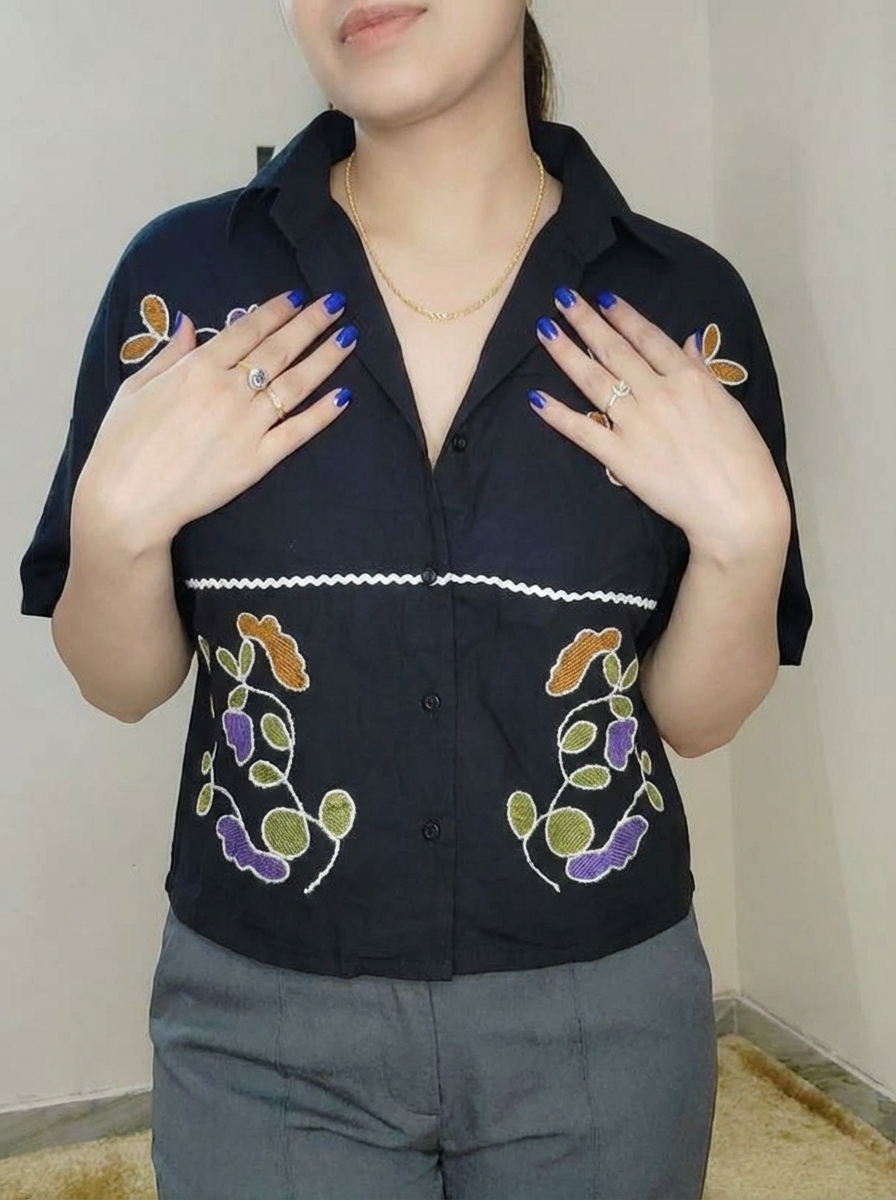
- **Body Mapping:** Unlike the current tight t-shirt, the target shirt is a button-down with a looser fit. The fabric should drape vertically from the shoulders with a "boxier" silhouette. However, because the user is pressing their hands against their chest, the simulation must show the fabric being compressed/depressed specifically under the palms and fingers, creating tension wrinkles radiating outward from the touch points.
- **Occlusion Handling:** **CRITICAL:** The user's hands (fingers, knuckles, and wrist area) completely obscure the upper chest. A precise segmentation mask is required for the hands and the gold rings. The new garment must be rendered logically *behind* the hands. The gold chain necklace is currently visible; the new shirt's collar will likely sit higher, potentially covering the chain, or the chain must be layered over the skin inside the open collar.
PHASE 3: ENVIRONMENT & LIGHTING
- **Light Match:** The user is in a room with soft, diffuse artificial lighting coming from the front-left (indicated by the shine on the forehead). The black fabric of the new shirt should absorb most light but show soft, diffuse grey highlights on the folds created by the arm position. Shadows should cast gently to the user's left and down.
- **Color Calibration:** The source image has a high-contrast floral background. Ensure no blue/pink color bleed from the bedsheet transfers to the black shirt. The black level of the shirt must be matched to the contrast of the user's grey trousers—deep black but retaining texture visibility, adjusted for the slightly warm indoor color temperature of the user image.
PHASE 4: IDENTITY PROTECTION
- **Facial Lock:** Absolute freeze on the entire head region above the neck base, including the jawline, hair pulled back behind the ears, and facial expression. The blue nail polish on the hands must remain unaltered.
- **Body Integrity:** Strict prohibition on body warping. The user's shoulder width, arm thickness, and torso volume must remain consistent. The transition from the new black shirt to the existing grey trousers at the hips must be seamless, respecting the user's actual waistline.