Thinking Process
PHASE 1: VISUAL DECONSTRUCTION
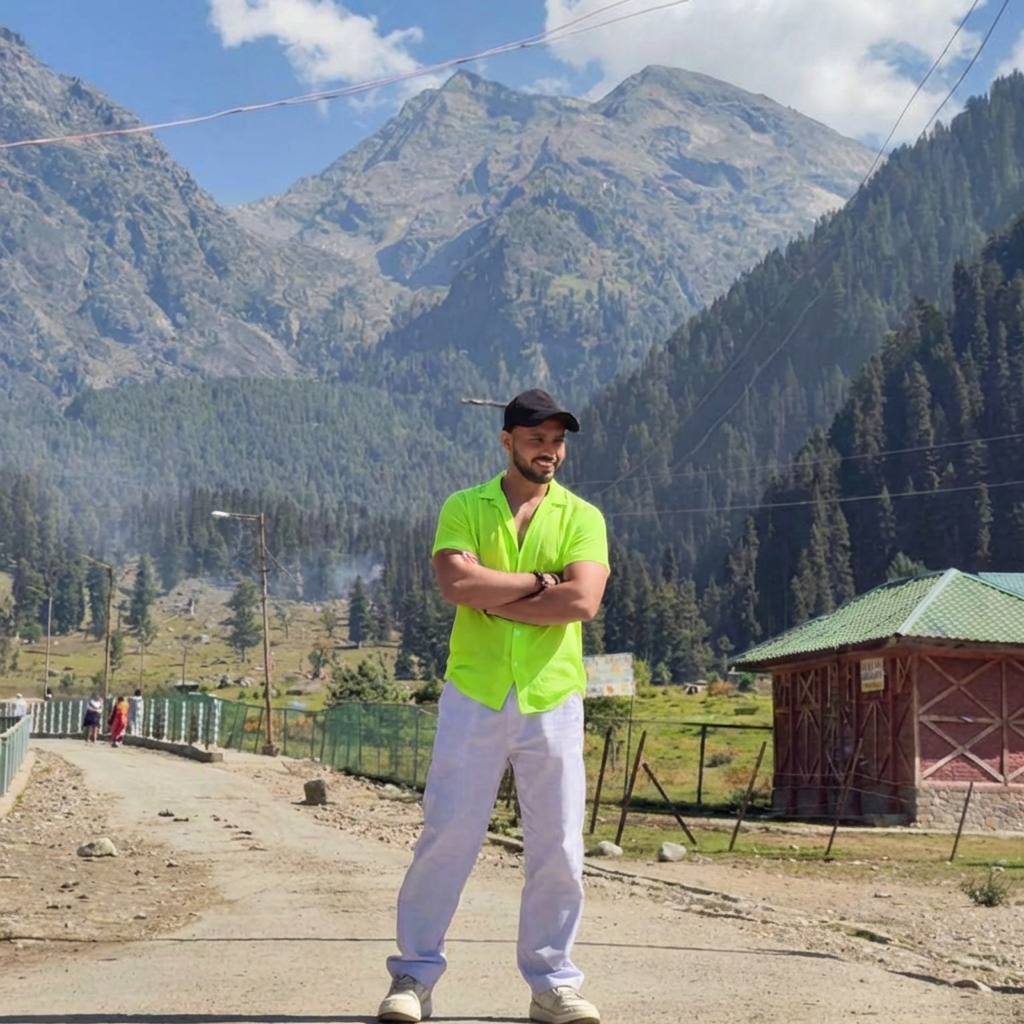
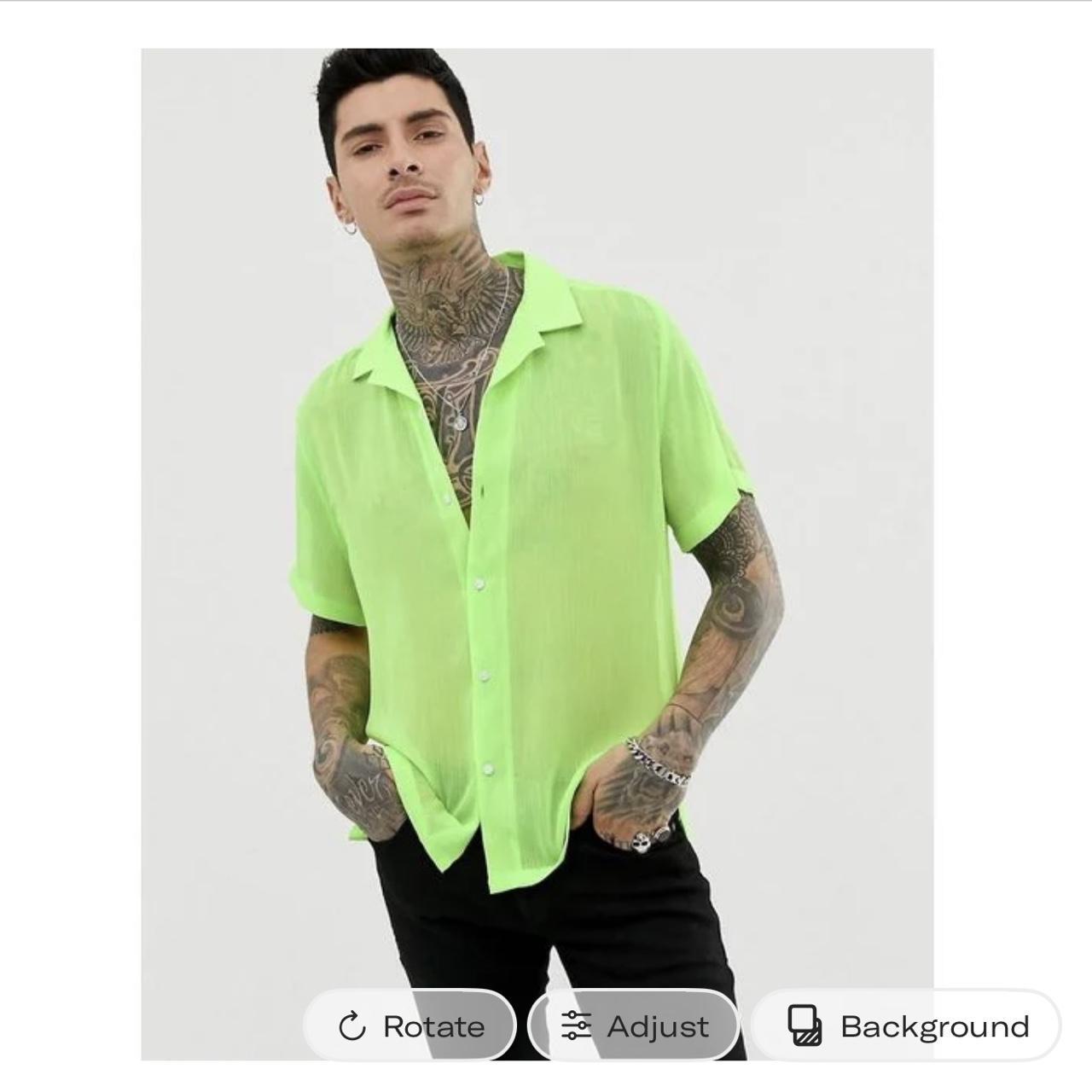
- **Fabric Physics:** The source garment is a lightweight, semi-sheer woven fabric (likely viscose, rayon, or a linen blend). It possesses high flexibility and low shear stiffness, meaning it drapes fluidly rather than holding a rigid shape. The surface is matte but the neon color has high albedo/luminance. Simulation must account for subsurface scattering due to the bright sunlight in the target environment; the fabric should appear airy, not heavy like cotton canvas.
- **Key Features:**
- **Camp Collar:** The open, notched lapel collar structure must be preserved and seated correctly around the target's neck.
- **Button Placket:** The vertical line of white/pearl buttons must align with the target's sternum center line, distorted slightly by the crossed-arm tension.
- **Neon Hue:** The specific "high-vis" lime green saturation must remain vibrant without clipping in the bright sunlight.
- **Sleeve Cuffs:** The hemmed structure of the short sleeves needs to be retained.
PHASE 2: FIT & DRAPE SIMULATION
- **Body Mapping:**
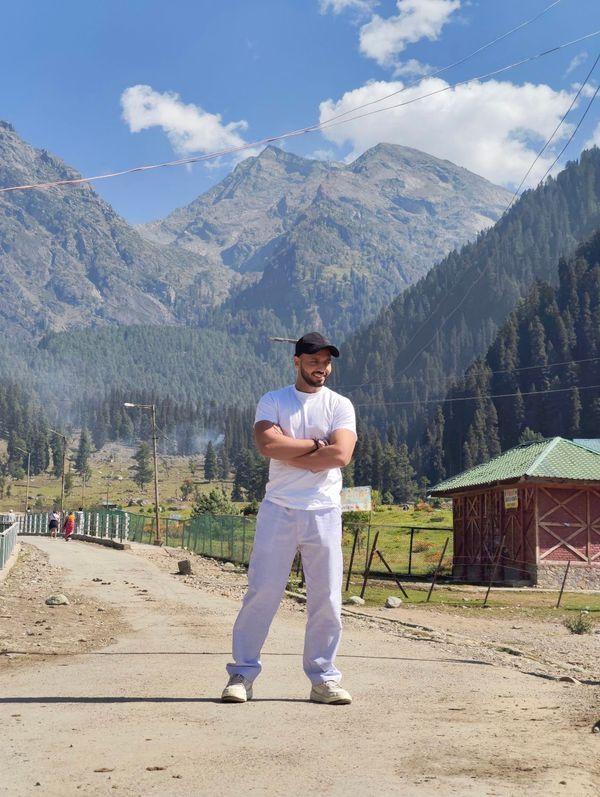
- **Crossed-Arm Tension:** The user's arms are crossed tightly. The fabric physics engine must simulate "pulling" across the upper back (trapezius) and deltoids.
- **Bunching:** Significant horizontal folding and bunching must occur at the elbows and the mid-section where the forearms press the fabric against the abdomen. The shirt cannot hang straight; it must conform to the compression of the folded arms.
- **Shoulder Fit:** The target user has broader shoulders than the source model. The mesh must expand laterally to accommodate the user's deltoids without stretching the texture map unrealistically.
- **Occlusion Handling:**
- **Forearms & Hands:** The user's forearms and hands are the primary occlusion layer. The shirt must be rendered *behind* the crossed forearms but *over* the biceps and chest.
- **Accessories:** The wristwatch on the user's left wrist (visible on the right side of the image) must be masked out and layered *over* the garment sleeve or pushed up slightly by the fabric bunching.
- **Neck/Traps:** The user's neck and trap muscles must remain visible above the collar line.
PHASE 3: ENVIRONMENT & LIGHTING
- **Light Match:**
- **Directionality:** The target scene features harsh, high-contrast natural sunlight coming from the upper right (evident by the shadow casting on the road and the user's face).
- **Shadow Casting:** The crossed arms must cast hard, dark shadows onto the new shirt's stomach area. The cap brim shadow on the face must remain, but the shirt collar will cast a small shadow onto the clavicle area.
- **Reflectivity:** The neon fabric will likely cause "color bleeding" (radiosity), bouncing green light onto the underside of the user's chin and the inner side of the forearms.
- **Color Calibration:**
- **White Balance:** The target image is cool-toned (daylight/blue sky). The source image is studio warm. The neon green must be color-graded to match the outdoor color temperature (approx 5500K-6500K) so it doesn't look like a pasted sticker.
- **Exposure:** The shirt is very bright. Exposure must be clamped to prevent the neon green from blowing out into pure white in the direct sun.
PHASE 4: IDENTITY PROTECTION
- **Facial Lock:** The user's entire head (including the black cap, facial hair, ears, and neck up to the Adam's apple) is a freeze zone. No pixel modification is permitted here.
- **Body Integrity:** The user has a muscular/athletic build. The warping algorithm is strictly forbidden from slimming the waist or narrowing the shoulders to match the slimmer source model. The garment must be resized to fit the user, not the user warped to fit the garment. The stance and leg position must remain untouched.