Thinking Process
PHASE 1: VISUAL DECONSTRUCTION
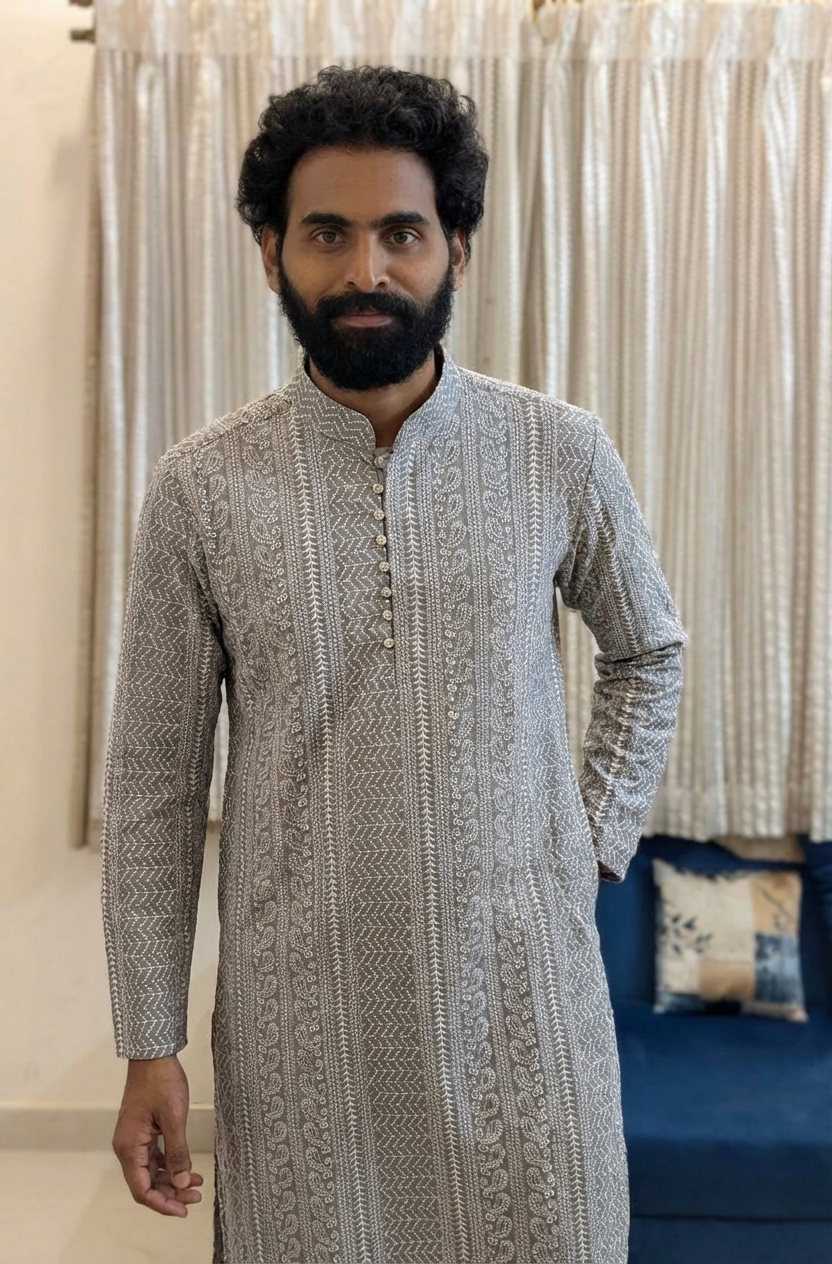
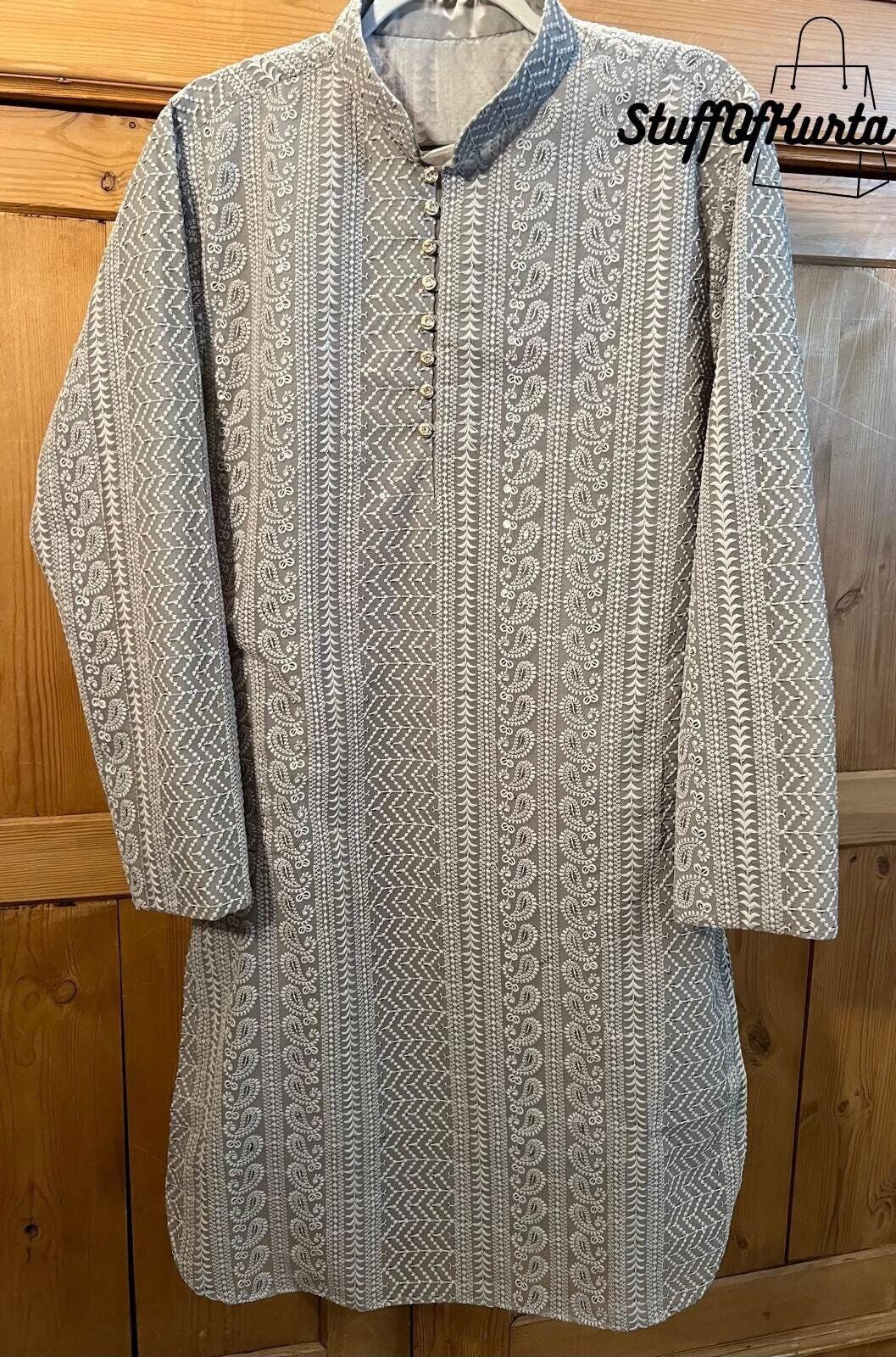
- **Fabric Physics:** The source garment is a structured cotton or linen blend featuring heavy Chikankari-style embroidery. The fabric has a matte finish with a medium-weight rigidity; it should not cling like the current jersey knit polo but rather hang with vertical rectilinearity. The white embroidery threads add surface texture that must generate micro-shadows, distinguishing them from the base grey fabric.
- **Key Features:**
- **Mandarin Collar:** Must replace the current polo collar entirely, standing upright against the neck without collapsing.
- **Pattern Alignment:** The vertical geometric/paisley embroidery strips must remain parallel to the center placket, deforming only slightly with body curvature.
- **Button Placket:** The central button line must align with the user's sternum.
- **Sleeve Length:** Transition from the user's current short sleeves to full-length sleeves.
- **Texture:** The "raised" feel of the white stitching must be preserved to maintain realism.
PHASE 2: FIT & DRAPE SIMULATION
- **Body Mapping:**
- **Shoulders:** The Kurta shoulder seams must align with the user's acromion points, wider than the current polo fit.
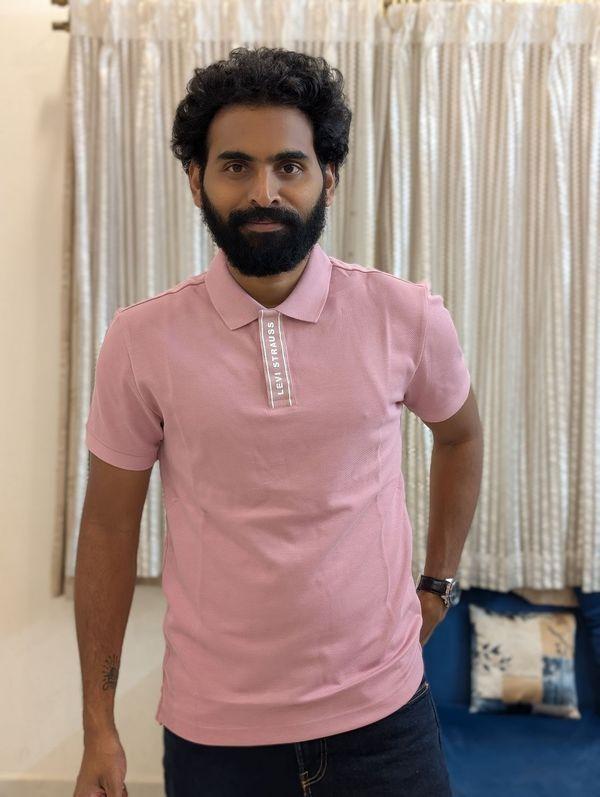
- **Torso:** The garment is a tunic fit. It must bypass the waist indentation visible in the current tucked-in polo and hang straight down, concealing the belt line and upper hips.
- **Sleeves:** The fabric must extend down the arms to the wrists. Unlike the tight polo sleeves, the Kurta sleeves should have a relaxed column shape, creating slight fold/stacking at the elbow bend due to the user's relaxed arm position.
- **Occlusion Handling:**
- **Wristwatch (Left Arm):** The long sleeve of the Kurta will likely cover the wristwatch entirely. If the cuff rides up, the watch must be treated as a rigid object the fabric flows *over*, not through.
- **Tattoo (Right Forearm):** This will be completely occluded by the new long sleeve.
- **Hair:** The user's hair is short enough that it does not touch the shoulders; however, the new Mandarin collar must sit cleanly *below* the beard line and nape hairline.
PHASE 3: ENVIRONMENT & LIGHTING
- **Light Match:** The user is in a room with soft, diffuse, warm artificial top-down lighting (indicated by the shadows under the chin and the warm hue on the curtains). The Kurta must adopt this warm ambient cast, shifting the cool grey/silver source tone slightly warmer to integrate.
- **Shadow Simulation:**
- **Self-Shadowing:** The fabric needs to cast shadows onto itself where the sleeves bunch at the elbow.
- **Drop Shadows:** A soft shadow must be cast by the Mandarin collar onto the user's neck.
- **Environmental:** The brightness of the white embroidery must be toned down slightly to match the exposure of the user's face, preventing the garment from looking "over-lit" compared to the skin.
PHASE 4: IDENTITY PROTECTION
- **Facial Lock:** Absolute freeze on the facial region from the chin upwards, including the beard, mustache, eyes, and curly hair volume. The neck skin visible above the new collar must remain the user's original skin tone.
- **Body Integrity:**
- **Proportions:** Do not slim the user or artificially broaden the chest. The user's stance and shoulder width must dictate the garment's size.
- **Hands:** The user's hands (fingers and knuckles) must remain untouched; the new sleeve cuffs must terminate naturally at the wrist bone without morphing the hands.