Thinking Process
PHASE 1: VISUAL DECONSTRUCTION
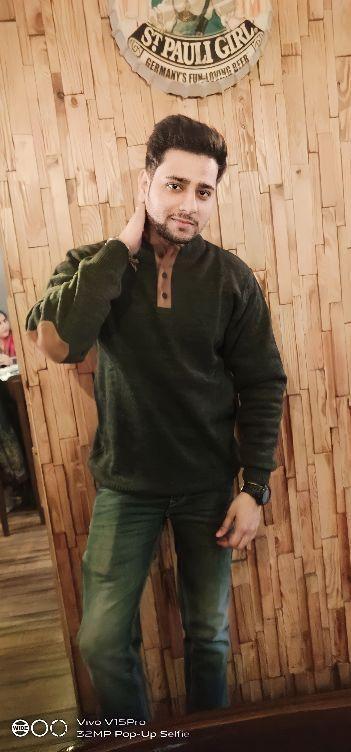
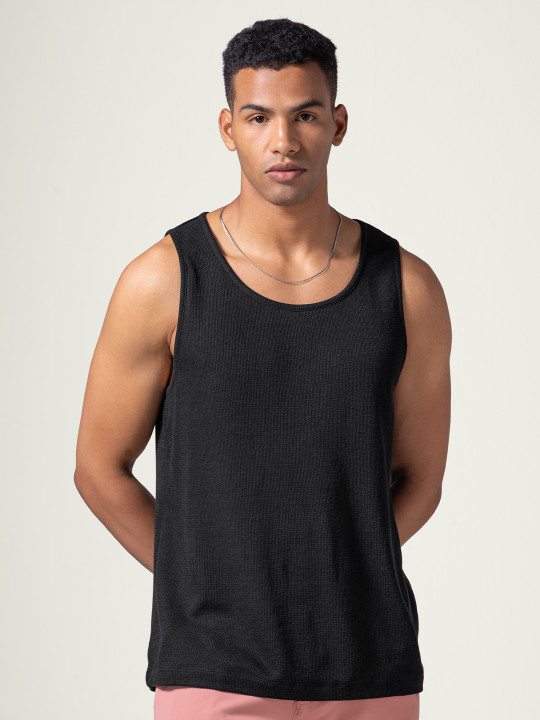
- **Fabric Physics:** The source garment is a ribbed knit cotton or cotton-blend jersey. It has a matte finish with low specular reflection, meaning it should not shine but rather diffuse light softly across the texture ridges. The fabric physics must simulate medium elasticity and moderate weight, draping closer to the body than the user's current thick sweater.
- **Key Features:** The specific vertical ribbing texture is the most critical detail to preserve. The U-shaped scoop neckline with its specific binding/piping width, the deep-cut armholes, and the straight bottom hem must be accurately transferred. The solid black color depth must be maintained while allowing texture visibility.
PHASE 2: FIT & DRAPE SIMULATION
- **Body Mapping:**
- **Torso:** The tank top fits closer to the skin than the user's current bulky sweater. The simulation must "deflate" the volume of the current sweater to map the tank top to the user's actual torso boundary.
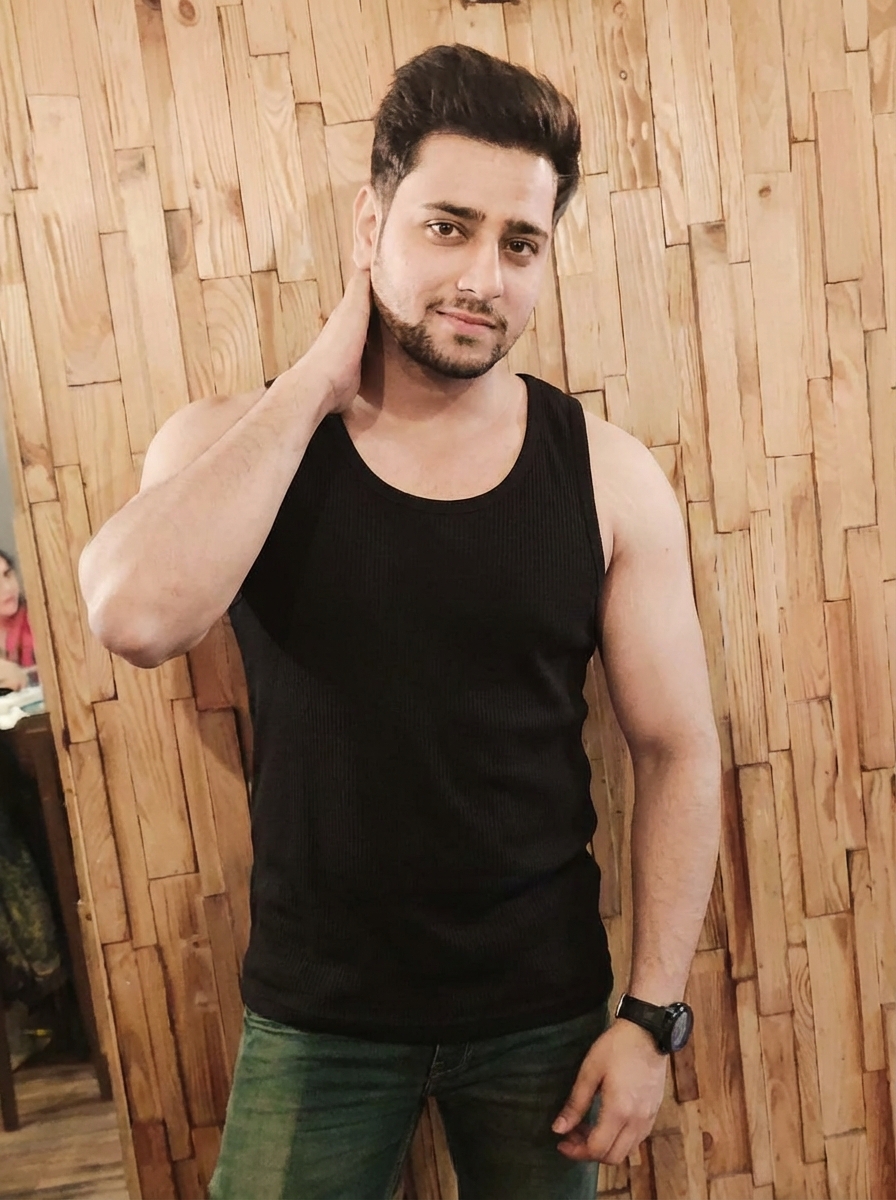
- **Shoulder/Arm Interaction:** The user's right arm (viewer's left) is raised with the hand behind the head. The tank top strap on this side must sit higher and tighter against the trap/shoulder, while the armhole should elongate vertically and potentially gape slightly due to the latissimus dorsi movement. The fabric across the chest should show slight diagonal tension lines pulling toward the raised right arm.
- **Sleeve Removal:** **CRITICAL:** The source is sleeveless, while the target wears long sleeves. The simulation must inpaint/generate realistic skin texture for the user's arms where the sweater currently covers them, matching the skin tone of the face and neck.
- **Occlusion Handling:** The user's right hand (viewer's left) is positioned behind the neck/head. While it likely won't overlap the tank top's low scoop neck, the jawline and neck area must remain the top layer. The watch on the left wrist (viewer's right) must be preserved if visible after arm-skin generation.
PHASE 3: ENVIRONMENT & LIGHTING
- **Light Match:** The target environment uses warm, indoor tungsten lighting (yellow/orange hues) with a light source likely coming from the ceiling/front-left. The pure black of the source tank top must be color-graded to accept this warm ambient cast (shifting towards a very dark warm charcoal) rather than remaining a cold, studio black.
- **Color Calibration:** Shadows on the garment should be soft and fall downward and slightly to the user's left, matching the shadows seen on the wall planks and the user's jeans. Highlights on the ribbing should reflect the warm room tone, not the cool white studio light of the source image.
PHASE 4: IDENTITY PROTECTION
- **Facial Lock:** The user's entire head region—including the quiff hairstyle, facial hair (beard/stubble), eyes, and the specific hand-behind-neck pose—must be frozen and pixel-preserved.
- **Body Integrity:** The user's shoulder width and torso mass must be respected. Do not slim the user down to match the source model's physique. The generated skin for the arms must match the user's facial complexion and body fat percentage (e.g., do not generate hyper-muscular model arms if they don't match the user's neck/face build).