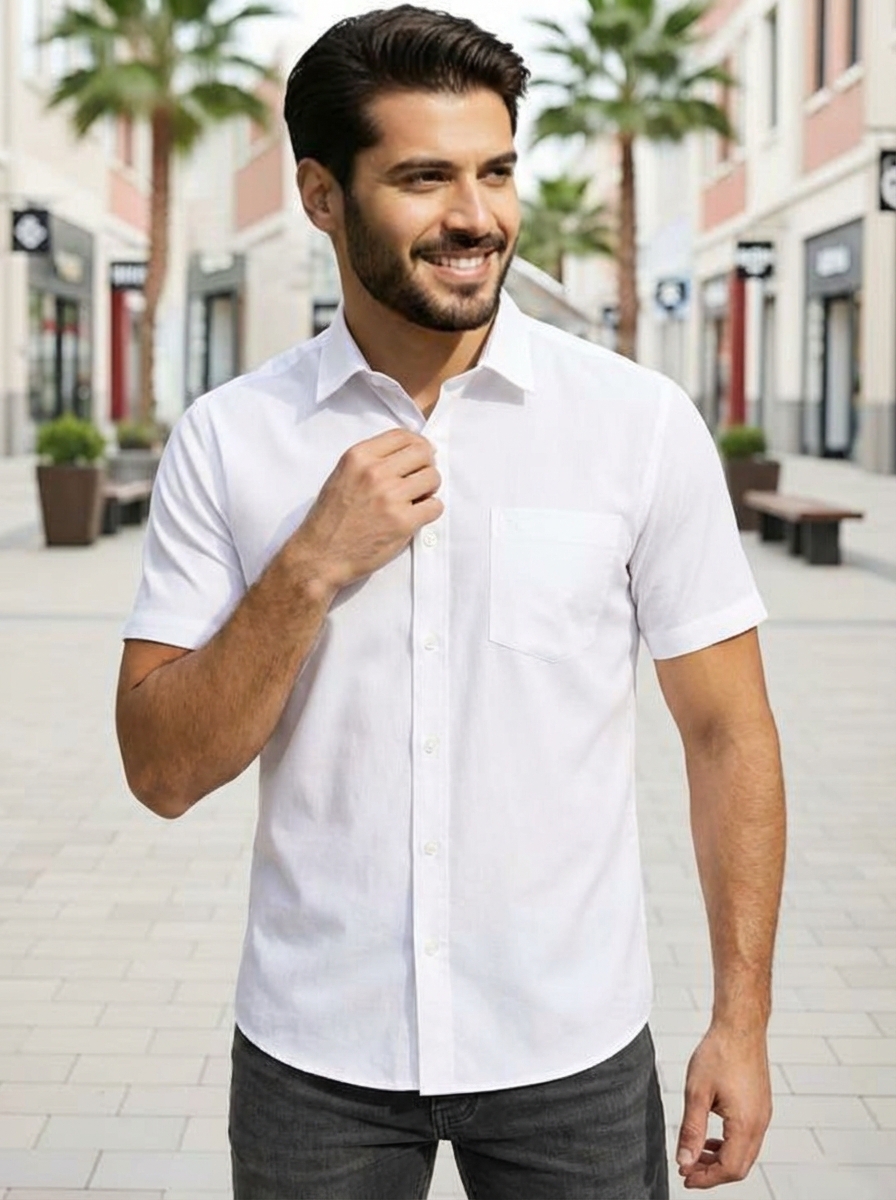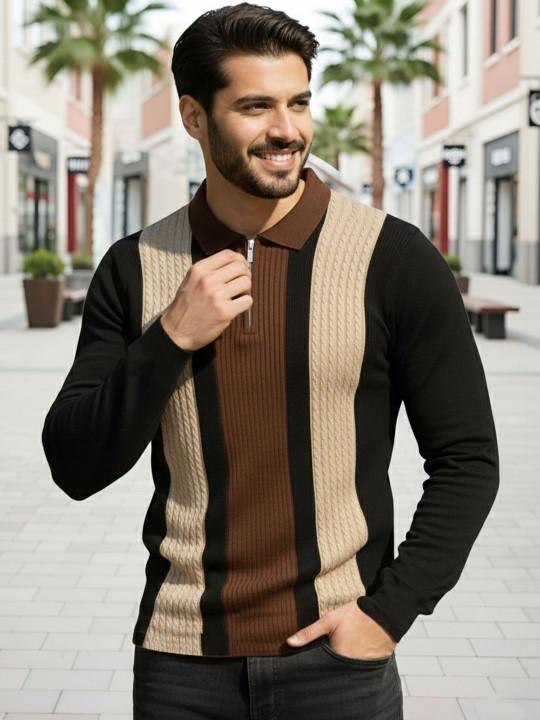
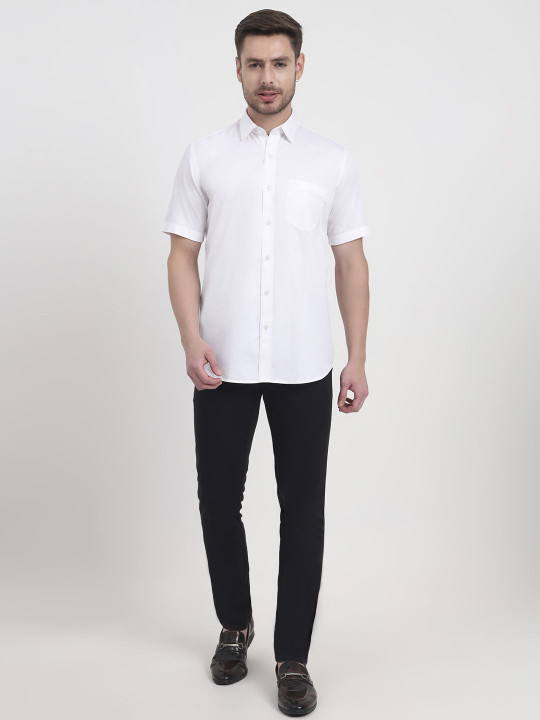
Thinking Process
PHASE 1: VISUAL DECONSTRUCTION
- **Fabric Physics:** The source garment is a woven white cotton or cotton-blend poplin. Unlike the user's current heavy cable-knit sweater, this fabric has low elasticity and medium stiffness. It should reflect light with a matte finish, showing crisp creases rather than soft, rolling folds.
- **Key Features:** The standard spread collar, the vertical button placket, the single patch pocket on the left chest, and the short sleeve hems are critical. The curved bottom hemline must be preserved if worn untucked.
PHASE 2: FIT & DRAPE SIMULATION
- **Body Mapping:**
- **Shoulders/Chest:** The fabric must pull slightly taut across the right pectoral and shoulder due to the user's raised right arm.
- **Sleeve Transition:** This is a Long-Sleeve to Short-Sleeve transfer. The simulation must generate/inpaint realistic skin texture and muscle definition for the user's forearms and elbows, matching the skin tone of the face and neck.
- **Torso:** The shirt should hang with a straighter silhouette than the current fitted sweater, draping vertically from the chest with slight breaking at the waistline where the jeans meet the shirt.
- **Occlusion Handling:** The user's **Right Hand** is the primary occlusion. It is currently interacting with the zipper of the old garment. The fingers and hand structure must be masked precisely and layered *over* the new shirt's placket. The simulation must treat the hand as a solid collider to prevent the white fabric from clipping through the fingers.
PHASE 3: ENVIRONMENT & LIGHTING
- **Light Match:** The target environment is an outdoor, daylight urban setting with diffuse sunlight coming from the upper right. The white shirt must stop being "studio white" and adopt the environmental ambient lighting—warmer highlights from the sun and slightly cooler, bluish tones in the shadow areas (folds/armpits) to match the outdoor atmosphere.
- **Color Calibration:** The white fabric needs to interact with the global illumination of the street scene. It should cast a subtle bounce-light reflection onto the user's jawline and the inner side of the right arm/hand. Shadows on the shirt should match the intensity and softness of the shadows on the pavement.
PHASE 4: IDENTITY PROTECTION
- **Facial Lock:** The user's entire head region, specifically the beard line, hairstyle, eyes, and neck structure, must be frozen and pixel-preserved.
- **Body Integrity:** The user's broad shoulder width and chest volume must remain constant. Do not slim the physique to match the model in the cloth image. The generated skin on the arms must match the user's existing vascularity and tan level inferred from the face.