Thinking Process
PHASE 1: VISUAL DECONSTRUCTION
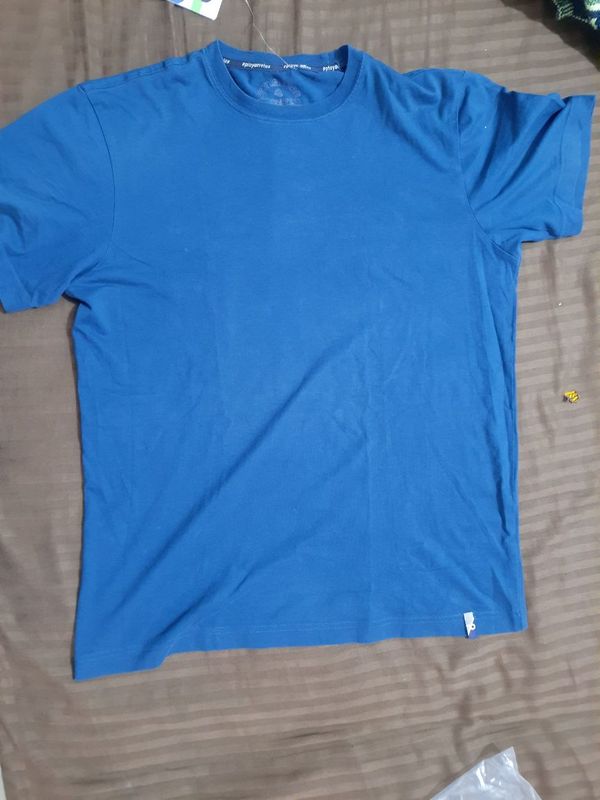
- **Fabric Physics:** The source garment is a standard cotton jersey knit. It possesses a high friction coefficient (matte finish) with low specular reflection. Unlike the user's current smooth/stiff-looking white tee, the source fabric is softer and more prone to micro-wrinkling. It should absorb light rather than bounce it, resulting in softer, more diffuse gradients between highlights and shadows.
- **Key Features:** The structural crew neck ribbing must be preserved. The small white rectangular brand tag on the bottom left hem (viewer's right) is a critical asset and must remain visible if the shirt is untucked, or removed if tucked. The double-stitched hem lines on the sleeves must be retained to maintain realism.
PHASE 2: FIT & DRAPE SIMULATION
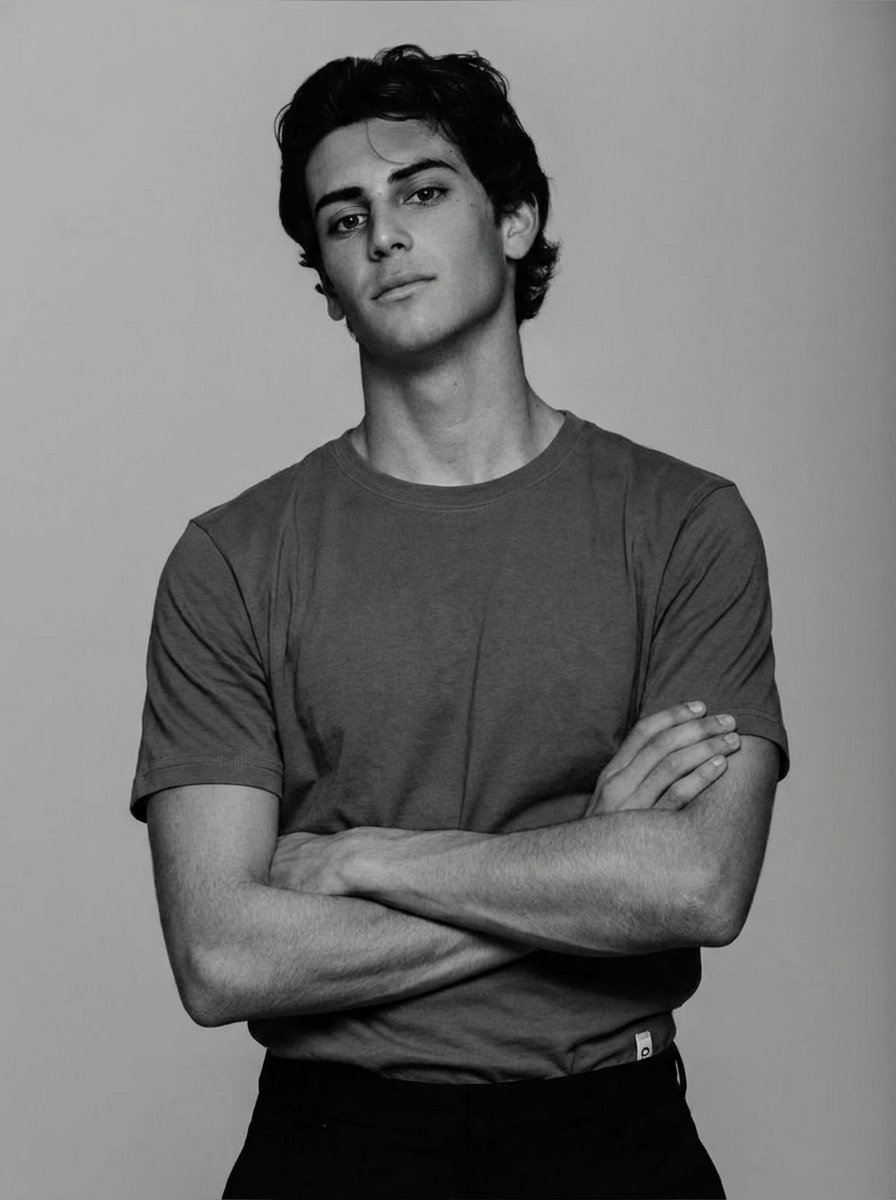
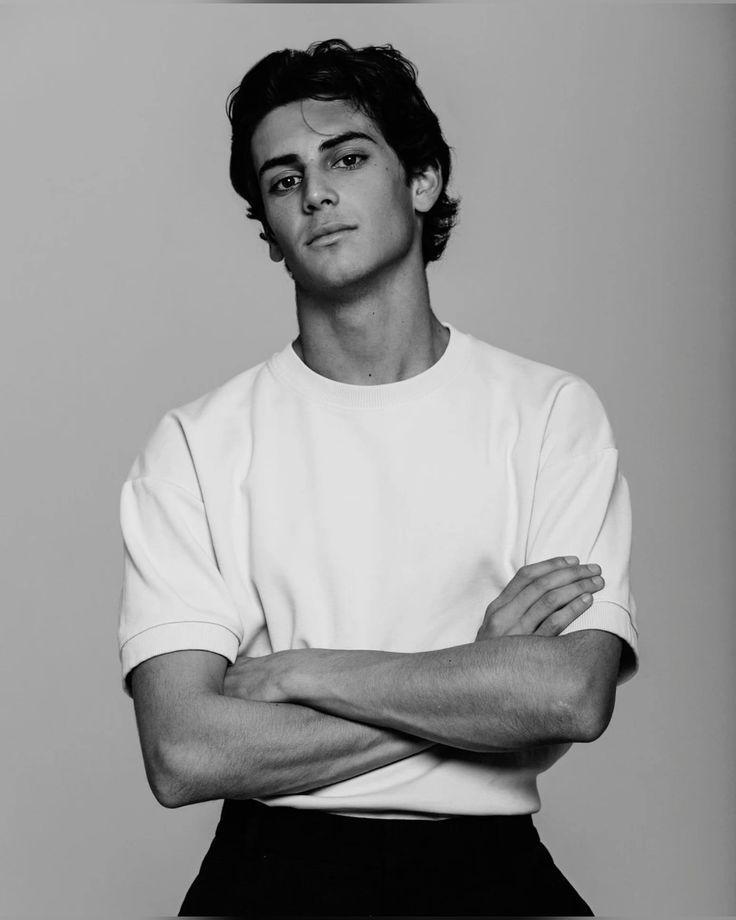
- **Body Mapping:** The user is in a high-tension pose (arms crossed). The simulation must generate tension wrinkles pulling from the armpits across the pectorals towards the shoulders. The fabric must demonstrate compression folds where the biceps press against the ribcage. The blue shirt appears slightly looser than the user's current white tee; the fit should reflect a "regular fit" rather than "slim fit," allowing for slight air gaps around the trapezius area before settling on the shoulders.
- **Occlusion Handling:** This is a high-complexity occlusion scenario. The user's forearms and hands are crossing the mid-torso. The new garment must be generated *behind* the arms and hands but *in front of* the chest wall. The shadows cast by the crossed arms onto the stomach area must be re-projected onto the new blue fabric.
PHASE 3: ENVIRONMENT & LIGHTING
- **Light Match:** The user image uses studio lighting, likely a softbox positioned top-left (indicated by the shadow on the right side of the neck and under the jaw). The new garment must render with highlights on the left shoulder and deep, soft shadows on the right torso and under the crossed arms.
- **Color Calibration:** The target image is grayscale (black and white). The source garment is blue. To integrate naturally, the blue hue must be converted to a corresponding luminance value (likely a Zone V or Zone VI mid-grey), making it significantly darker than the current white t-shirt. If color is retained, the saturation must be lowered to match the stark, high-contrast aesthetic of the studio shot, and the black point must match the user's trousers.
PHASE 4: IDENTITY PROTECTION
- **Facial Lock:** Absolute freeze required on the facial region from the chin up, including the jawline contour, hair texture, and neck musculature (sternocleidomastoid).
- **Body Integrity:** The user's arm vascularity and muscular definition must be preserved pixel-for-pixel. No slimming of the waist or broadening of the shoulders is permitted; the garment must drape over the existing volume, not reshape it.