Thinking Process
PHASE 1: VISUAL DECONSTRUCTION
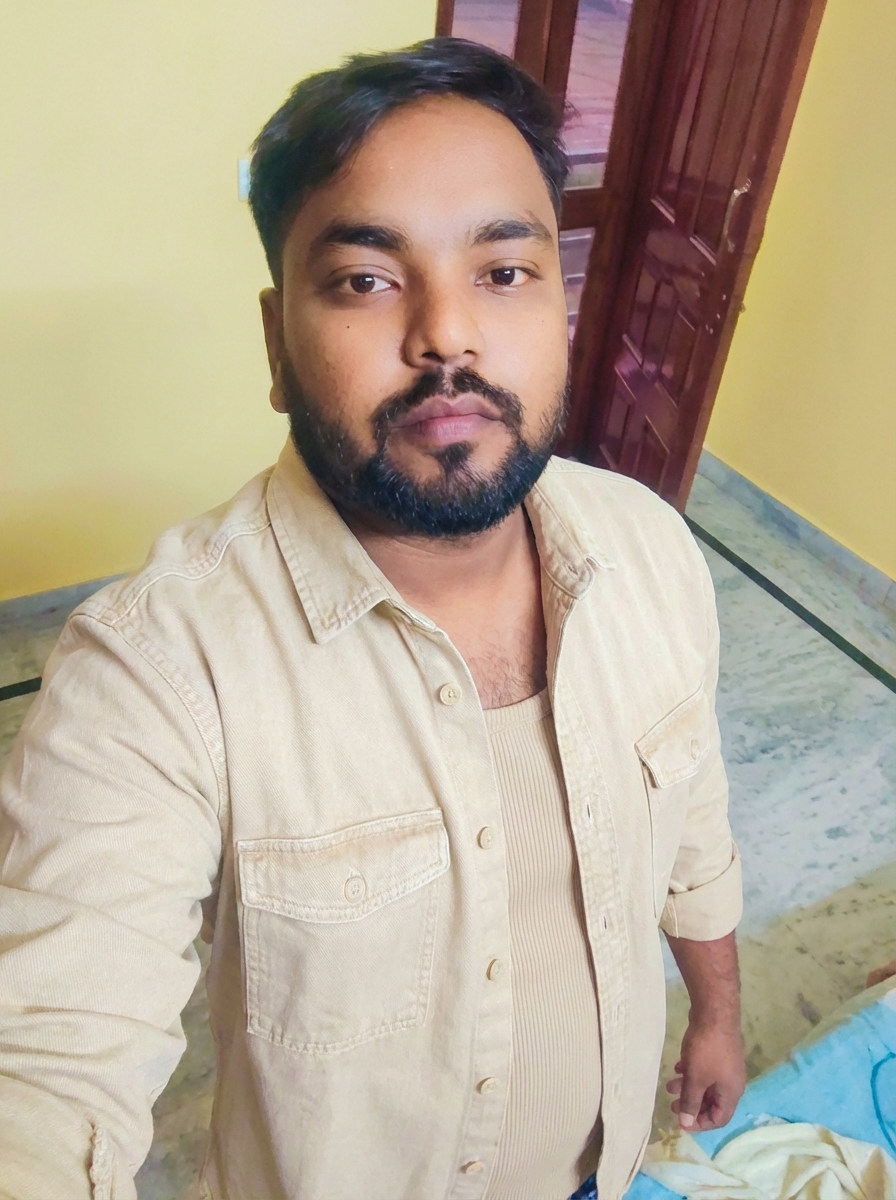
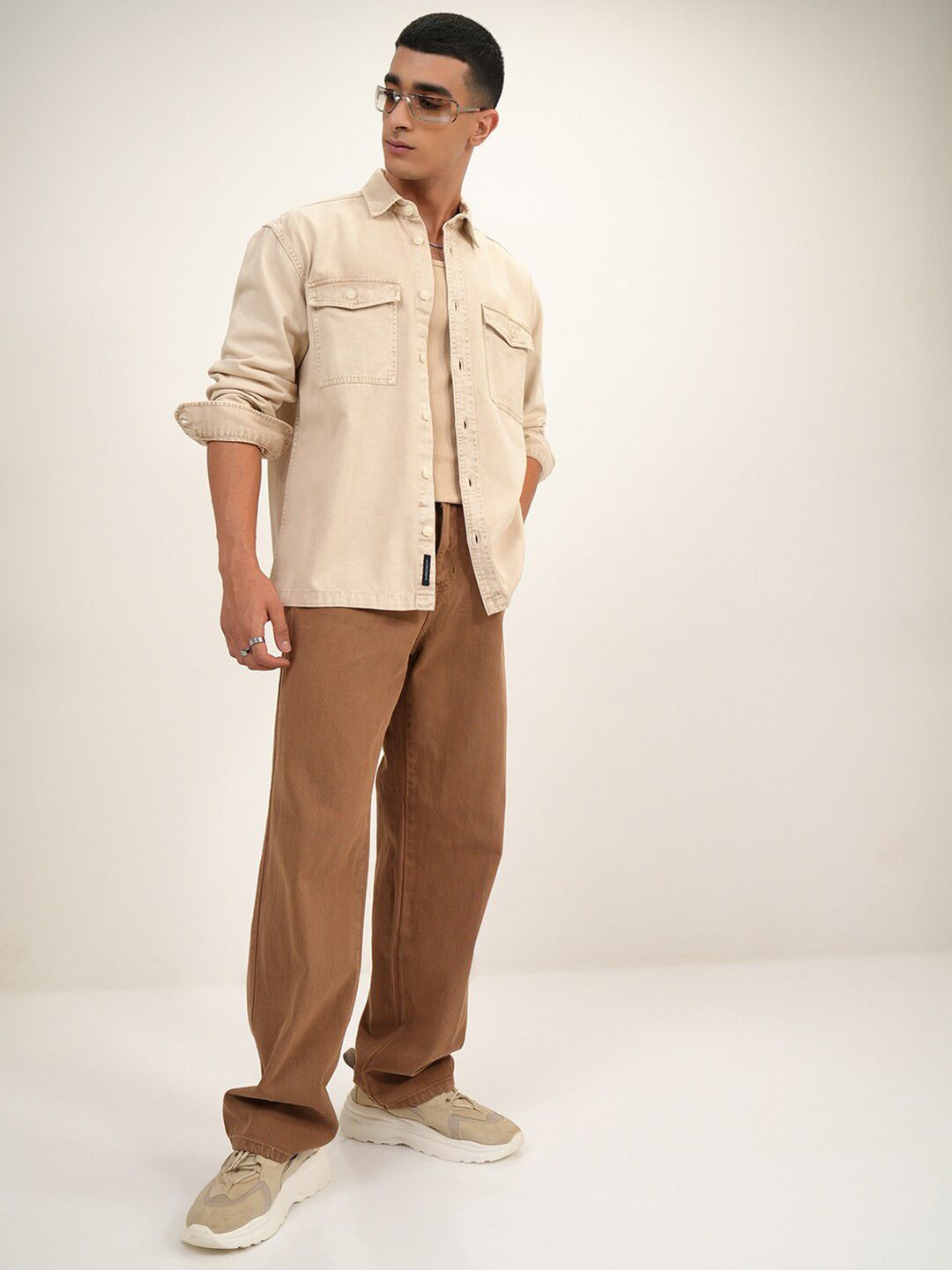
- **Fabric Physics:** The source garment is a layered ensemble consisting of a heavyweight cotton twill or denim overshirt (shacket) and a ribbed knit undershirt. The outer shirt has high structural rigidity and low drape (stiff), meaning it holds its shape rather than conforming tightly to the body. Surface reflectance is matte/diffuse; it should not exhibit specular highlights.
- **Key Features:** The open-front styling reveals the inner ribbed texture. Critical details to preserve include the dual chest pockets with flaps, the distinct collar structure, the visible vertical button placket, and specifically the rolled-up sleeve cuffs which add volumetric complexity.
PHASE 2: FIT & DRAPE SIMULATION
- **Body Mapping:** Due to the "selfie" perspective (high angle, camera close to face), the garment mesh must undergo significant foreshortening. The left shoulder (holding camera) is elevated and forward; the fabric must pull tight across this deltoid and armpit area. The garment is worn open, so the center gravity line must split, allowing the sides of the shirt to fall vertically alongside the torso rather than buttoning down the centerline. The shirt must expand volumetrically to accommodate the user's broader chest compared to the source model.
- **Occlusion Handling:** The user's beard is the primary occlusion layer. The new collar and upper placket must be rendered *behind* the beard hair at the jawline. No hands or hair obstruct the main torso area.
PHASE 3: ENVIRONMENT & LIGHTING
- **Light Match:** The user environment is illuminated by indoor artificial lighting (likely tungsten) which creates a warm, yellow cast. The light source appears to be coming from the upper-front-left, casting soft shadows under the chin and to the user's right side. The neutral beige of the source garment must be tinted with this warm ambient hue, and shadows must be generated on the right side of the garment folds to match the facial shadows.
- **Color Calibration:** Desaturate the "studio bright" quality of the source image. Apply a color grade to the beige fabric to match the temperature and white balance of the user's room (shifting from neutral cream to a warmer, slightly yellow-tinted beige).
PHASE 4: IDENTITY PROTECTION
- **Facial Lock:** Absolute freeze on pixels above the neck line. The user's eyes, nose, mouth, skin texture, and specific beard pattern must remain untouched. The hairline and ear visibility must be preserved.
- **Body Integrity:** Strictly forbidden to slim the user or warp the user's anatomy to match the source model's slender frame. The garment mesh must be warped to fit the *user's* existing body volume and shoulder width, maintaining his natural build.