Thinking Process
PHASE 1: VISUAL DECONSTRUCTION
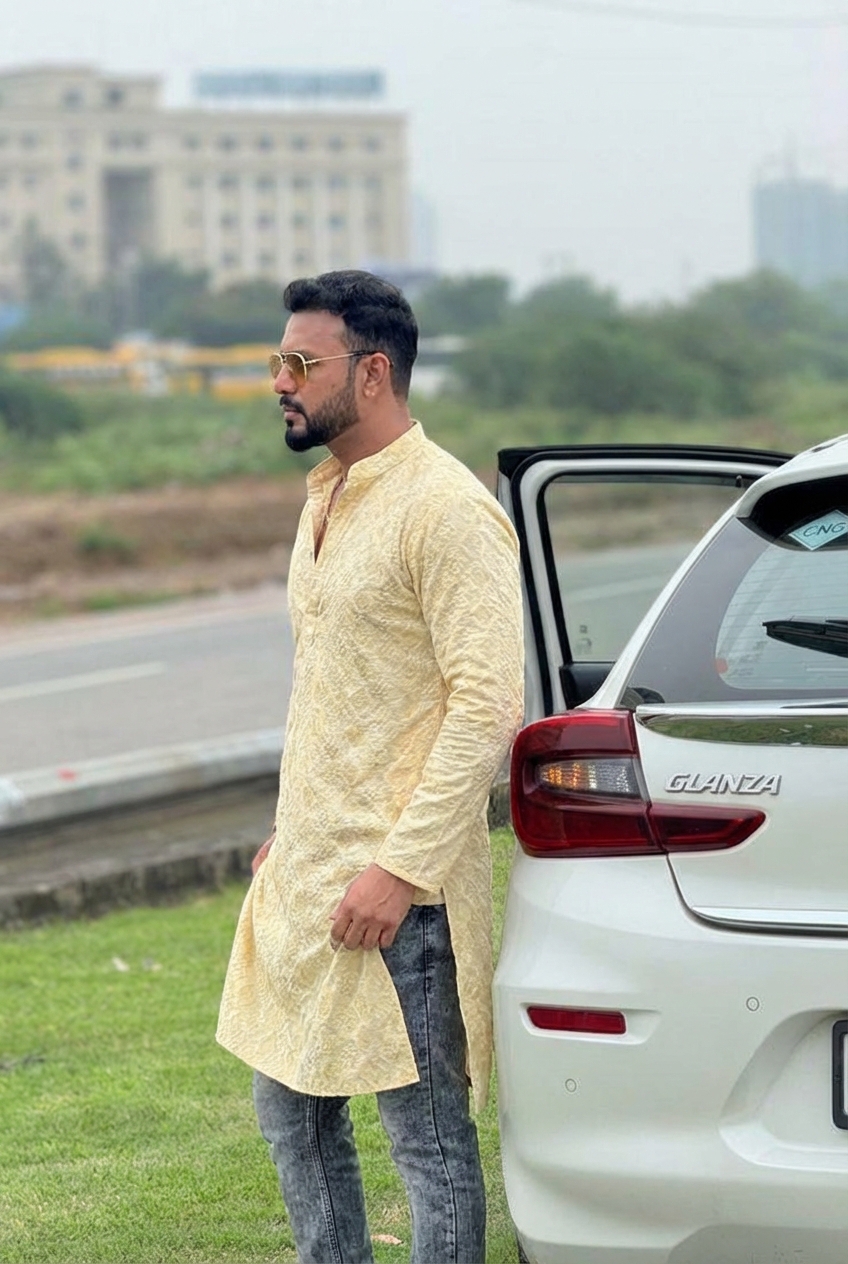
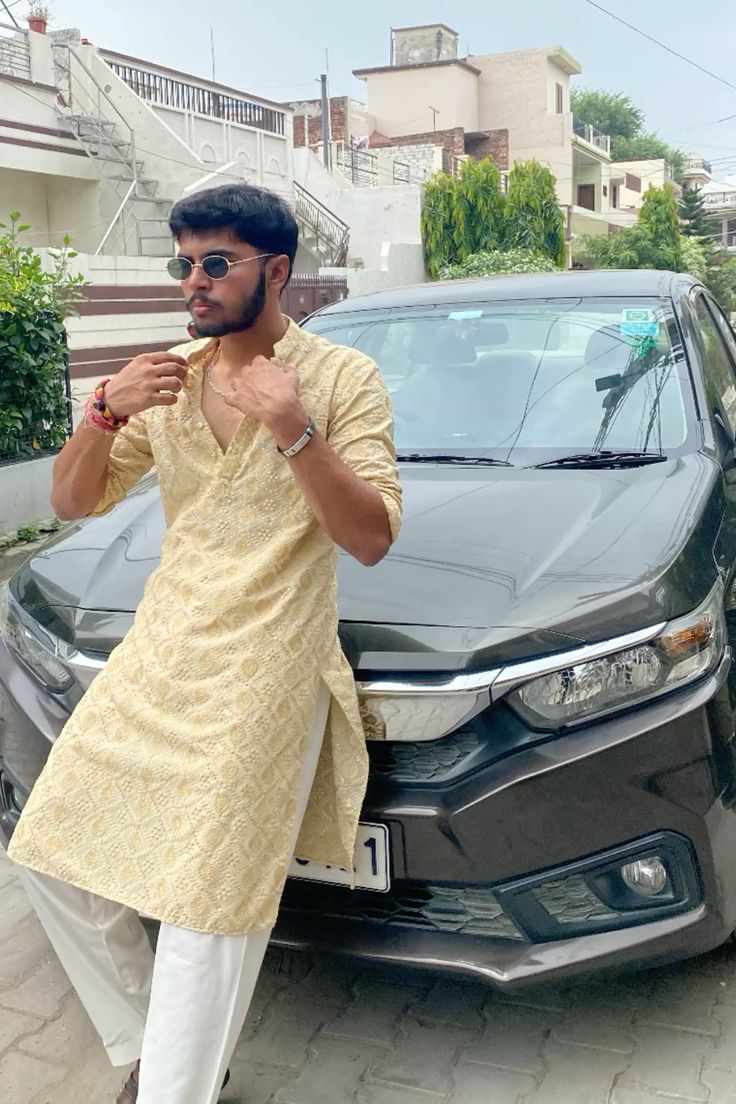
- **Fabric Physics:** The source garment is a textured, embroidered cotton or linen blend (likely Chikankari style). It has a matte finish with zero specular highlights. The simulation must render a complex "bump map" texture to represent the raised embroidery rather than a flat print. The fabric weight is medium-light; it should hold structural shape at the collar but drape vertically without clinging to muscle definition.
- **Key Features:** The Mandarin collar and deep V-neck opening are critical structure points. The intricate geometric embroidery pattern must be preserved without distortion. The garment length extends to the mid-thigh (significantly longer than the current T-shirt), featuring side slits (vents) that must be generated. The rolled-up sleeve aesthetic from the source should be adapted to the target's arm length or maintained as a styling choice.
PHASE 2: FIT & DRAPE SIMULATION
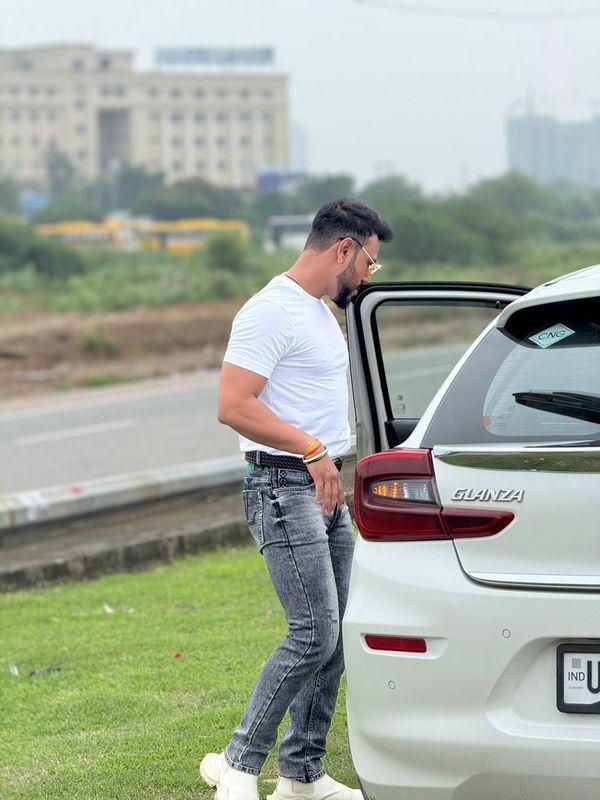
- **Body Mapping:** The target is in a side/three-quarter profile with a muscular build. The tight T-shirt silhouette must be replaced by a looser, tunic-style fit. The Kurta must drape vertically from the chest and shoulders, moving away from the lower back due to the user's forward-leaning posture. The hemline should not hug the waist but fall straight down to the thigh area, covering the belt and upper jeans.
- **Occlusion Handling:**
1. **Car Door Frame:** The user is standing behind an open car door window frame. The new garment must be strictly masked *behind* the black window trim and glass area.
2. **Left Hand:** The user's left hand is resting on the waistband/belt. Since the Kurta is long, the simulation must layer the fabric *behind* the hand and wrist to prevent the hand from being swallowed by the cloth, or simulate the fabric bunching slightly above the wrist if the sleeve is long.
PHASE 3: ENVIRONMENT & LIGHTING
- **Light Match:** The target environment is soft, diffuse, overcast outdoor daylight with low contrast. The lighting is cool/neutral. The source image is warmer and brighter. The Kurta's yellow tone must be desaturated slightly and cooled to match the ambient light of the target scene. Shadows should be soft ambient occlusion, particularly under the collar and where the fabric folds near the bent elbow.
- **Color Calibration:** Apply a subtle cool-tone filter to the yellow fabric to harmonize with the green grass and grey asphalt background. Ensure the white/cream embroidery does not "glow" but reacts to the soft lighting conditions.
PHASE 4: IDENTITY PROTECTION
- **Facial Lock:** Absolute freeze on the facial profile, including the beard line, ear, and sunglasses. The neck seam where the new Mandarin collar attaches must be blended carefully below the jawline.
- **Body Integrity:** Do not slim the user's broad shoulder width or bicep volume. While the garment is loose, the underlying structure of the shoulders must remain robust to match the user's physique. Do not alter the position of the legs or the car geometry.