Thinking Process
PHASE 1: VISUAL DECONSTRUCTION
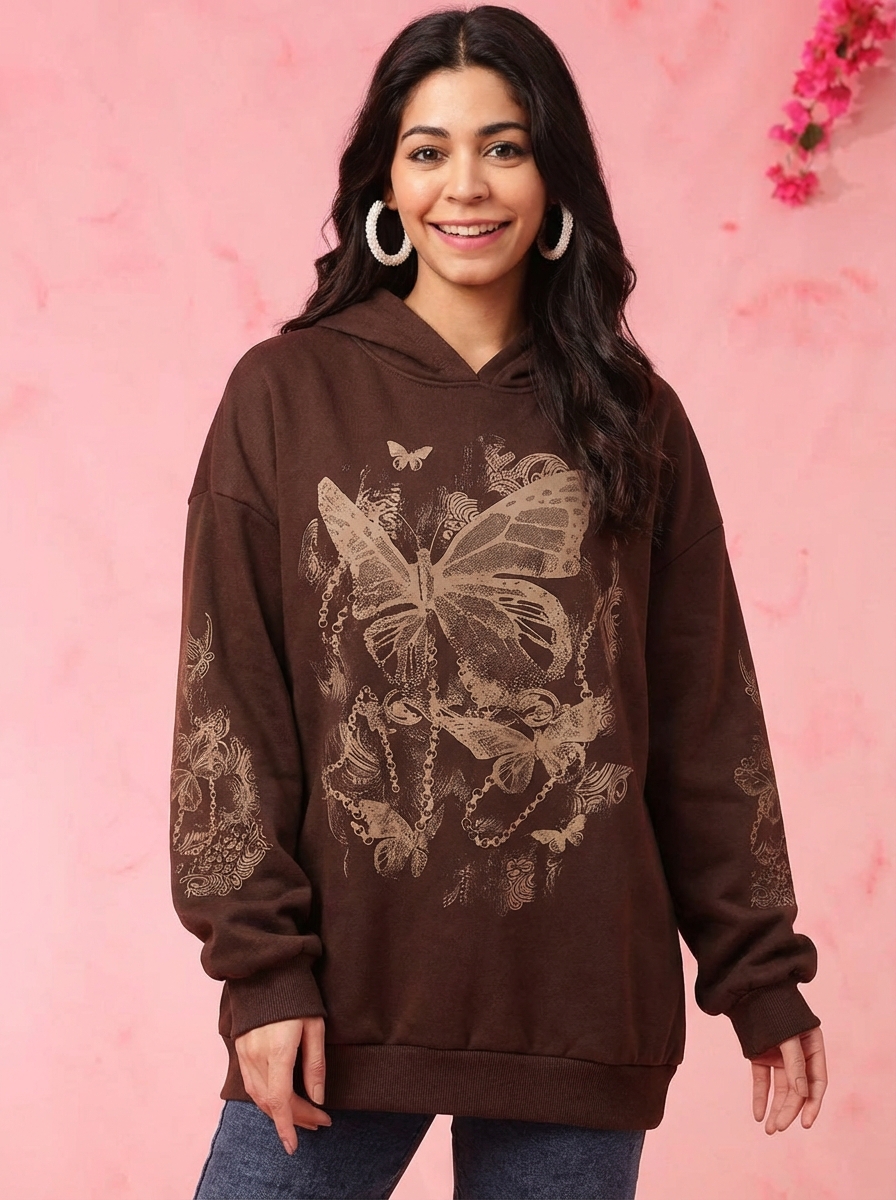
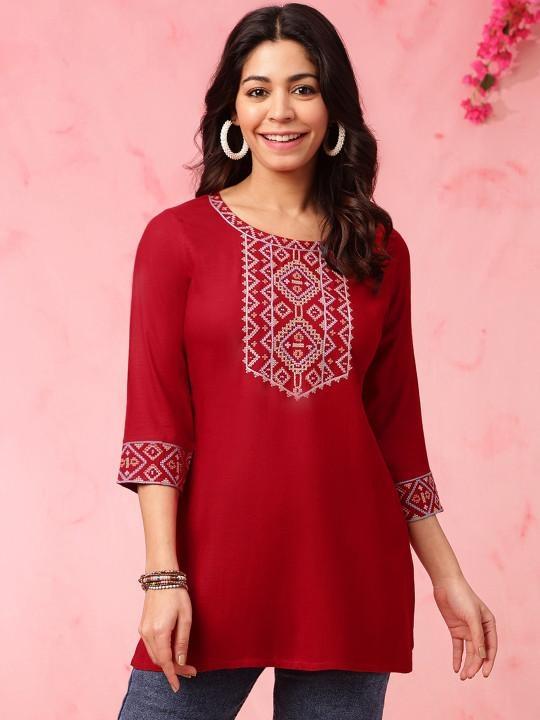
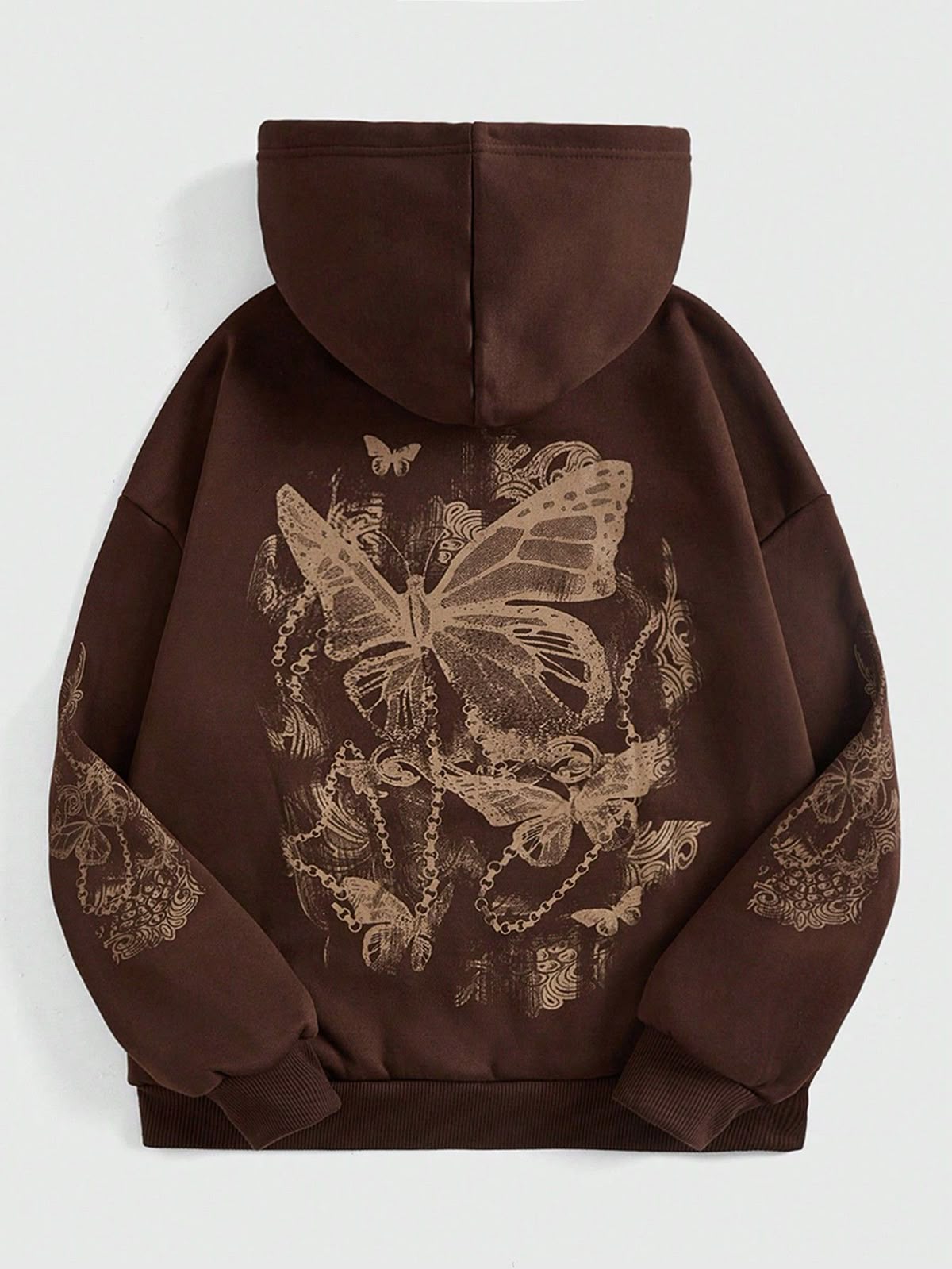
- **Fabric Physics:** The source garment is a heavyweight, cotton-poly blend fleece (approx. 350-400 GSM). Unlike the user's current lightweight rayon/cotton kurti, this fabric has high structural rigidity and low drape. It is matte, absorbing most light, but will show soft, broad highlights on the folds due to the fleece texture.
- **Key Features:** The distinctive butterfly and chain graphic (screen printed or bleached effect) along with the sleeve graphics must be preserved. The oversized "drop-shoulder" seams, the kangaroo pocket volume (implied by the hoodie silhouette), the thick ribbed cuffs, and the ribbed hemline are critical structural elements. The hood itself adds significant volume around the neck area.
PHASE 2: FIT & DRAPE SIMULATION
- **Body Mapping:** The transition is from "Form-Fitting" to "Oversized Streetwear." The hoodie should not follow the user's waist indentation. Instead, it must hang in a boxy silhouette from the shoulders, draping vertically due to gravity. The ribbed hem should land below the hips, creating a slight "mushrooming" effect where the elastic creates tension. The sleeves are longer than the user's arms and must bunch up (stack) naturally at the wrists, creating heavy fold density.
- **Occlusion Handling:**
- **Hair:** The user's long, dark wavy hair is the primary occlusion layer. It must lay *over* the shoulder and upper chest area of the hoodie. The bulk of the hood at the nape of the neck will push the hair slightly outward/forward.
- **Accessories:** The large hoop earrings must remain visible and unobstructed by the collar/hood. The bracelets on the right wrist will likely be covered by the long ribbed cuffs; however, if the sleeve is simulated as "pushed up," the bracelets must layer on top.
PHASE 3: ENVIRONMENT & LIGHTING
- **Light Match:** The user is in a soft, diffuse studio setting with a pink backdrop. The primary light source is front-left (viewer's left), casting soft shadows to the right. The deep brown of the hoodie must adopt the ambient occlusion of this lighting setup. Shadows within the hoodie's folds must match the contrast levels of the user's hair.
- **Color Calibration:** The "chocolate brown" of the hoodie will receive subtle warm/pinkish color bleed (bounce light) from the background. The white/beige graphics on the hoodie must not appear purely white but should be slightly warmed to match the scene's white balance, ensuring they don't look like a superimposed sticker.
PHASE 4: IDENTITY PROTECTION
- **Facial Lock:** Absolute freeze required for the user's eyes, nose, mouth, jawline, and skin texture. The neck area (where visible above the hoodie neckline) must retain original skin tone and lighting.
- **Body Integrity:** Prohibit any slimming or warping of the user's lower body (jeans/legs). The user's natural shoulder width must act as the anchor for the garment; the garment should make the silhouette larger, not shrink the user to fit the clothes. The hands must retain their current size and skin tone.