Thinking Process
PHASE 1: VISUAL DECONSTRUCTION
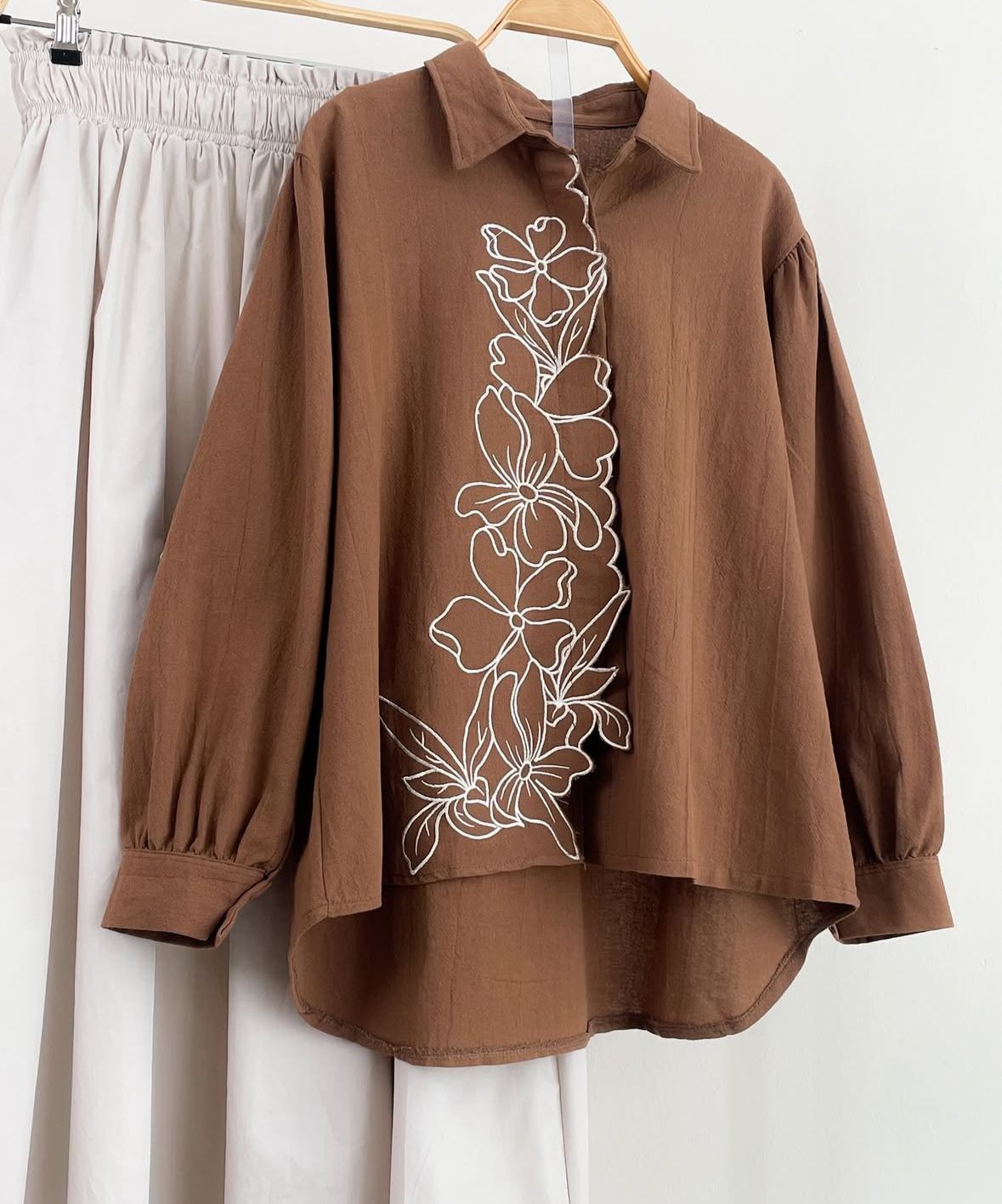
- **Fabric Physics:** The source garment appears to be a medium-weight cotton or linen blend with a matte finish. Unlike the user's current tight knit top, this material has low elasticity and structural stiffness. It should not cling to the skin; instead, it must simulate a semi-rigid drape that creates air gaps between the body and the fabric, particularly around the waist and armholes. Light interaction should be diffuse with no specular highlights.
- **Key Features:** The large white floral embroidery running down the placket is the primary focal point and must maintain high contrast without distortion. The garment features a collar, gathered sleeve cuffs (bishop sleeve style), and a high-low hemline. The texture of the linen weave must be upscaled to match the resolution of the target image.
PHASE 2: FIT & DRAPE SIMULATION
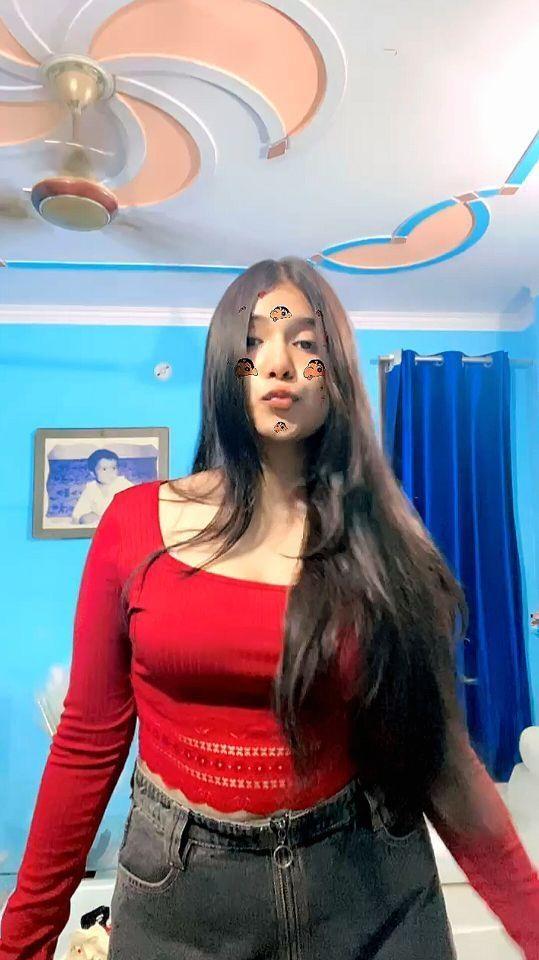
- **Body Mapping:** The silhouette must transition from the user's current "skin-tight" fit to a "relaxed/oversized" fit. The shoulder seams of the brown shirt should drop slightly past the user's natural shoulder line. The fabric must hang vertically from the chest apex, ignoring the waist curve (boxier fit). Sleeves should billow slightly above the cuff, creating volume that does not currently exist in the red top.
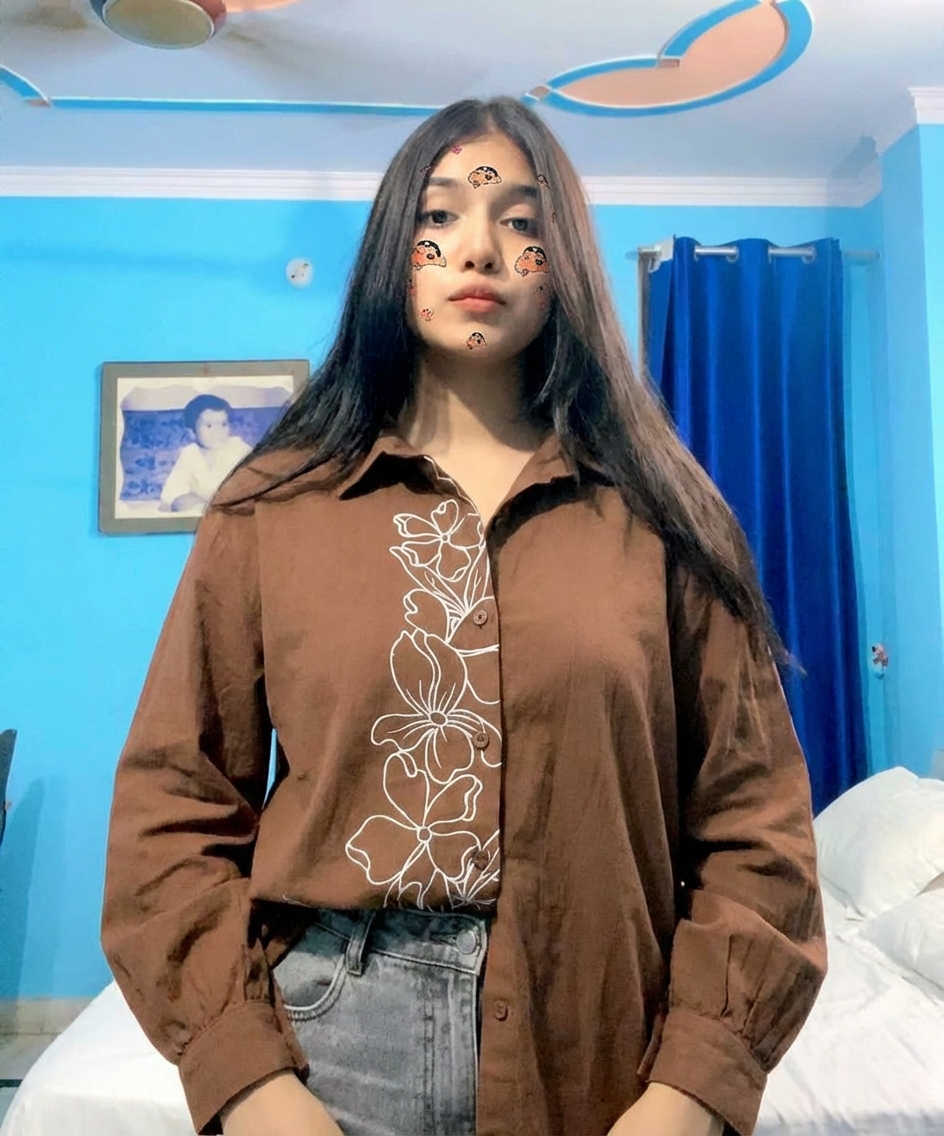
- **Occlusion Handling:** **CRITICAL:** The user has long, dark hair flowing over both shoulders and down the chest. A high-precision segmentation mask is required for the hair strands. The brown shirt must be rendered *behind* these hair layers. The shirt collar must appear to wrap around the back of the neck, underneath the hair volume.
PHASE 3: ENVIRONMENT & LIGHTING
- **Light Match:** The user's environment is dominated by cool, cyan-toned ambient light from the blue walls and a strong overhead light source (ceiling fan fixture). The neutral/warm studio lighting of the source cloth must be neutralized. Shadows on the new garment must cast downward (under the bust and collar) and take on a cool, bluish tint to integrate with the room's atmosphere.
- **Color Calibration:** The "mocha/brown" of the source shirt will visually shift in this environment. It should appear slightly desaturated and cooler to match the white balance of the user's photo. The white embroidery must reflect the room's ambient cyan light slightly, preventing it from looking artificially bright white.
PHASE 4: IDENTITY PROTECTION
- **Facial Lock:** The user's facial structure, skin tone, makeup, and the digital stickers/filters on her cheeks must remain pixel-perfectly frozen. The neck area above the collar line must be preserved.
- **Body Integrity:** Strictly forbid any warping of the user's hips or jean waistline. While the *shirt's* silhouette adds volume, the underlying body mesh (shoulder width, arm thickness) must not be slimmed or altered. The jeans texture and shape below the shirt's hemline must remain untouched.