Thinking Process
PHASE 1: VISUAL DECONSTRUCTION
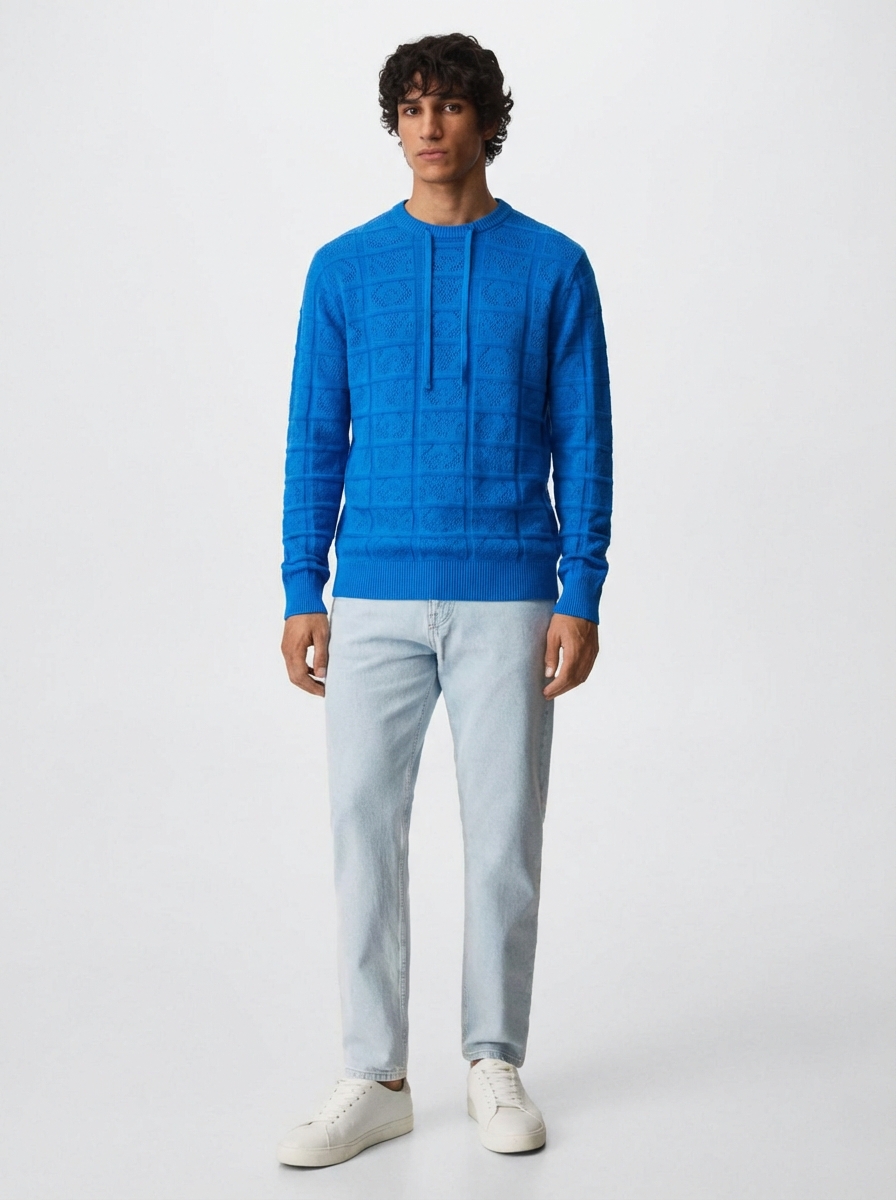
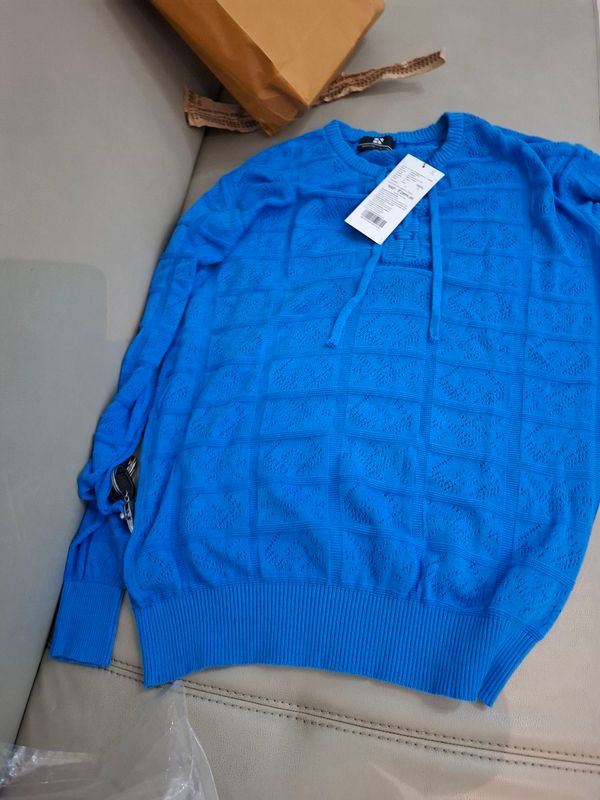
- **Fabric Physics:** The source garment is a textured waffle-knit or cable-knit sweater (likely cotton or acrylic blend). It requires a matte shader with high roughness; it should not exhibit specular highlights like the current button-down shirt. The simulation must account for significant surface displacement mapping to render the 3D depth of the square/grid knit pattern rather than treating it as a flat texture.
- **Key Features:** The specific grid-like knit pattern must be preserved without distortion. The ribbed elastic cuffs and ribbed bottom hem are critical structural elements. The drawstrings at the neckline must be retained and subjected to gravity. **Crucial:** The visible price tags and the keys attached to the source garment's sleeve must be digitally excised and inpainted with the correct knit texture.
PHASE 2: FIT & DRAPE SIMULATION
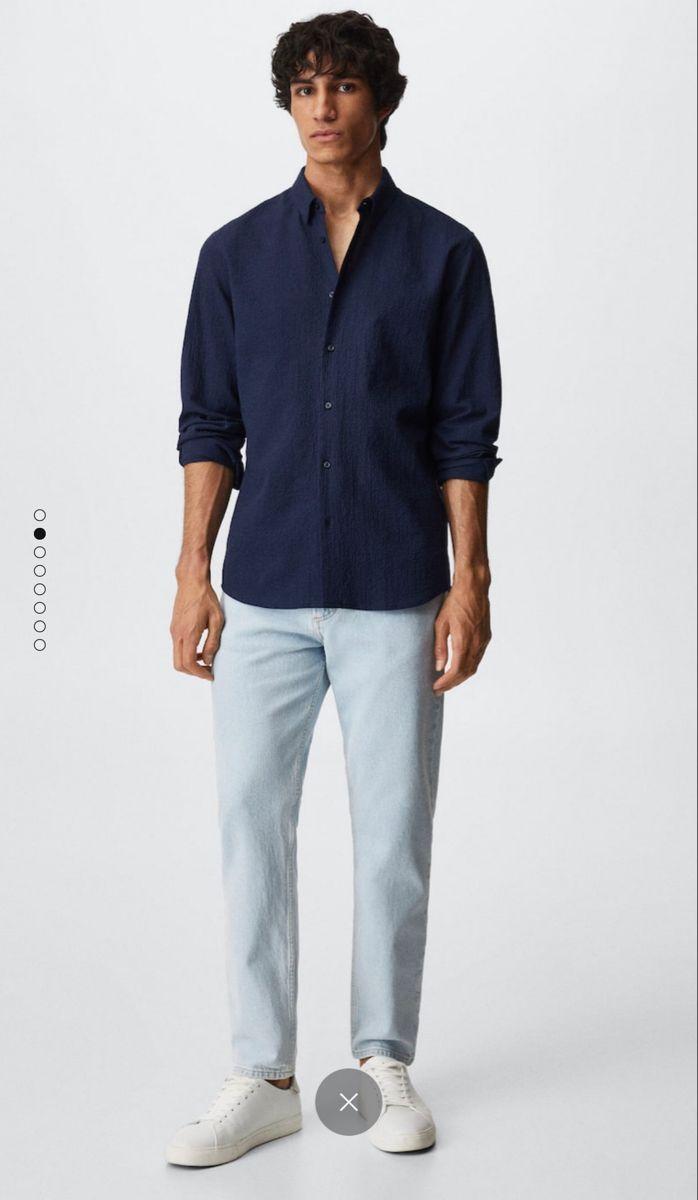
- **Body Mapping:** The target user is currently wearing a woven shirt with rolled sleeves. The simulation must extrapolate the user's forearm volume to extend the new garment's sleeves fully to the wrist. The sweater has a "relaxed fit" physics profile; it should sit looser on the shoulders than the current shirt and drape vertically over the torso without clinging to the abdominals. The ribbed hem should cinch slightly at the hips, creating a natural "mushrooming" effect of the fabric just above the waistline.
- **Occlusion Handling:** The user's dark, curly hair overlaps the collar area; the hair mask must be layered **over** the new sweater's neckline. The user's hands are positioned at the sides; the new sleeves must end at the wrist bone and not clip through the hands or fingers. The collar of the underlying blue shirt must be fully removed so it does not peek out from the new crew neck.
PHASE 3: ENVIRONMENT & LIGHTING
- **Light Match:** The target image utilizes soft, directional studio lighting originating from the front-left (creating a shadow behind the user to the right). The source garment (currently photographed in flat, overhead room light) must be relit to match this high-contrast studio setup. Shadows must be cast deeply into the recesses of the knit texture to provide volumetric realism.
- **Color Calibration:** The "electric blue" of the source garment is highly saturated. To match the User Image's color grade, the white balance of the sweater must be slightly cooled to align with the studio's neutral-cool lighting, ensuring the brightness levels match the exposure of the user's jeans.
PHASE 4: IDENTITY PROTECTION
- **Facial Lock:** The user's entire head region—specifically the jawline, facial structure, skin tone, and messy hairstyle—must remain pixel-perfect and frozen.
- **Body Integrity:** Strictly forbidden to slim the user's waist or alter the shoulder width. The underlying body mesh (pose and scale) must remain constant. Any change in silhouette should strictly be the result of the added fabric thickness of the knit sweater versus the thin button-down shirt.