Thinking Process
PHASE 1: VISUAL DECONSTRUCTION
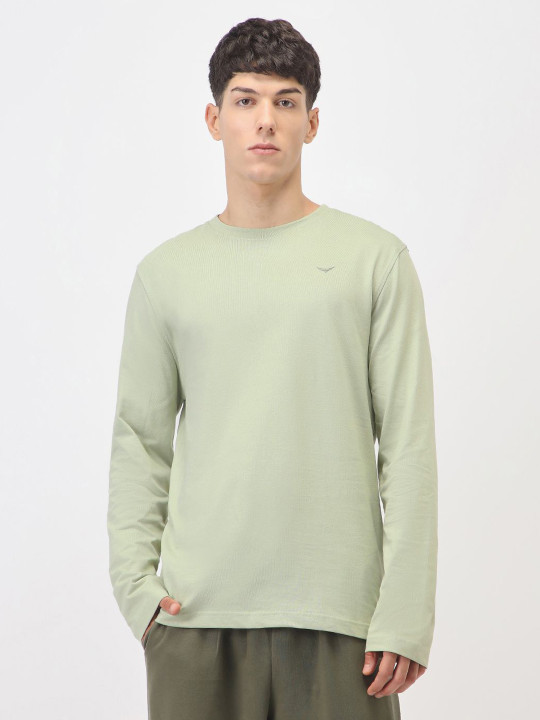
- **Fabric Physics:** The source garment appears to be a mid-weight cotton jersey or interlock knit. It has a matte finish with low specularity (no shine). The material possesses moderate structure but is soft enough to drape, suggesting a physics model that allows for soft folding without rigid creasing.
- **Key Features:**
- **Color:** Sage/Pale Green (must replace the high-contrast white).
- **Structure:** Long sleeves with a standard hem (this is a critical generation area as the target currently has bare arms).
- **Details:** The small logo on the upper left chest (viewer's right) must be preserved and warped to match the chest curvature. The ribbed crew neck collar needs to sit naturally at the user's clavicle line.
PHASE 2: FIT & DRAPE SIMULATION
- **Body Mapping:**
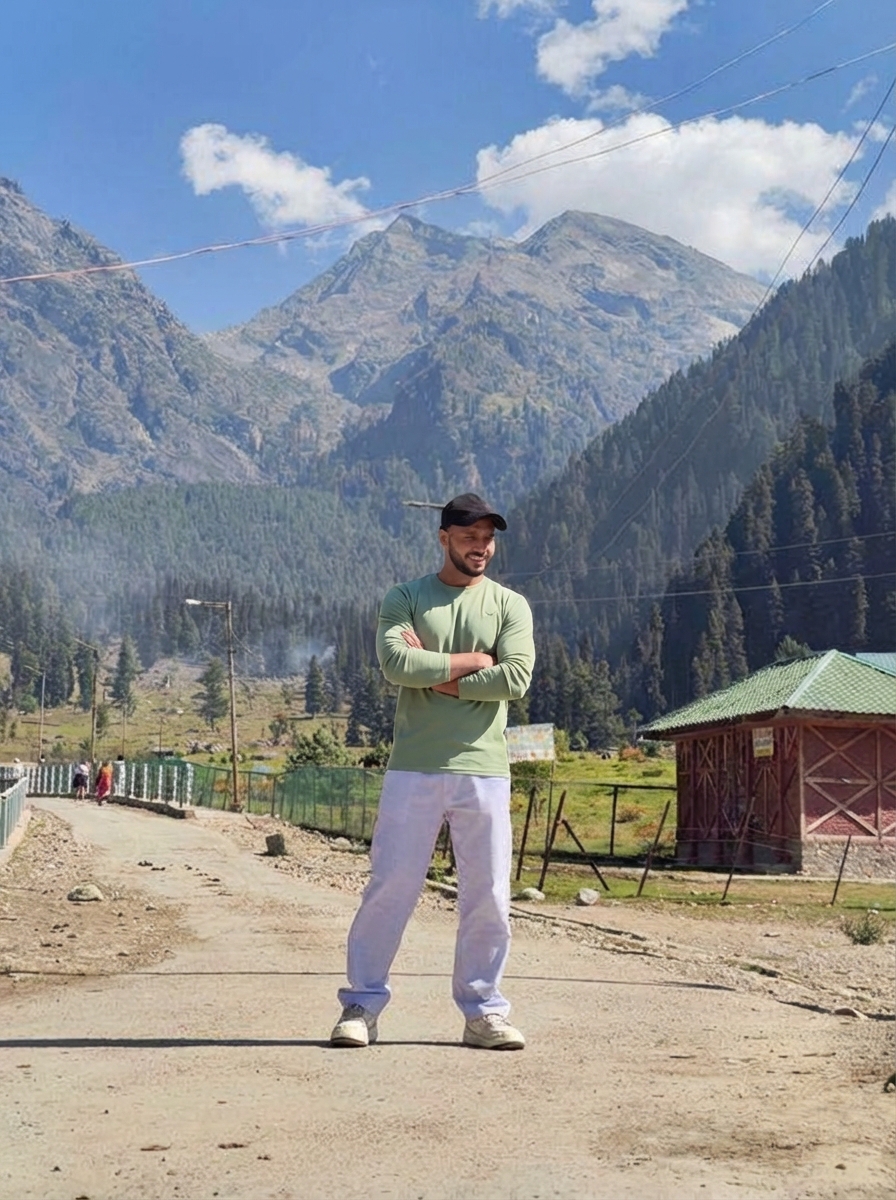
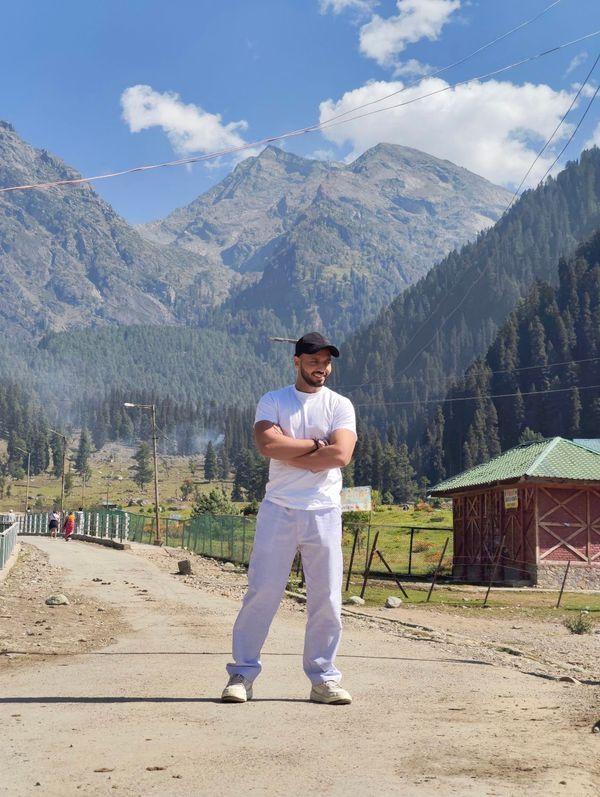
- **Pose Geometry:** The user has arms crossed over the chest. This requires complex mesh deformation. The fabric must stretch tight across the upper back and shoulders (deltoids).
- **Compression Zones:** Significant fabric bunching and folding must be generated at the inner elbows (cubital fossa) and underneath the forearms where they press against the chest. The long sleeves of the source garment must generate completely new texture to cover the user's currently bare forearms.
- **Gravity:** The hemline cannot hang straight; it will interact with the forearms and likely be pushed slightly outward or bunched up above the crossed arms depending on the shirt's length relative to the torso.
- **Occlusion Handling:**
- **Hands:** The user's hands are tucked into the bicep area. The segmentation mask must ensure the user's hands layer *over* the new fabric covering the biceps.
- **Cap:** The cap must remain a distinct layer separate from the garment transfer.
PHASE 3: ENVIRONMENT & LIGHTING
- **Light Match:**
- **Source:** The target environment features strong, direct outdoor sunlight coming from the upper-right (viewer's perspective), creating hard, high-contrast shadows.
- **Shadow Casting:** The new garment must cast a distinct, hard shadow onto the user's pants and the ground (if the shirt extends that low, though mostly self-shadowing). Crucially, the crossed arms must cast deep, sharp shadows onto the stomach area of the green shirt.
- **Color Calibration:**
- **White Balance:** The source cloth is studio-lit (neutral). It must be adjusted to accept the warm temperature of the direct sunlight (adding yellow/orange warmth to highlights) and the cool ambient light from the blue sky/mountains in the shadowed areas.
- **Brightness:** The sage green must not be overexposed by the outdoor sun; texture details must remain visible in the bright highlights.
PHASE 4: IDENTITY PROTECTION
- **Facial Lock:** The user's face, facial hair (beard), and headwear (black cap) must be completely frozen and masked out of the generation process to prevent resolution loss or identity shifting.
- **Body Integrity:** The simulation must respect the user's muscular build (broad shoulders). Do not slim the torso or alter the leg/stance geometry. The transfer must only affect the upper body garment area, leaving the pants and shoes untouched.