Thinking Process
PHASE 1: VISUAL DECONSTRUCTION
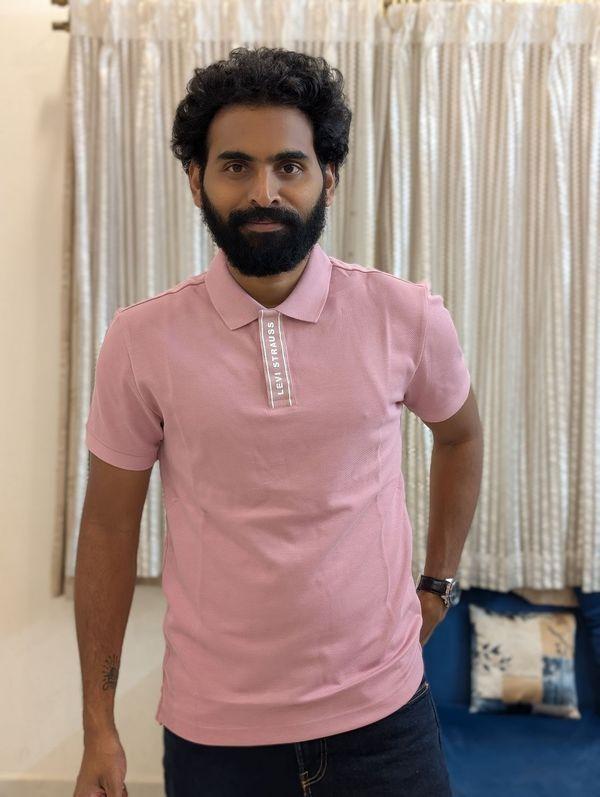
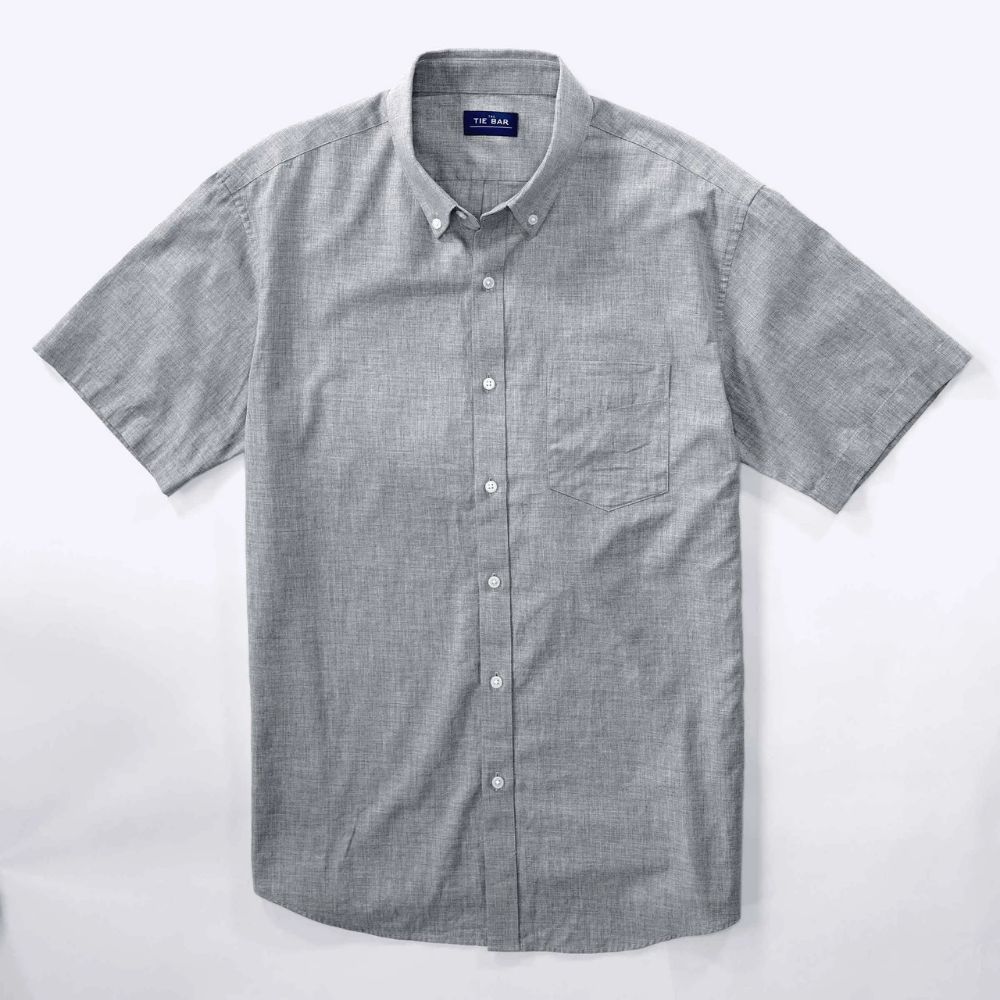
- **Fabric Physics:** The source garment appears to be a chambray or lightweight linen blend with a visible heathered weave texture. Unlike the user's current knit polo (which stretches), this woven material has higher structural rigidity and near-zero elasticity. Light reflection should be matte and diffuse, with no specular highlights, emphasizing the tactile, fibrous surface of the cloth.
- **Key Features:** The button-down collar points (which provide structure around the neck), the single patch pocket on the wearer's left chest, the contrasting white buttons, and the distinct curved "shirttail" hemline must be preserved. The interior neck tag ("The Tie Bar") and the specific heather grey color pattern are essential for realism.
PHASE 2: FIT & DRAPE SIMULATION
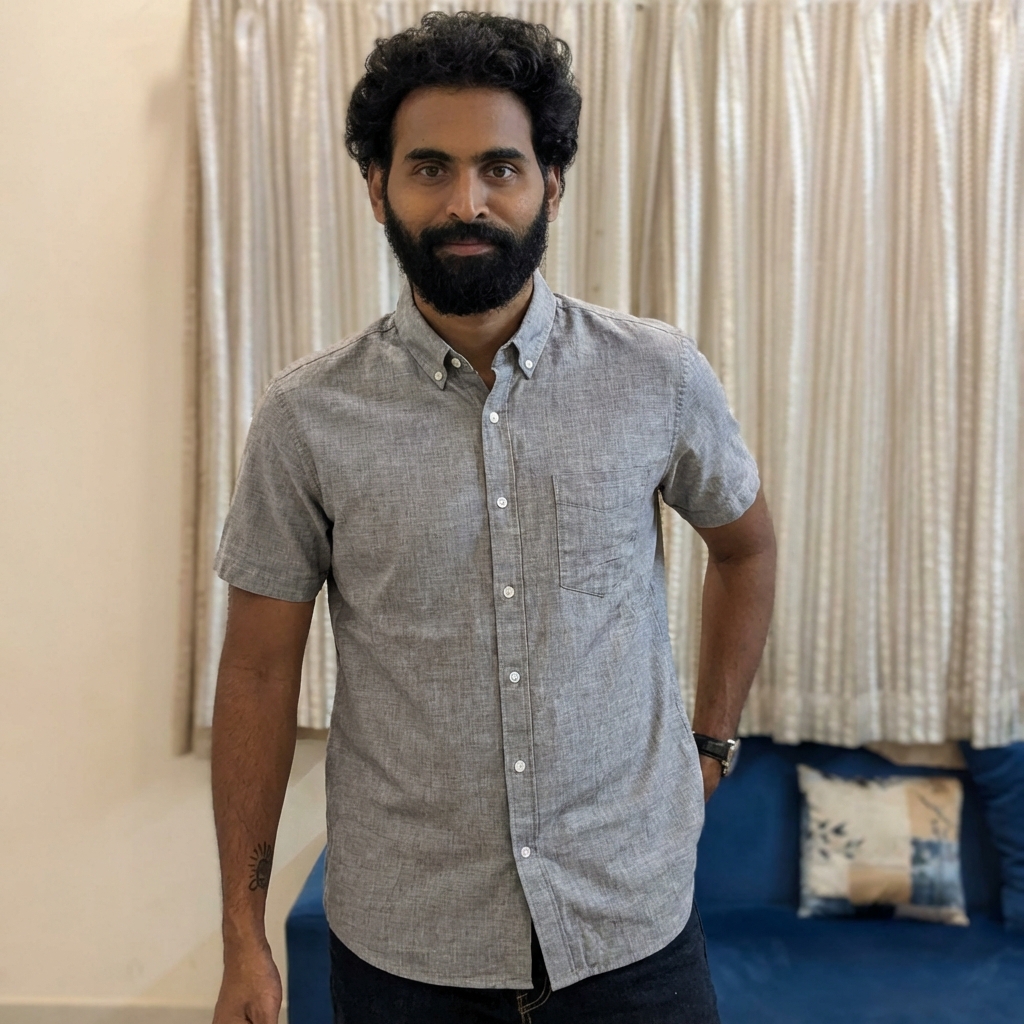
- **Body Mapping:** The source shirt is a standard fit button-down, meaning it must drape looser than the user's current form-fitting polo. The fabric should hang vertically from the acromion (shoulder point), creating a "tenting" effect around the biceps rather than clinging to the skin. There should be a slight gap between the sleeve hem and the arm. The torso fabric should drape with gravity, showing mild folding near the waist where the fabric gathers, rather than conforming strictly to the pectorals and abdominals.
- **Occlusion Handling:** The user's thick beard is the primary occlusion zone; the new stiff collar must be rendered *underneath* the beard line to maintain depth perception. The user's arms and watch (left wrist) are exposed; the short sleeves of the new garment must terminate above the elbow, ensuring the forearm tattoo (right arm) and watch remain fully visible and unaltered.
PHASE 3: ENVIRONMENT & LIGHTING
- **Light Match:** The user is in a warm, indoor environment with soft directional light coming from the upper-left (viewer's perspective). The source garment (currently in flat, cool studio light) must be re-lit to match. Deep, soft shadows must be cast on the viewer's right side of the shirt torso and under the right sleeve. Self-shadowing must occur under the collar and inside fabric folds.
- **Color Calibration:** The neutral grey of the source shirt must absorb the ambient warm yellow/orange tones of the room. The grey should shift slightly towards a warmer "taupe-grey" to integrate with the background curtains and skin tone reflections, avoiding a "cut-and-paste" bright grey look.
PHASE 4: IDENTITY PROTECTION
- **Facial Lock:** The user's entire head region—specifically the curly hair volume, eyes, nose, and the dense beard structure—must be frozen. The neck transition point needs precise masking to blend the new higher collar without cutting into the jawline.
- **Body Integrity:** The user's shoulder width and arm muscle definition must remain exact. Do not apply any "slimming" filters or alter the user's posture. The tattoo on the right forearm serves as a critical anchor point for skin texture and must remain untouched.