Thinking Process
PHASE 1: VISUAL DECONSTRUCTION
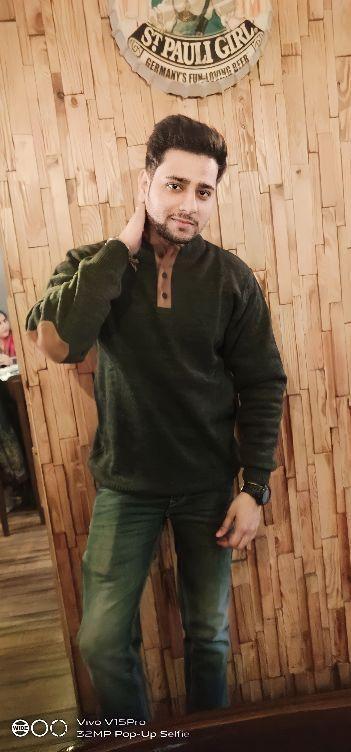
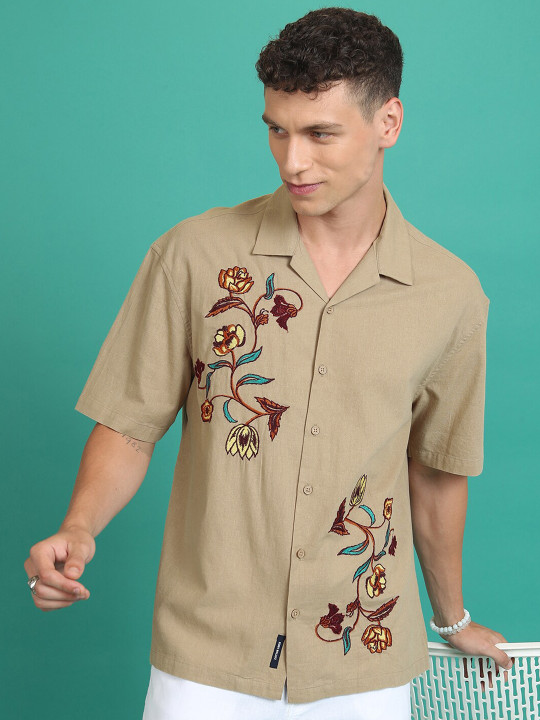
- **Fabric Physics:** The source garment appears to be a linen or linen-cotton blend. It possesses a matte finish with a structured yet breathable weave. Unlike the user's current knitted sweater, this fabric should not stretch significantly but rather fold and crease crisply. Light reflection should be diffuse with low specularity.
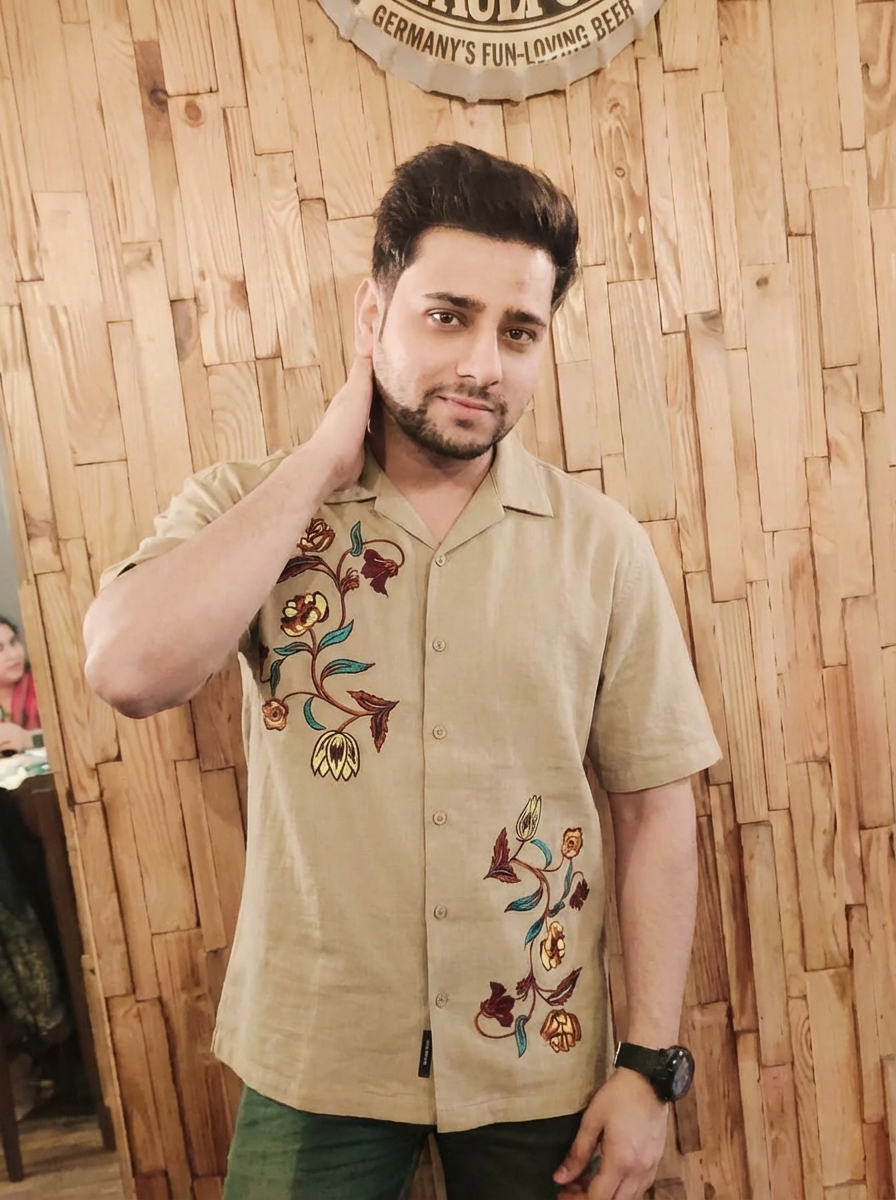
- **Key Features:** The large-scale floral embroidery (browns, yellows, and teals) on the chest panels is the primary visual anchor and must not be distorted. The open "camp collar" (Cuban collar) structure, brown distinct buttons, and the small black brand tag near the bottom hem must be preserved. The short sleeves are a critical geometric change from the user's current long sleeves.
PHASE 2: FIT & DRAPE SIMULATION
- **Body Mapping:** The source shirt is a relaxed, boxy fit. On the user, the fabric must settle closer to the body than the current bulky sweater but remain loose.
- *Right Arm (Raised):* The sleeve on the user's right side must slide down towards the shoulder (gravity), creating compression folds/bunching at the armpit and top of the shoulder.
- *Left Arm (Relaxed):* The sleeve should hang cylindrically with a slight gap between the fabric and the bicep.
- *Torso:* Remove the visual "bulk" of the current knitted sweater; the linen shirt should drape flatter against the chest and abdomen.
- **Occlusion Handling:** The user's **right hand and wrist** are heavily interacting with the neck area. The new collar must be rendered *behind* the user's hand and fingers. The user's jawline and beard hair must act as the top layer, obscuring the upper collar where they make contact.
PHASE 3: ENVIRONMENT & LIGHTING
- **Light Match:** The user is in a warm, dimly lit indoor environment (restaurant/pub setting) with overhead tungsten lighting, casting soft shadows downwards. The flat, bright studio lighting of the source garment must be completely relit. Shadows on the shirt should be deeper and warmer to match the room's ambience.
- **Color Calibration:** The neutral beige/tan of the source shirt must be color-graded with a warm yellow/orange tint to integrate with the wood paneling and artificial lighting of the user's photo. The embroidery thread colors must shift accordingly (e.g., the teal stems will appear darker/greener).
PHASE 4: IDENTITY PROTECTION
- **Facial Lock:** The user's entire head (hair, forehead, eyes, nose, mouth, and beard) and the specific position of the right hand touching the neck must be frozen and pixel-perfectly preserved.
- **Body Integrity:** Do not alter the user's shoulder width or torso volume.
- *Crucial Generative Task:* Since the source is short-sleeved and the user is wearing long sleeves, the simulation must generatively inpaint the user's forearms. The skin tone and texture of these generated arms must perfectly match the user's face and neck complexion.