Thinking Process
PHASE 1: VISUAL DECONSTRUCTION
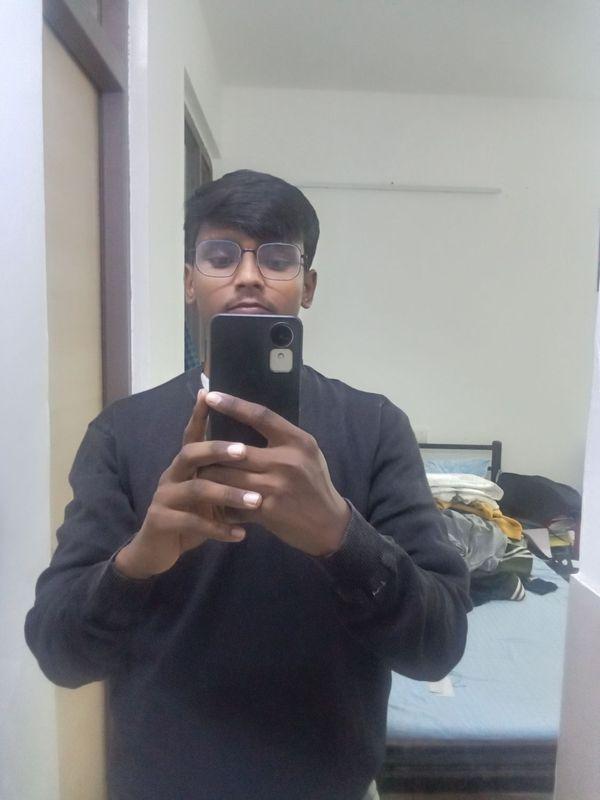
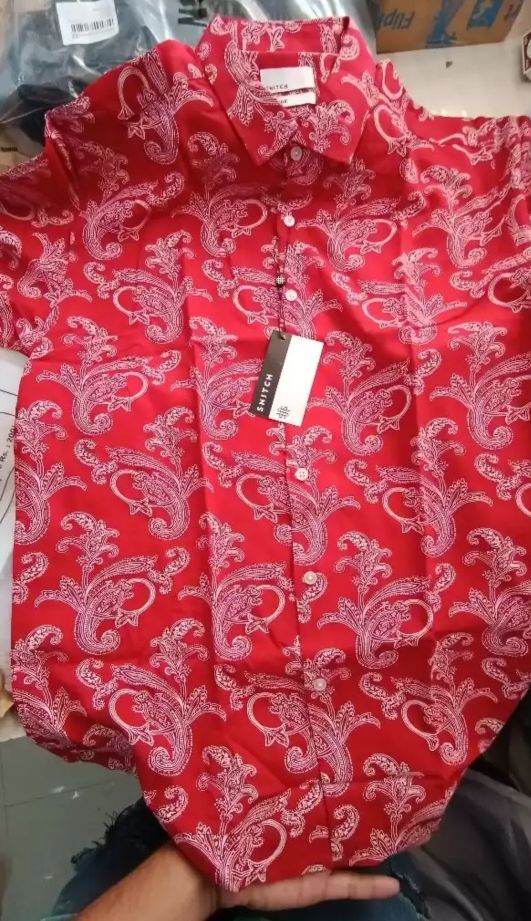
- **Fabric Physics:** The source garment appears to be a lightweight cotton poplin or viscose blend. It possesses medium structural integrity—enough to hold a crisp collar shape but pliable enough to crease easily. Light interaction should be largely diffuse (matte) with very subtle specular highlights on the tension points (shoulders/buttons), unlike the highly absorbent matte texture of the user's current fleece/knit sweatshirt.
- **Key Features:** The high-frequency white paisley/floral print on the red base must remain sharp and undistorted. Key rigid anchors include the spread collar, the vertical button placket (white buttons), and the specific "SNITCH" brand tag hanging from the second button (unless digitally removed). The short-sleeve structure is a critical geometric change from the user's current long sleeves.
PHASE 2: FIT & DRAPE SIMULATION
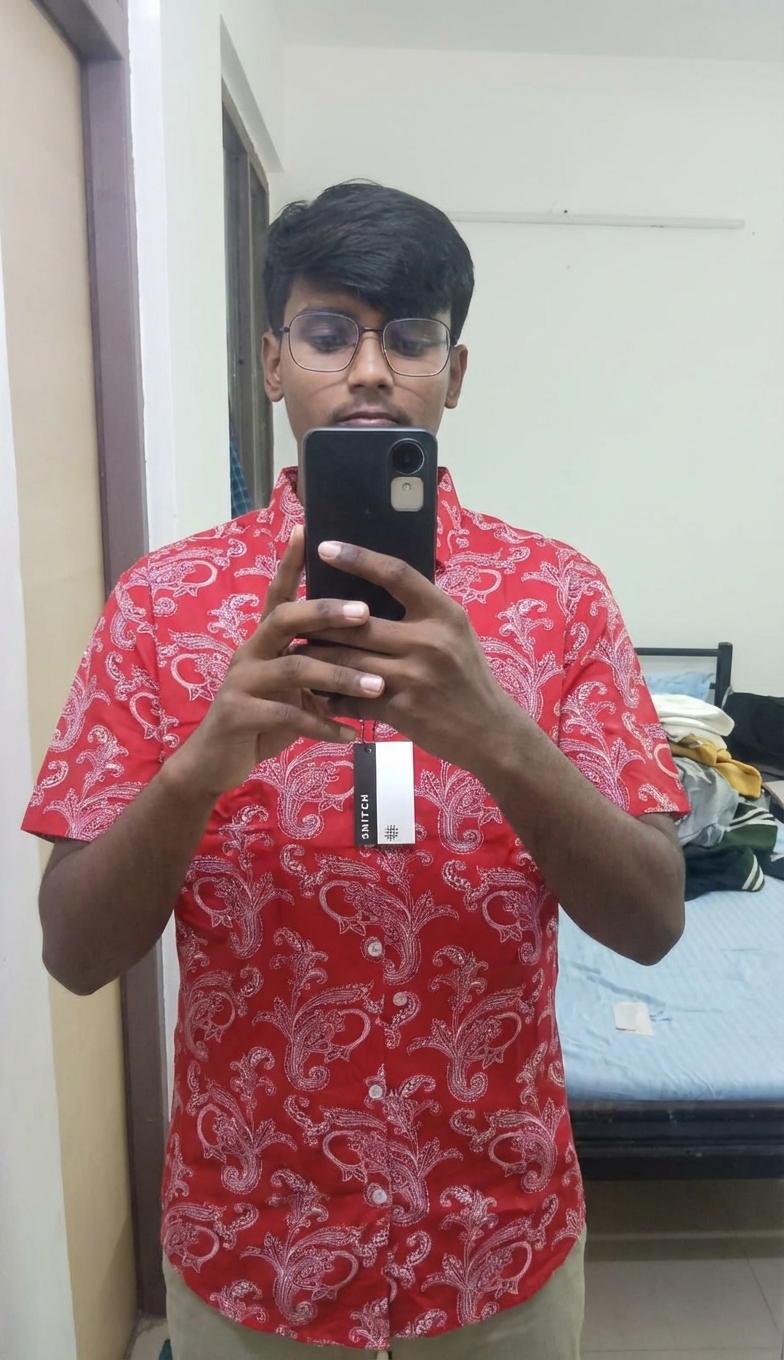
- **Body Mapping:** The simulation must replace the bulky volume of the current sweatshirt with a closer-fitting, thinner silhouette appropriate for a summer shirt. The fabric must drape vertically from the shoulders but exhibit tension ripples radiating from the armpits due to the user's raised arms (holding the phone). The collar must wrap naturally around the neck, sitting lower than the current crewneck. **Crucial:** Since the source is short-sleeved and the user is wearing long sleeves, skin texture generation or masking is required for the lower biceps/forearms, or the simulation must imply the shirt is layered over the existing sleeves (depending on rendering intent).
- **Occlusion Handling:** **CRITICAL:** High-precision segmentation masks are required for the user's hands and the smartphone. The new garment pattern must be rendered *behind* the fingers and the device. The phone covers the center placket area; the pattern continuity must be logically inferred behind this obstruction.
PHASE 3: ENVIRONMENT & LIGHTING
- **Light Match:** The user environment has diffuse, overhead indoor lighting (likely fluorescent/LED), resulting in a cooler color temperature and soft, indistinct shadows. The bright, high-contrast lighting of the source cloth image must be flattened. Shadows on the new garment must cast downwards, specifically creating ambient occlusion shadows under the collar and around the fingers holding the phone.
- **Color Calibration:** The source red is oversaturated relative to the target environment. The albedo of the shirt must be reduced and color-graded with a slight cyan/green tint to match the white balance of the room, ensuring the red doesn't appear "luminescent" or like a superimposed sticker. Noise/grain must be added to the shirt texture to match the lower ISO quality of the selfie camera.
PHASE 4: IDENTITY PROTECTION
- **Facial Lock:** Absolute pixel-lock required for the user's hair (including the fringe resting on the forehead), glasses (reflections included), nose, and the visible portion of the cheeks/jaw not covered by the phone.
- **Body Integrity:** The user's shoulder width and skeletal structure must remain immutable. Do not slim the waist or alter the wrist/hand size. The volumetric simulation of the new shirt must respect the user's actual somatic build, not the artificial bulk of the current sweatshirt.