Thinking Process
PHASE 1: VISUAL DECONSTRUCTION
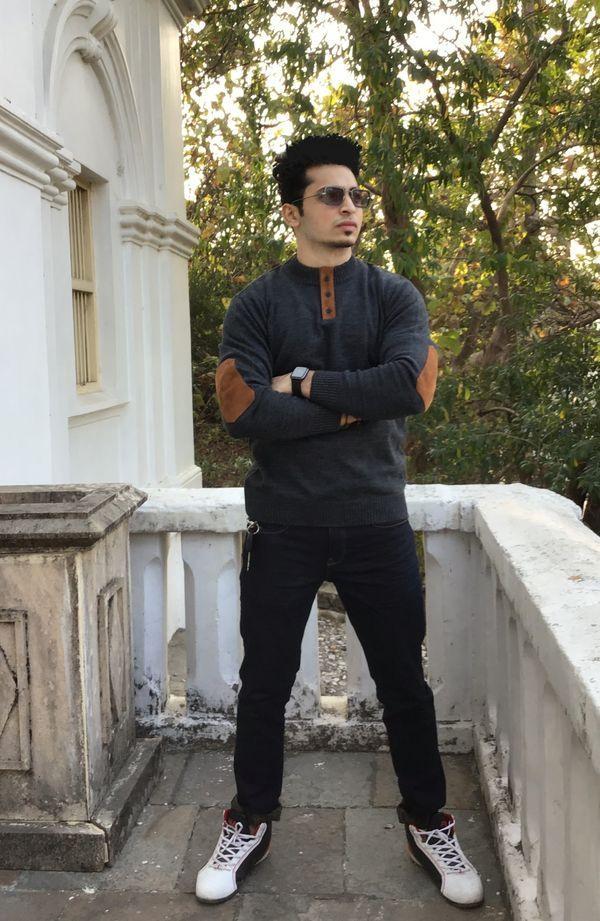
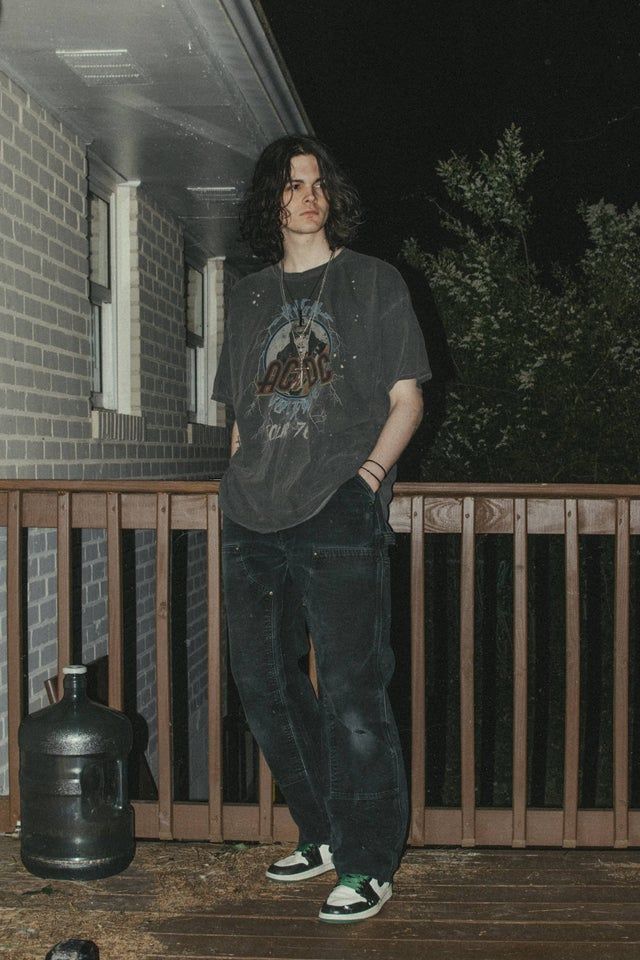
- **Fabric Physics:** The source garment is a vintage-wash, heavyweight cotton jersey t-shirt. It has a matte finish with low specularity (no shine). The physics simulation must account for a "worn-in" softness, meaning it will have smaller, higher-frequency micro-wrinkles compared to the user's current stiff knit sweater. It should drape heavily but loosely, consistent with an oversized fit.
- **Key Features:** The central "AC/DC" graphic with lightning bolt motifs is the primary visual anchor and must be preserved, though warped by the pose. Specific distress marks (small holes/white paint specs on the upper chest and shoulder) must be transferred. The wide, ribbed crew neck collar and the drop-shoulder seam construction are essential structure points. Note: The necklace in the source image is an occlusion and must be removed; only the fabric texture behind it is retained.
PHASE 2: FIT & DRAPE SIMULATION
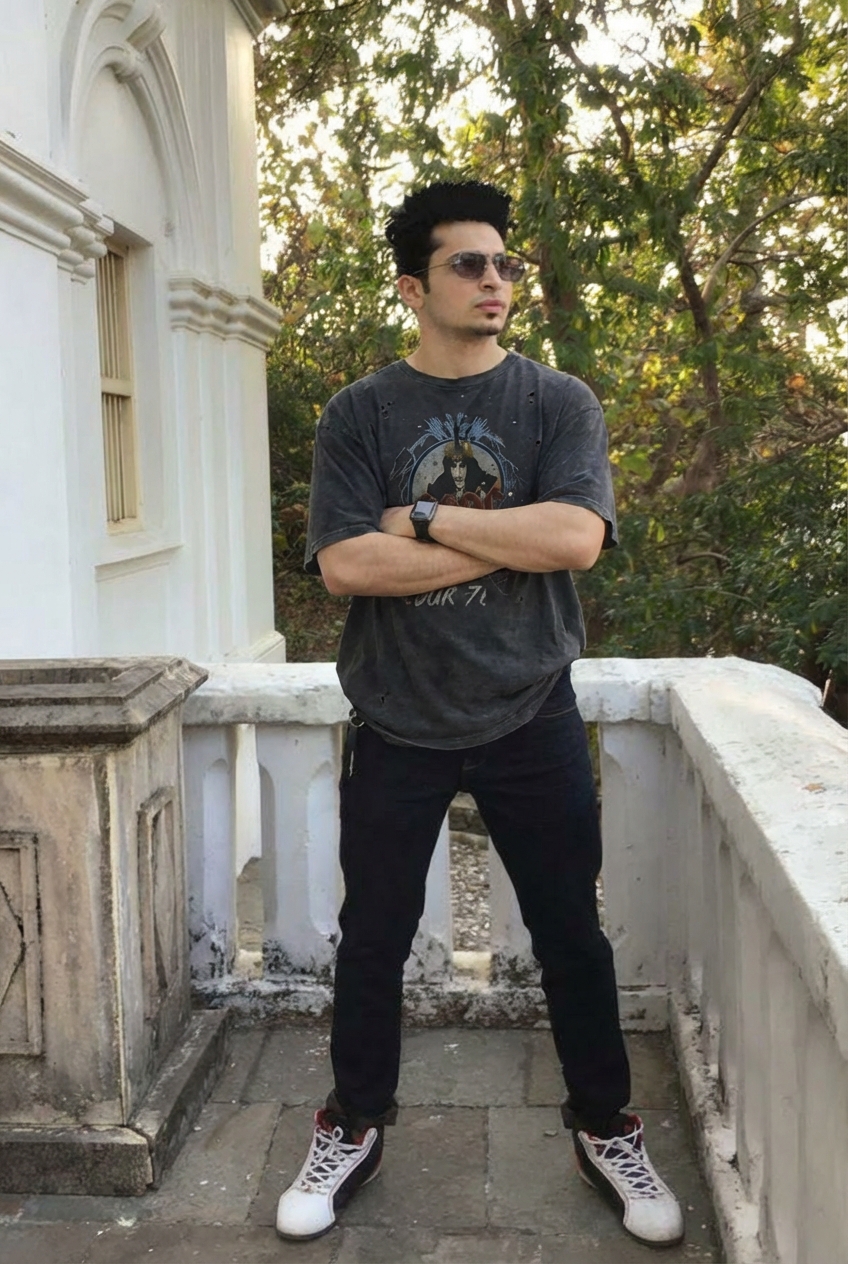
- **Body Mapping:** The user's "arms crossed" pose presents a high-complexity physics challenge. The target t-shirt must appear compressed across the pectorals and midsection due to the pressure of the forearms. The graphic on the chest will be partially obscured and heavily folded/warped where the arms press against the torso. The short sleeves of the source tee must drape naturally over the user's deltoids but terminate before the elbow, interacting with the bicep compression. The hemline should hang straight at the sides but bunch slightly at the waist due to the wide-legged stance.
- **Occlusion Handling:** The user's forearms, hands, and the wristwatch on the left wrist are rigid foreground layers. The generated t-shirt must be rendered strictly *behind* these elements. The user's neck must be masked properly to transition from the new crew neck collar to the skin.
PHASE 3: ENVIRONMENT & LIGHTING
- **Light Match:** The target environment features diffuse, outdoor natural daylight (shaded/overcast) with soft shadows falling downwards. The source image uses harsh, direct flash photography (nighttime). The source texture's contrast must be lowered to remove the "flash burn" effect. The new lighting model must apply soft ambient occlusion in the folds created by the crossed arms and cast soft shadows from the arms onto the stomach area of the shirt.
- **Color Calibration:** The source shirt is a washed black/charcoal. It must be color-graded to match the natural temperature of the outdoor scene, neutralizing the yellow/warm tint of the indoor flash from the source image to match the cooler, greener ambient light of the user's background.
PHASE 4: IDENTITY PROTECTION
- **Facial Lock:** The user's entire head, including the specific hairstyle, sunglasses, facial structure, and facial hair, must remain frozen and pixel-perfect.
- **Body Integrity:** The user's athletic physique and shoulder width must be maintained. The simulation must strictly avoid transferring the "slouched/leaning" posture of the source model. The user's legs (jeans) and shoes must remain untouched; the t-shirt generation stops at the hip/upper thigh line.