Thinking Process
PHASE 1: VISUAL DECONSTRUCTION
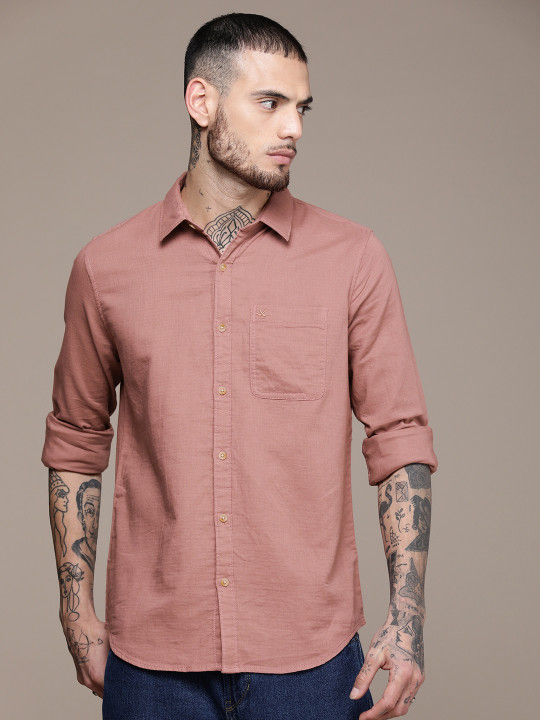
- **Fabric Physics:** The source garment is a woven cotton or linen-blend fabric with a matte finish. Unlike the user's current knit t-shirt, this material has structural rigidity, particularly at the collar, placket, and cuffs. It does not stretch significantly; therefore, the simulation must reflect tensile resistance rather than elasticity. Light interaction should be diffuse with low specularity (no shine).
- **Key Features:** The structured spread collar must replace the current crew neckline. The vertical button placket with brown buttons must align with the user's centerline. The left chest pocket with the small embroidered logo/stitch detail must be preserved. The texture of the "Oxford" style weave needs to be upscaled to match the resolution of the target image.
PHASE 2: FIT & DRAPE SIMULATION
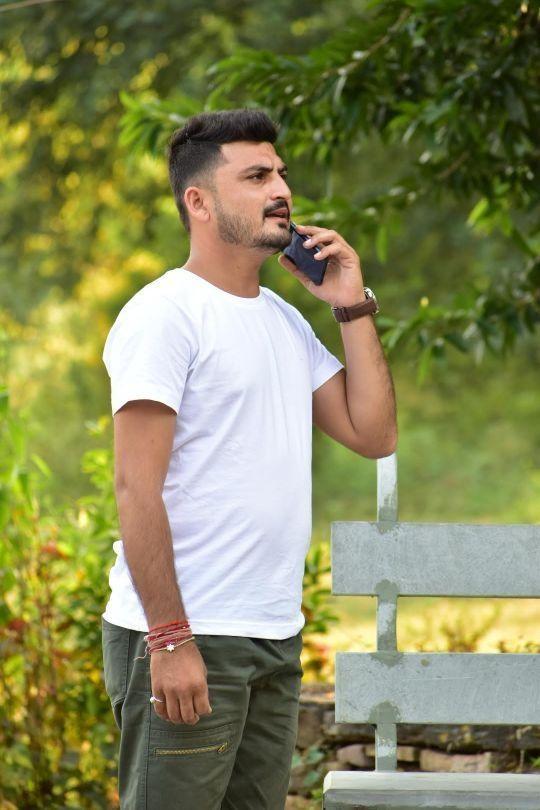
- **Body Mapping:** The garment must accommodate the user's 3/4 turned posture. The fabric should drape vertically from the pectorals, minimizing the "cling" seen in the current white t-shirt around the stomach area to simulate a looser, woven fit. Crucially, high-tension folding must be simulated at the user's left inner elbow (antecubital fossa) due to the acute angle of the arm holding the phone.
- **Occlusion Handling:** The user's left hand, left wrist, and the large brown wristwatch are critical occlusion layers; the shirt sleeve must visually terminate or bunch *behind* the watch, or the watch must be masked to sit *on top* of the sleeve cuff. The red bracelets on the right wrist must also overlay the garment. The user's beard line must layer over the new collar.
PHASE 3: ENVIRONMENT & LIGHTING
- **Light Match:** The target environment features soft, natural outdoor daylight with a greenish cast from the foliage. The primary light source is directional from the upper-right. The new garment must accept shadows cast by the user's raised left arm across the upper chest. Deep occlusion shadows are required under the collar folds and inside the sleeve crumples.
- **Color Calibration:** The source garment is studio-lit (neutral). It must be color-graded to accept the ambient warm sunlight and slight green bounce-light from the surrounding vegetation. The dusty pink/mauve tone must remain distinct but slightly desaturated to match the outdoor contrast levels.
PHASE 4: IDENTITY PROTECTION
- **Facial Lock:** Absolute pixel preservation required for the user's face, hair, beard, and ears. The boundary between the neck and the new collar is the critical blending line; do not alter the neck width or skin tone.
- **Body Integrity:** Strictly forbidden to apply the slim silhouette of the source model to the target user. The volumetric mesh of the shirt must expand to fit the target user's torso and arm circumference without warping the background foliage or slimming the user's waist.