
Thinking Process
PHASE 1: VISUAL DECONSTRUCTION
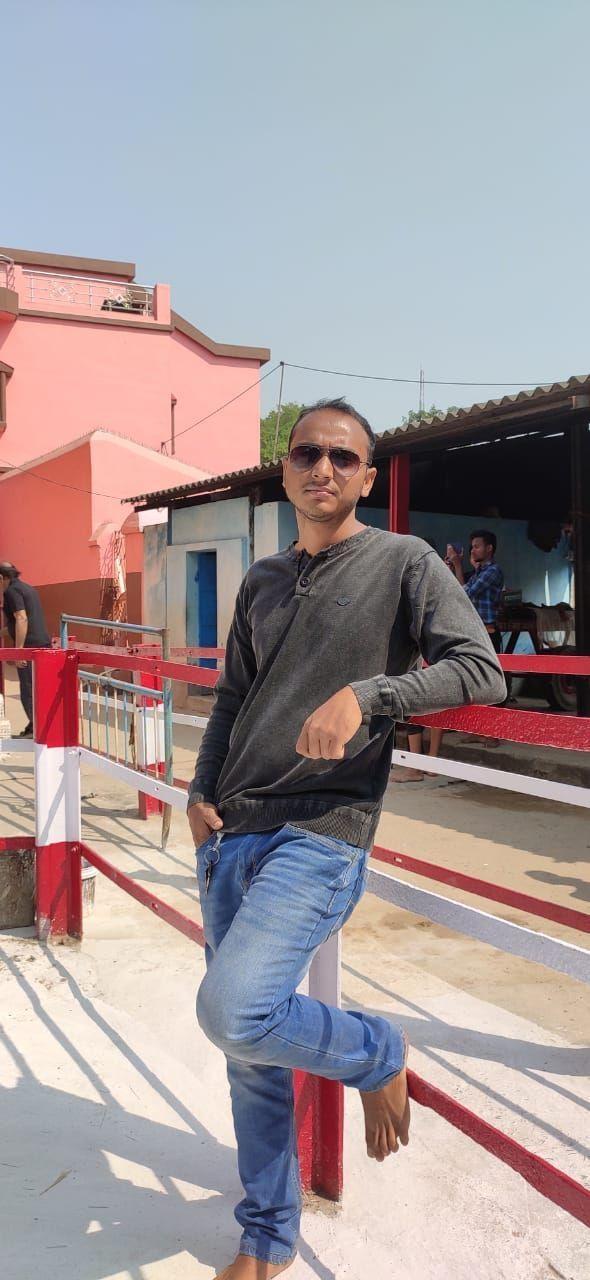
- **Fabric Physics:** The source garment is a standard mid-weight cotton jersey. It possesses a matte finish with low specular reflection. Unlike the user's current textured/waffle-knit henley, the target fabric has a smoother surface tension. It should exhibit soft, pliable folding patterns rather than stiff ridges. Light absorption should be uniform, diffusing bright sunlight without creating plastic-like highlights.
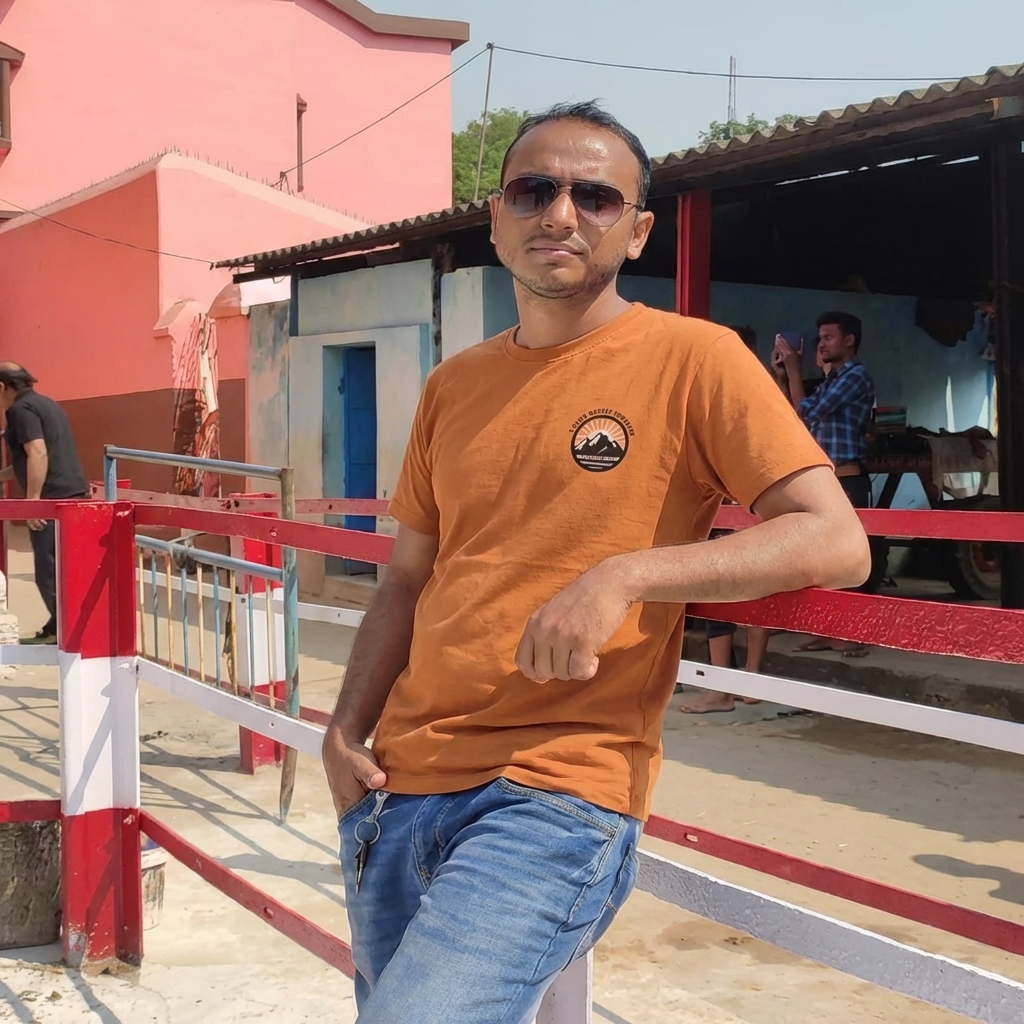
- **Key Features:** The distinct "Vector Lab" circular mountain logo on the left chest must be preserved without distortion. The crew neck collar structure (ribbing thickness) and the specific "burnt orange" hue are critical. The hems on the short sleeves and waist are standard double-stitched and must remain visible.
PHASE 2: FIT & DRAPE SIMULATION
- **Body Mapping:**
- **Shoulder Anchor:** The shirt will hang primarily from the shoulder line, slightly skewed due to the user's leaning posture.
- **Left Side (Railing Lean):** Because the user's left arm is raised and resting on the railing, the fabric must compress and bunch significantly in the left axilla (armpit) region. The side seam should curve inward, conforming to the pressure against the railing.
- **Right Side (Hand in Pocket):** The right arm is bent with the hand in the pocket. This action pulls the fabric taut across the right latissimus dorsi and waist. The hemline on this side will be disrupted, likely bunching slightly above the wrist or draping over the inserted hand.
- **Sleeve Transition:** The simulation must account for the transition from the current long sleeves to the new short sleeves, requiring accurate skin texture estimation for the now-exposed forearms.
- **Occlusion Handling:** The user's right wrist (entering the pocket) is a primary collision point; the garment hem must settle naturally around or over it. The keys hanging from the belt loop on the right hip act as a secondary collision layer—the shirt hem should hang loosely over them, potentially creating a small protrusion bump.
PHASE 3: ENVIRONMENT & LIGHTING
- **Light Match:** The scene utilizes harsh, high-angle natural daylight (sunlight). The lighting direction creates strong, sharp shadows. The new garment must render with high-contrast self-shadowing, particularly under the chest and in the folds generated by the leaning pose.
- **Color Calibration:** The source image is studio-lit (neutral). To integrate into the scene, the orange albedo must be warmed slightly to match the outdoor solar temperature. There should be a subtle warm pink/red bounce light calculation on the left side of the torso, reflecting the ambient color from the adjacent pink building and red railing.
PHASE 4: IDENTITY PROTECTION
- **Facial Lock:** Absolute preservation of the user's facial structure, skin tone, hair, and specifically the sunglasses and their reflection. The neck area above the clavicle must remain seamless.
- **Body Integrity:** The user's leaning skeletal rig must remain unaltered. No slimming of the waist or broadening of the shoulders. The lower body (jeans, bare feet) and the background environment (railing, building, sky) are strictly out of bounds for modification.