Thinking Process
PHASE 1: VISUAL DECONSTRUCTION
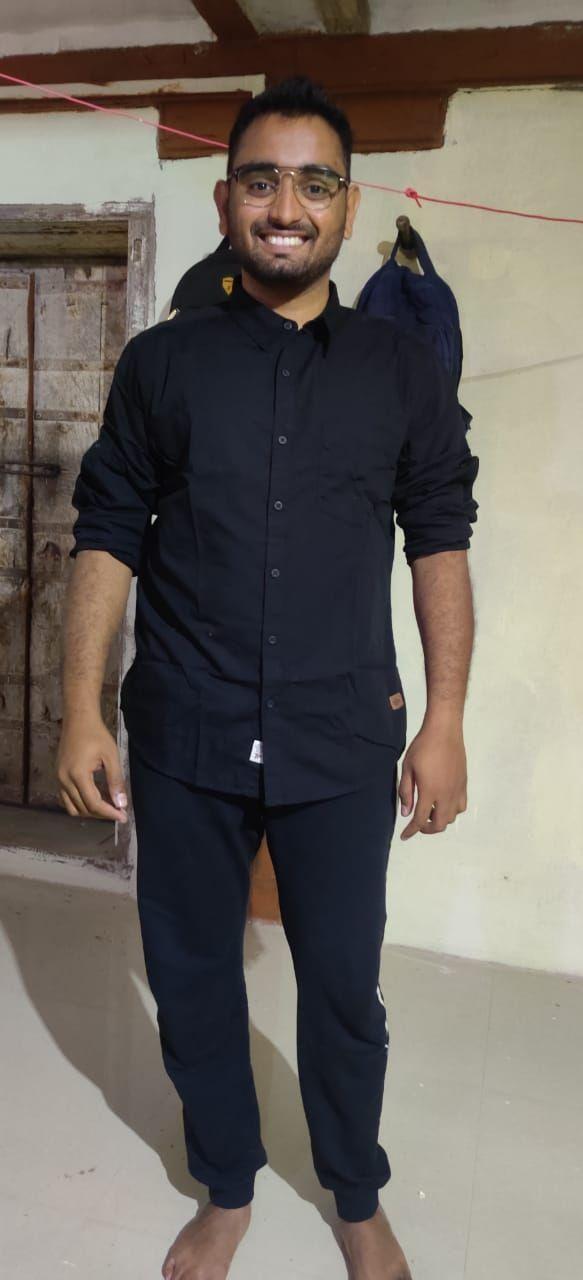
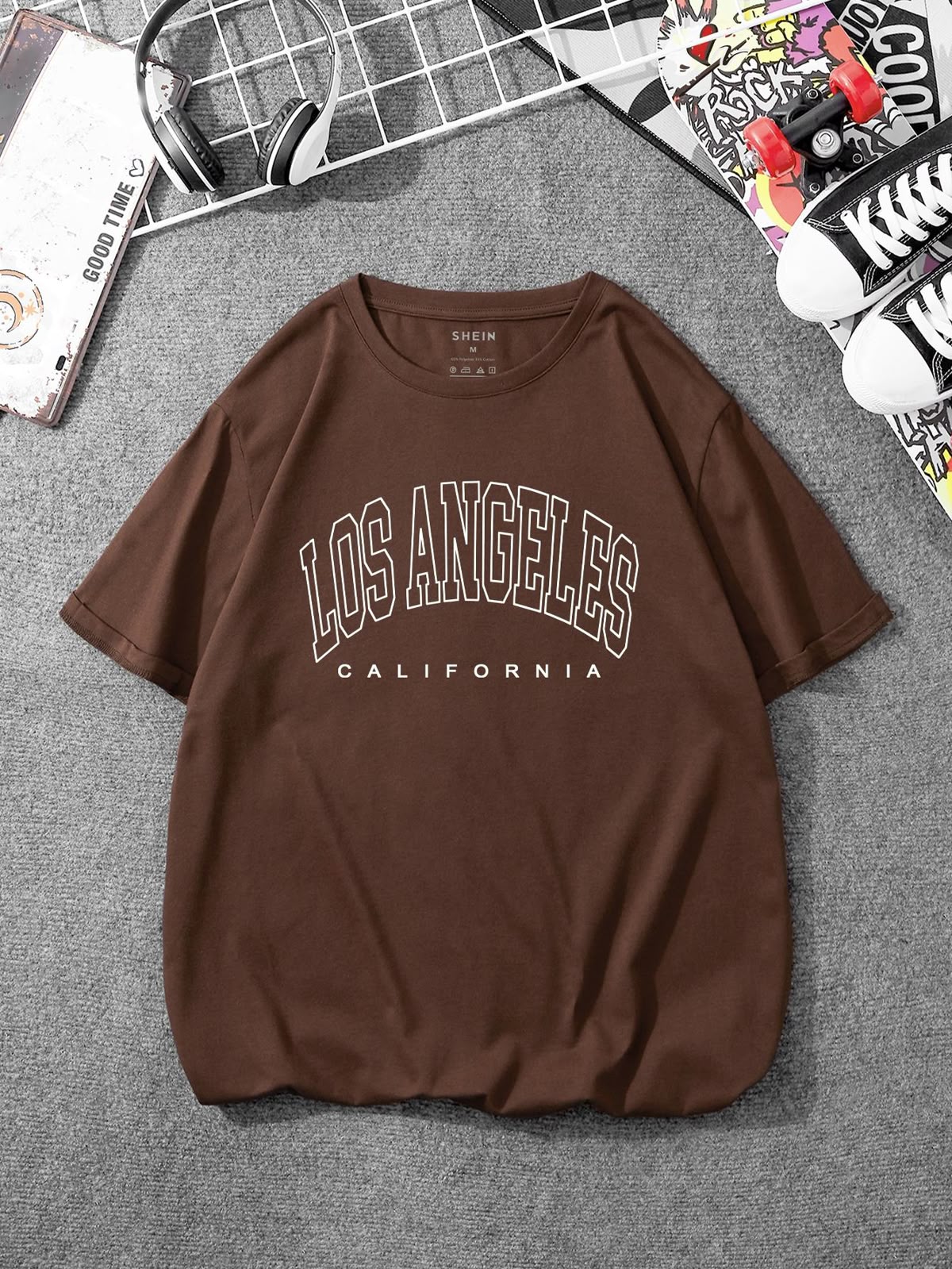
- **Fabric Physics:** The source garment is a cotton jersey knit or cotton-blend. It possesses a high friction coefficient (low sheen/matte finish) and moderate pliability. Unlike the user's current stiff woven button-down, the target T-shirt will not hold rigid creases; it must exhibit soft, rolling folds. It should absorb light rather than reflect it, with no specular highlights.
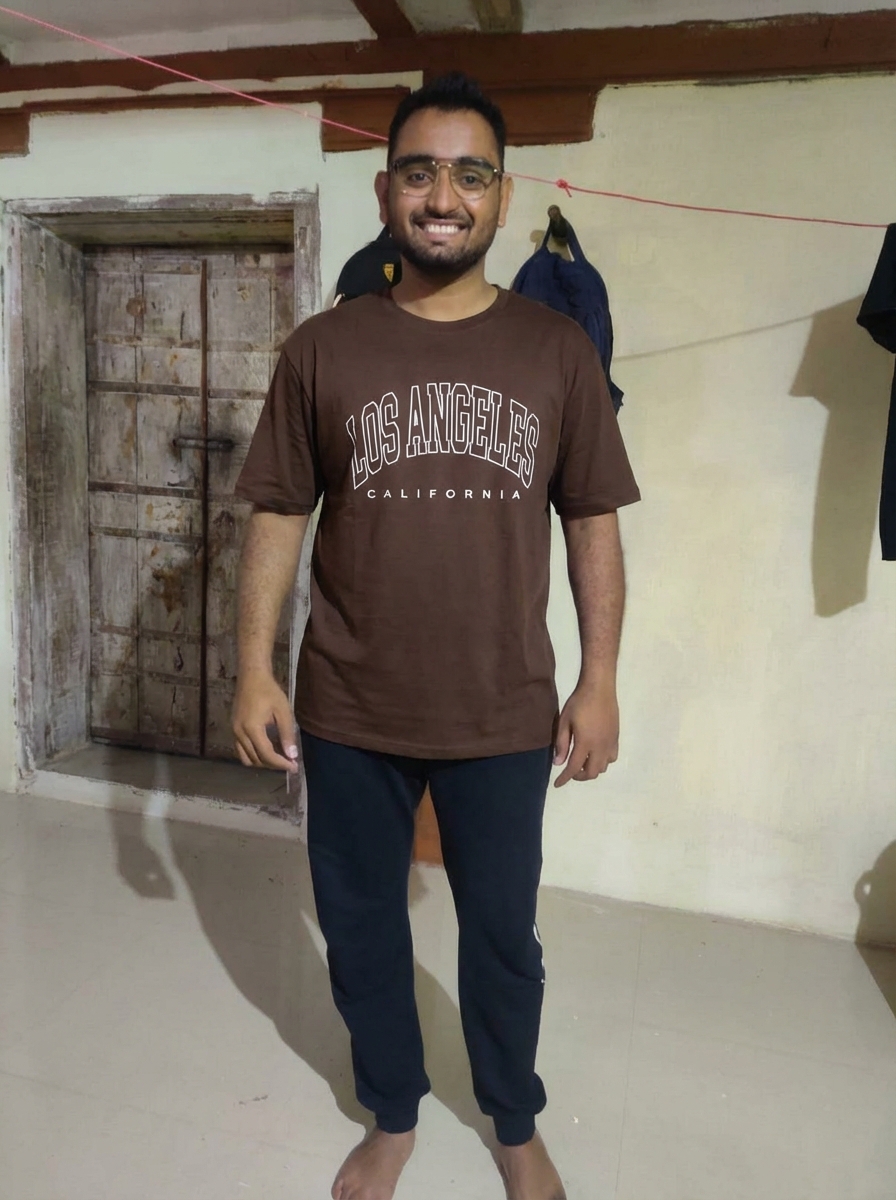
- **Key Features:** The "LOS ANGELES CALIFORNIA" typography with the arched white outline is the critical anchor point; it must remain centered on the sternum. The ribbed crew neckline and the folded/stitched hem on the short sleeves must be preserved. The chocolate/mocha brown hue needs to maintain its saturation without washing out.
PHASE 2: FIT & DRAPE SIMULATION
- **Body Mapping:** The simulation must account for a reduction in volume. The user is currently wearing a structured, collared shirt that adds bulk. The T-shirt must sit closer to the skin, draping from the trapezius and shoulders. Gravity will cause vertical tension lines from the armpits down to the waist. The graphic print must warp slightly across the curvature of the pectoral muscles to demonstrate volume. **Critical:** Since the source is short-sleeved and the target is wearing long sleeves (rolled), the simulation requires generative inpainting to reconstruct the user's upper arms (biceps/triceps) where the new sleeve ends and the old sleeve covered.
- **Occlusion Handling:** The user's beard creates a minor occlusion risk near the neckline; the new crew neck sits lower than the current collar, so the neck area below the beard requires accurate skin texture generation. There are no hand or hair occlusions over the main torso area.
PHASE 3: ENVIRONMENT & LIGHTING
- **Light Match:** The target environment utilizes hard, top-down artificial lighting, casting sharp shadows downward (evident under the user's chin and current hemline). The new garment must render with self-shadowing under the chest and folds, consistent with a light source positioned directly above. The flat lighting of the source image must be completely replaced by this directional room lighting.
- **Color Calibration:** The user's room has a warm, yellow-cream wall tone but the light source appears cool/neutral white. The brown of the shirt must pick up slight ambient occlusion from the skin tone but generally maintain a cooler contrast to stand out against the beige walls.
PHASE 4: IDENTITY PROTECTION
- **Facial Lock:** Absolute freeze required on the user's facial geometry, specifically the glasses frames, eyes, and the beard line. The transition from the generated neck skin to the existing beard must be seamless.
- **Body Integrity:** The user's shoulder width and waist circumference must remain unaltered. The simulation must not slim the waist or broaden the shoulders artificially; the silhouette should only change to reflect the thinner fabric thickness, not a change in body mass.