Thinking Process
PHASE 1: VISUAL DECONSTRUCTION
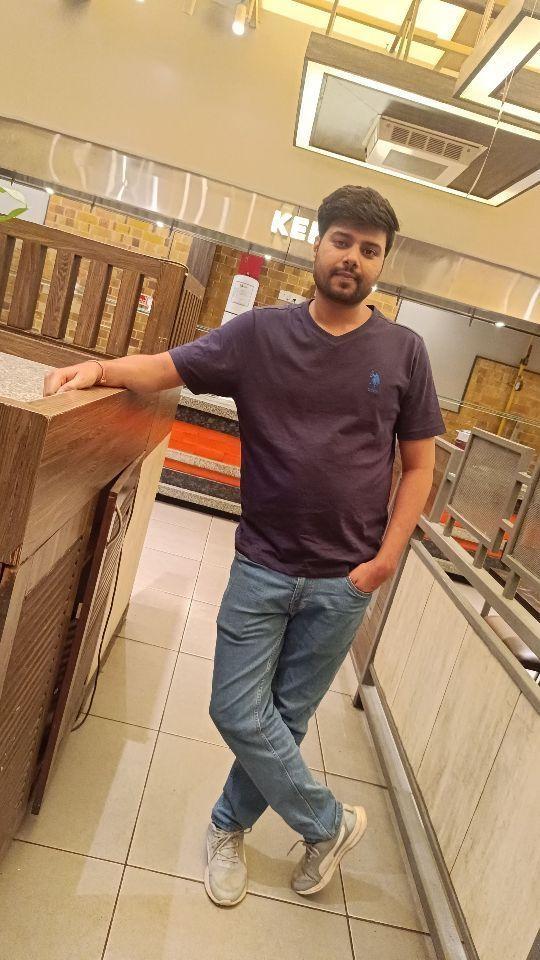
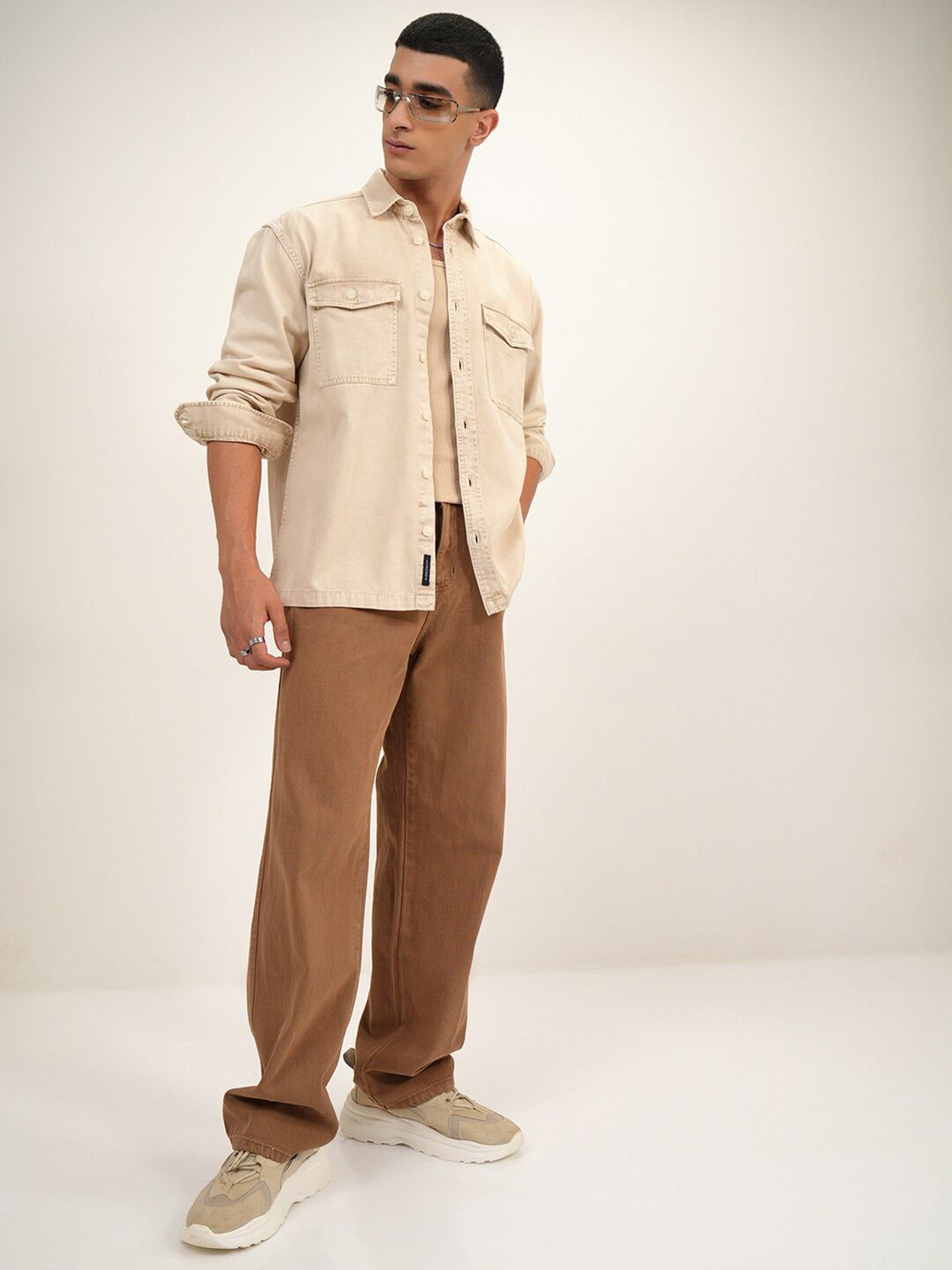
- **Fabric Physics:** The source garment is a structured, heavy-weight cotton or lightweight denim overshirt (shacket) in beige. Unlike the user's current soft-knit t-shirt, this material has high structural rigidity and low elasticity. It creates hard folds rather than soft ripples. Light interaction should be diffuse and matte; there is no specular highlight, but the texture of the twill weave must be visible.
- **Key Features:** The open-front styling is critical. The simulation must preserve the collar structure, the two breast pockets with button flaps, the visible front placket buttons, and the specific rolled-up sleeve cuffs. The beige ribbed undershirt visible in the source image should be included as a secondary layer or the overshirt must be rendered closed depending on the VTO model's layering capability (assuming open transfer to match source style).
PHASE 2: FIT & DRAPE SIMULATION
- **Body Mapping:**
- **Shoulders & Chest:** The garment must sit wider on the user's shoulders than the current t-shirt to simulate the "overshirt" fit.
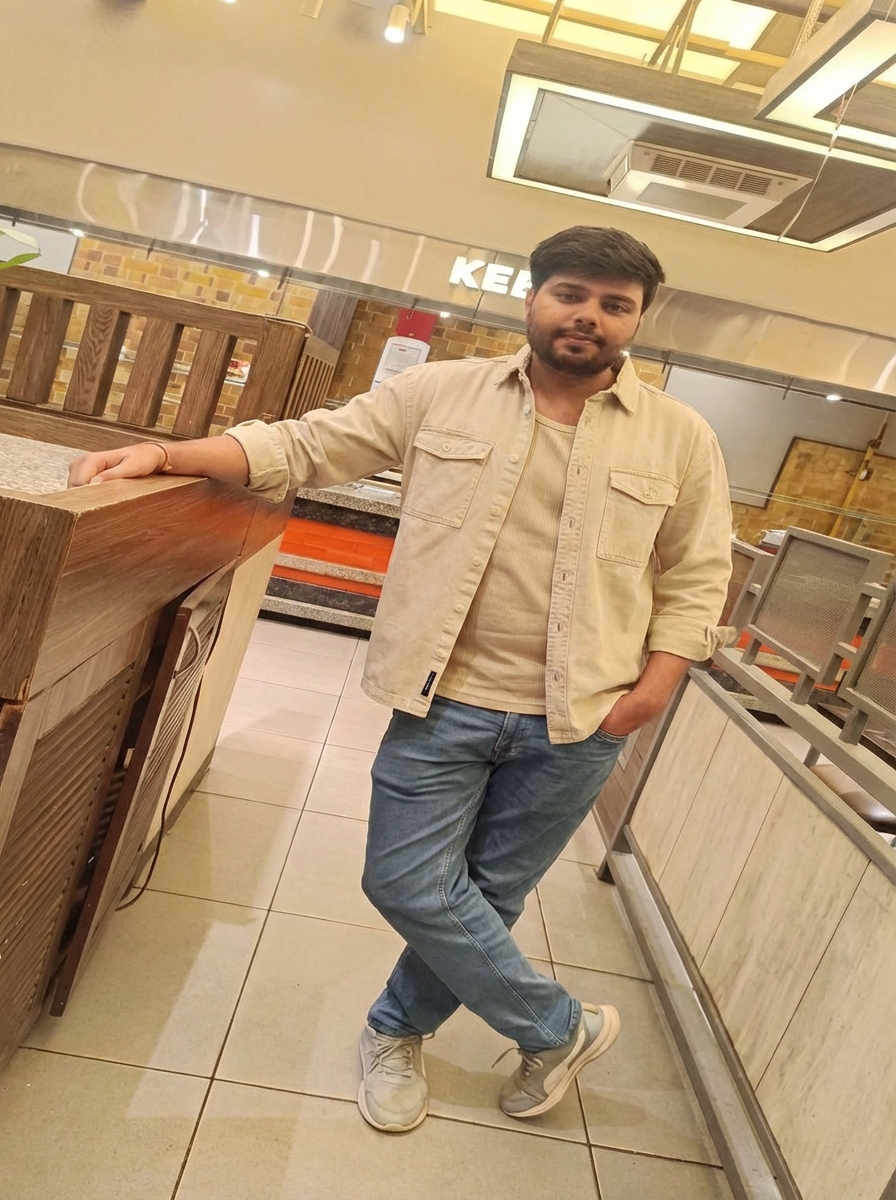
- **Torso Dynamics:** Due to the user leaning to his right on the counter, the right side of the open shirt must compress and bunch slightly at the waist/hip interface. The left side of the shirt (away from the counter) should hang vertically due to gravity, draped over the left hip.
- **Sleeves:** The source garment has rolled sleeves. These must volumetrically surround the user's biceps, sitting slightly looser than the current tight t-shirt sleeves.
- **Occlusion Handling:**
- **Right Arm/Counter:** The user's right arm rests on a wooden structure. The new garment's sleeve and right hem must clip accurately against this surface, not phasing through the wood.
- **Left Hand:** The user's left hand is in his pocket. The hem of the new shirt must interact here—either draping *over* the wrist or bunching slightly behind the forearm. It cannot cover the hand inside the pocket.
PHASE 3: ENVIRONMENT & LIGHTING
- **Light Match:** The user is in a warm, artificial indoor environment (approx. 3000K-3500K lighting) with overhead sources creating down-shadows. The source image is cool studio lighting. The beige garment must be color-graded with a yellow/orange tint to match the ambient food court lighting.
- **Color Calibration:** The brightness of the beige shirt must be lowered slightly to account for the indoor exposure, preventing it from looking "glowy" or superimposed. Shadows cast by the collar onto the neck and by the shirt hem onto the jeans must match the soft, diffuse shadows seen under the user's current chin.
PHASE 4: IDENTITY PROTECTION
- **Facial Lock:** Absolute freeze required on the user's facial features, beard, hairstyle, and the skin tone of the neck above the clavicle. The user's glasses (if any—none visible, but standard protocol applies) and watch/bracelet on the right wrist must be preserved.
- **Body Integrity:** Strictly forbidden to alter the user's BMI or body shape to match the source model. The user's torso volume, shoulder width, and the specific angle of the crossed legs must remain untouched. The garment fits the man; the man does not change to fit the garment.