Thinking Process
PHASE 1: VISUAL DECONSTRUCTION
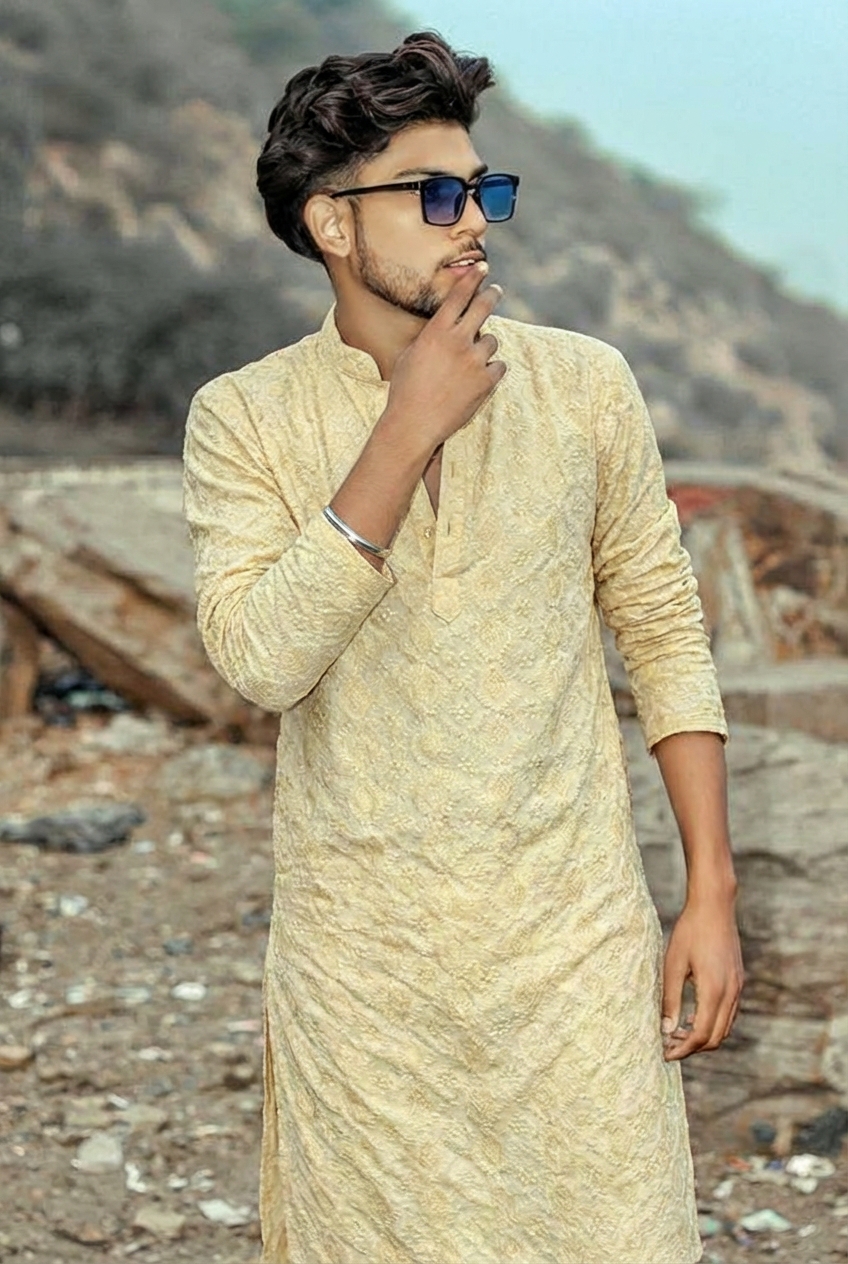
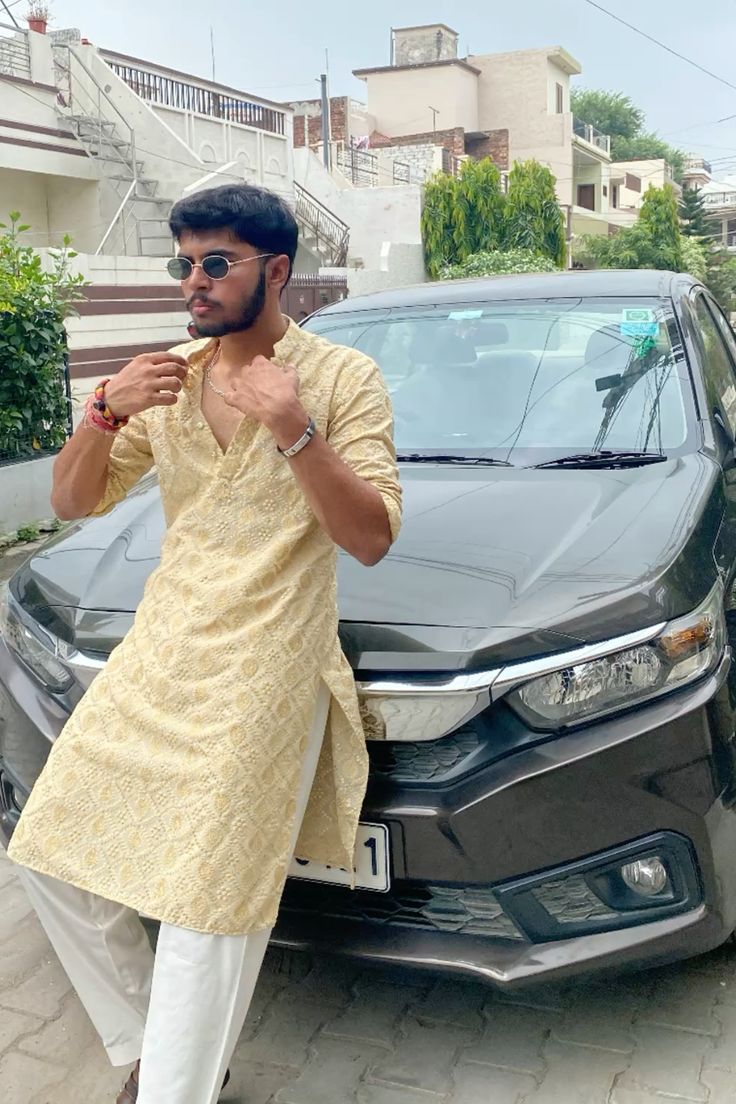
- **Fabric Physics:** The source garment is a textured Kurta, likely a cotton-silk blend or linen with Chikankari-style embroidery. Unlike the user's current knit sweater, this fabric has low elasticity and medium stiffness. It should behave as a woven fabric: draping vertically with distinct, sharp folds rather than stretching over muscles. It requires a matte finish with subtle specular highlights only on the embroidery threads to capture the texture depth.
- **Key Features:** The Mandarin collar and the V-split neckline must be preserved. The intricate geometric/floral self-pattern (embroidery) is the defining texture and must remain high-frequency. The hemline is significantly longer than the current sweater (tunic length), likely ending mid-thigh with side slits (chaak).
PHASE 2: FIT & DRAPE SIMULATION
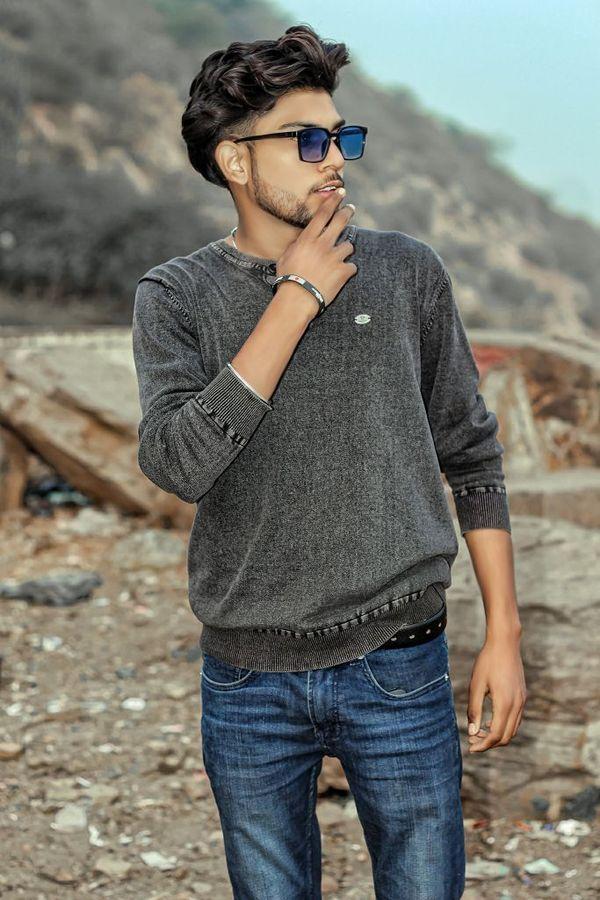
- **Body Mapping:** Due to the user's bent right arm (acute angle at the elbow), the non-elastic Kurta sleeve must exhibit significant compression wrinkles (bunching) at the inner elbow (antecubital fossa) and tension lines radiating across the bicep. The torso fit should be relaxed and straight, creating an "air gap" between the fabric and the user's abdomen, unlike the current form-fitting sweater. Gravity will pull the excess fabric downward, not inward.
- **Occlusion Handling:** CRITICAL: The user's right hand (touching the chin) and the silver bracelet on the right wrist are major occlusion layers. The new sleeve cuff must end *under* the bracelet or drape naturally around the forearm, ensuring the hand and wrist remain the top-most layer. The user's hair volume at the nape of the neck must overlap the collar.
PHASE 3: ENVIRONMENT & LIGHTING
- **Light Match:** The User Image features soft, diffuse outdoor lighting (likely overcast or shaded daylight) coming primarily from the front-left. The source Kurta is currently in bright, high-contrast daylight. The rendered Kurta must have its exposure lowered and shadows softened. Ambient occlusion needs to be generated under the collar and where the sleeve bunches at the elbow to ground the garment.
- **Color Calibration:** The source yellow is too vibrant for the target scene's desaturated, "moody" color palette. The Kurta's saturation must be reduced by approximately 15-20%, and the white balance shifted slightly cooler (towards blue/cyan) to integrate seamlessly with the grey/brown background tones.
PHASE 4: IDENTITY PROTECTION
- **Facial Lock:** The user's hair architecture, sunglasses, nose, mouth, facial hair, and jawline are strictly frozen. The interaction between the fingers and the chin must remain pixel-perfect.
- **Body Integrity:** The user's shoulder width and skeletal pose must remain unchanged. No slimming of the torso is permitted; however, the silhouette will naturally widen slightly due to the transition from a tight sweater to a loose-fitting Kurta. The jeans and background below the new hemline must be preserved.