Thinking Process
PHASE 1: VISUAL DECONSTRUCTION
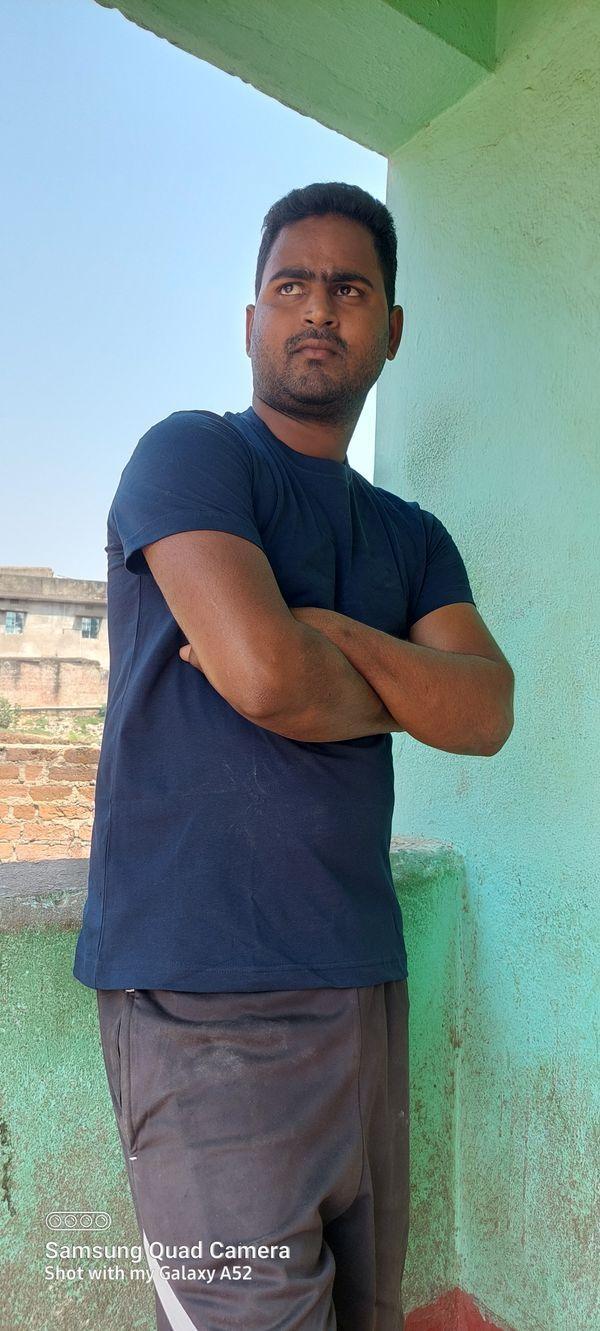
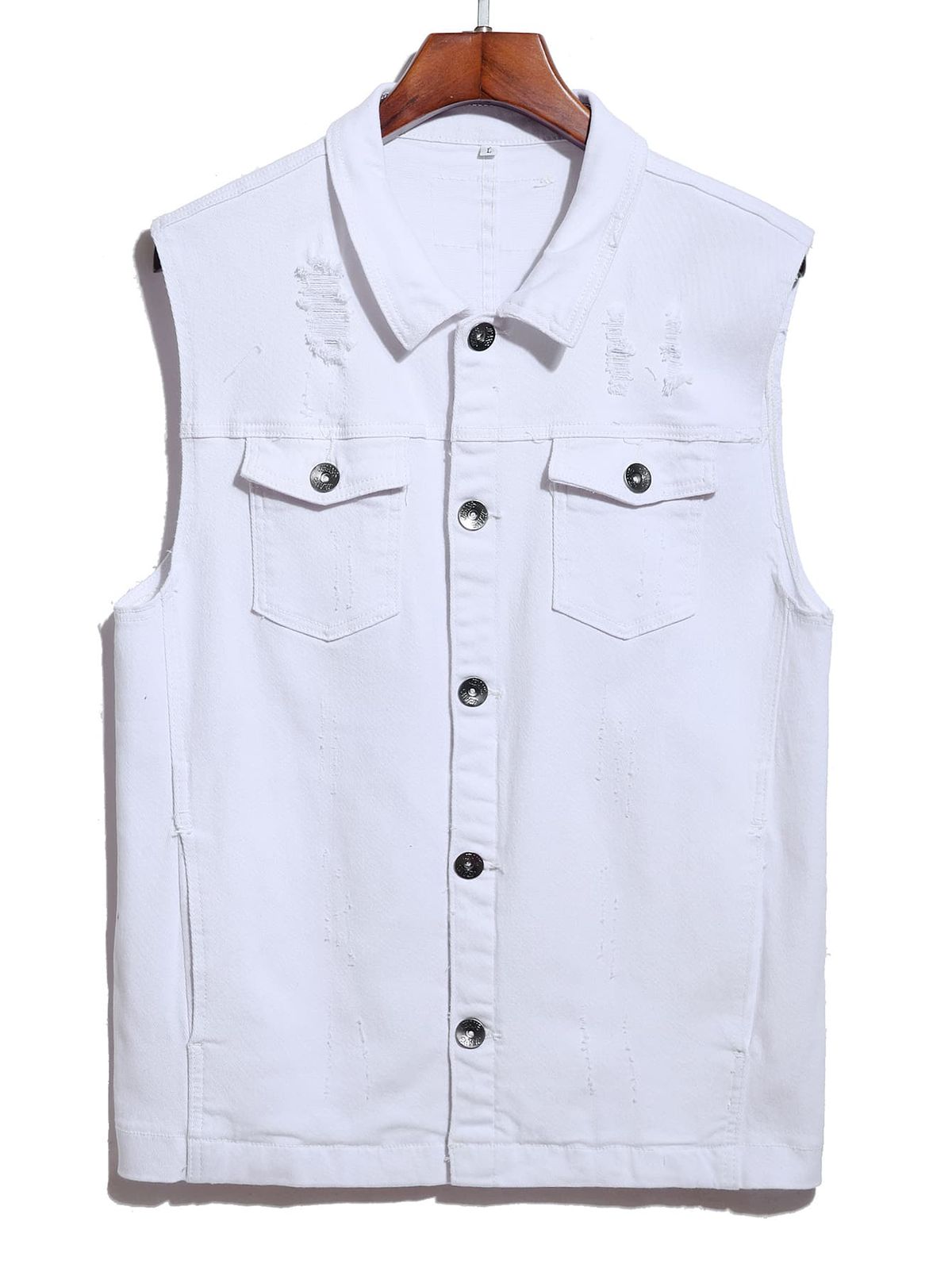
- **Fabric Physics:** The source material is heavyweight, non-stretch white denim. Unlike the user's current cotton t-shirt, this fabric possesses high structural rigidity. It will not cling to the skin but rather bridge over body contours. The fabric has a matte finish but high albedo (reflectivity) due to the white color, meaning it will strongly pick up environmental colors. The metal buttons require sharp, specular highlights.
- **Key Features:** The distinctive "distressed" friction marks and rips on the upper chest panels must be rendered with depth (normal mapping). The collar is structured and must stand slightly away from the neck, not lie flat like a t-shirt crew neck. The sleeveless armholes have a specific hem thickness that must be visible. Chest pocket flaps and dark silver buttons act as anchor points for visual tracking.
PHASE 2: FIT & DRAPE SIMULATION
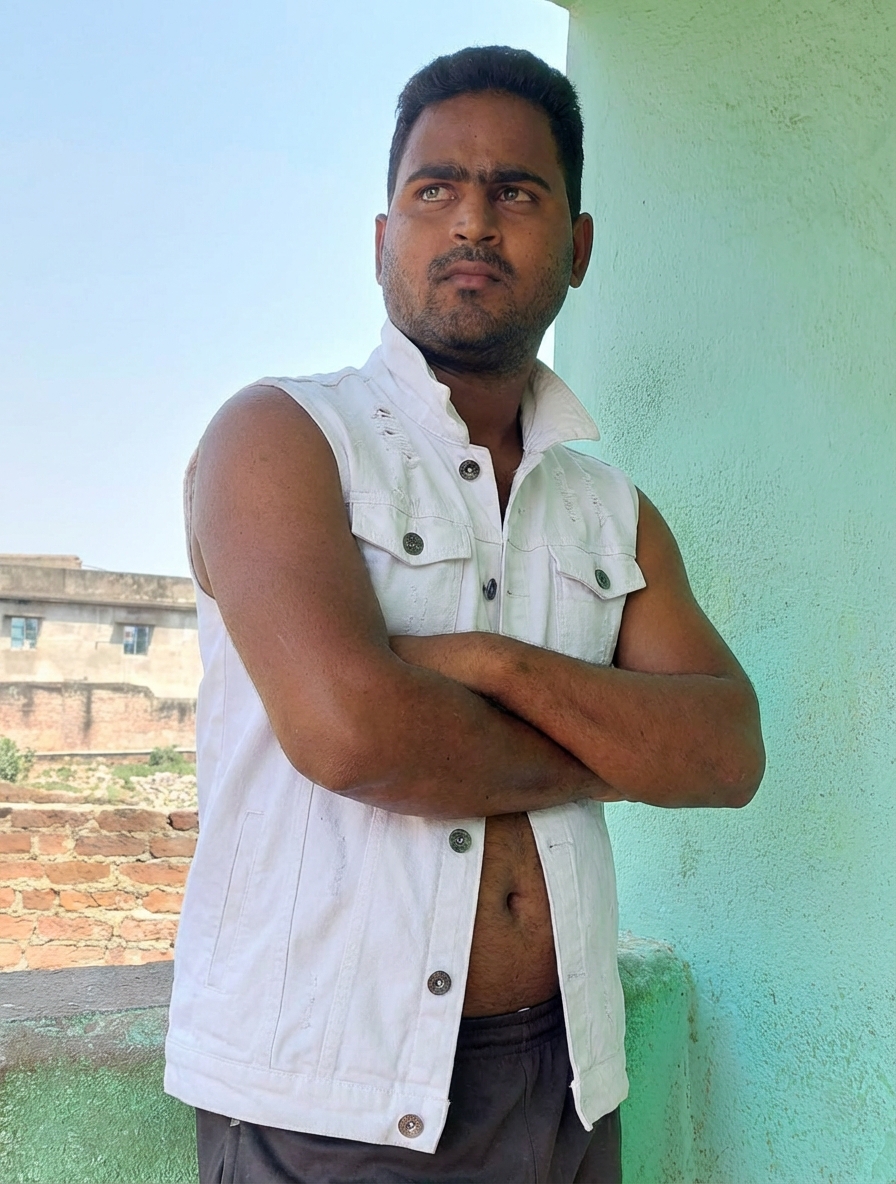
- **Body Mapping:** The user's crossed-arm pose creates significant tension across the midsection and upper back. However, because denim is stiff, the vest should not bunch into micro-folds inside the elbow crease like the current t-shirt. Instead, the vest should maintain a boxy silhouette, bulging slightly outward at the chest rather than collapsing inward. The collar must align with the trapezoids, maintaining the garment's vertical structural integrity despite the arms pressing against the torso.
- **Occlusion Handling:** **CRITICAL:** The user's forearms and hands are crossing directly over the stomach/diaphragm area. The vest simulation must undergo "depth culling" here. The garment must appear to pass *behind* the crossed arms. Since the source is sleeveless and the target has sleeves, the system must in-paint/generate bare skin on the user's deltoids and biceps to replace the blue t-shirt sleeves, ensuring the skin tone matches the user's face and forearms.
PHASE 3: ENVIRONMENT & LIGHTING
- **Light Match:** The scene utilizes natural outdoor daylight, seemingly overcast or indirect sunlight coming from the upper left. The white denim must be exposed brightly but not blown out. The crossed arms must cast realistic, soft ambient occlusion shadows onto the stomach area of the vest.
- **Color Calibration:** There is a strong color spill from the mint-green wall on the user's left (right side of the image). The white denim is a reflective surface; it **MUST** exhibit a subtle green tint/bounce light on the corresponding side to integrate the subject into the environment physically.
PHASE 4: IDENTITY PROTECTION
- **Facial Lock:** The user's entire head, including the jawline, facial hair stubble, and hairline, must remain frozen. The neck area above the collarbone requires careful masking to ensure the new collar sits naturally without altering the neck width.
- **Body Integrity:** The user has a solid, medium build. The simulation must not use a generic "slim" mannequin mesh. The volume of the biceps and the breadth of the shoulders must remain identical to the original image to maintain the user's physical identity. Do not alter the waist width where the track pants meet the torso.