Thinking Process
PHASE 1: VISUAL DECONSTRUCTION
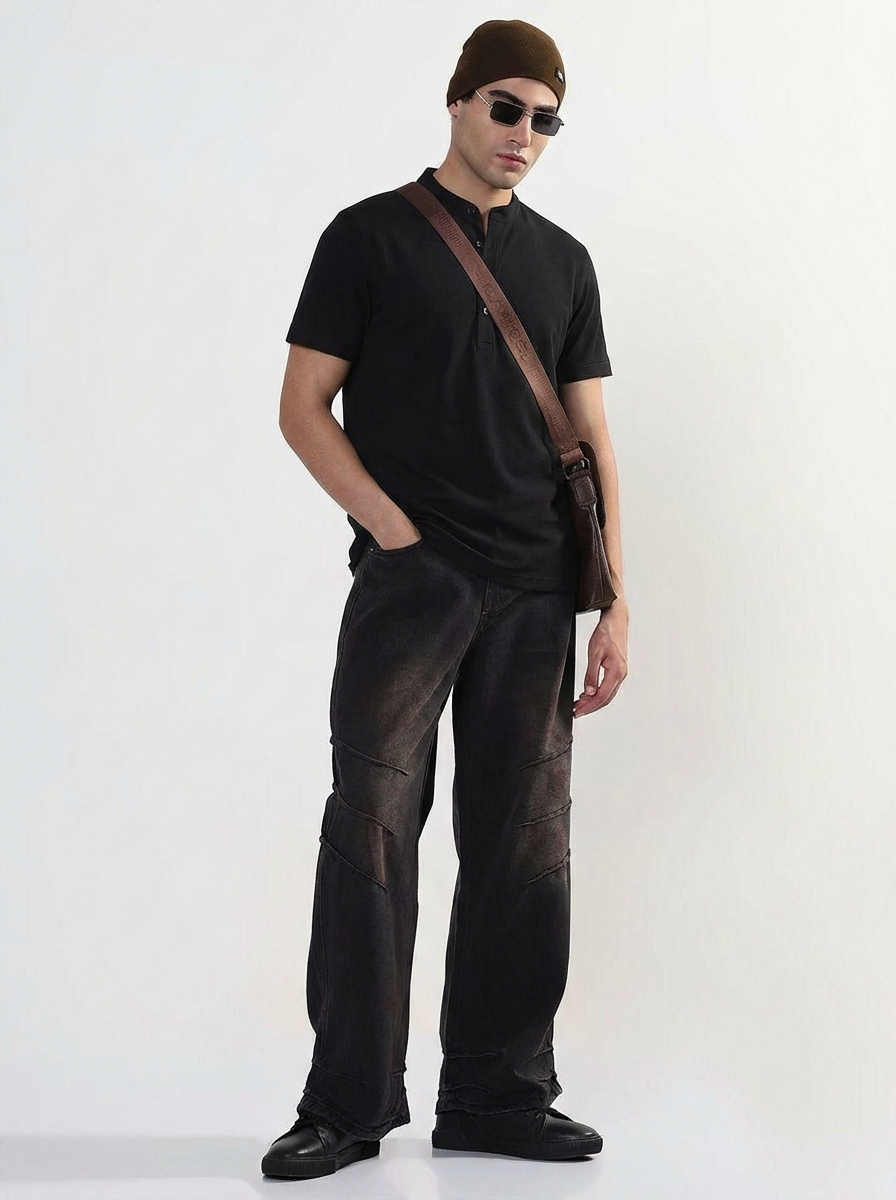
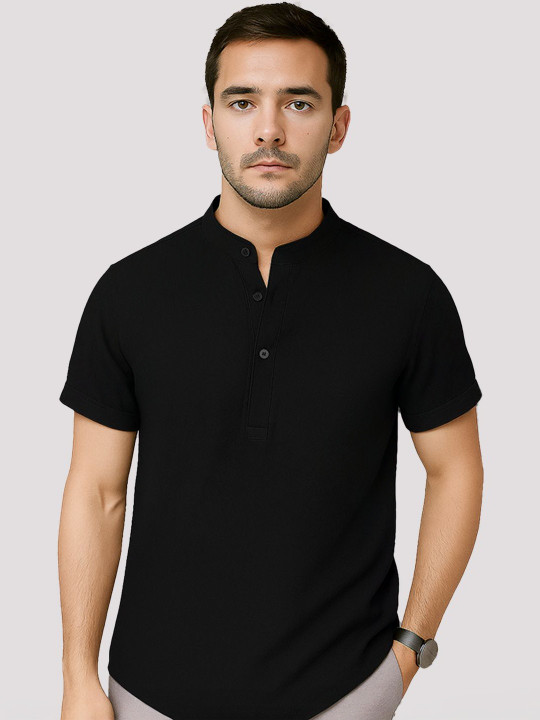
- **Fabric Physics:** The source garment appears to be a cotton or cotton-blend jersey with a potential waffle or rib-knit texture. It has a matte finish with low light reflectivity. The physics engine must simulate "medium weight" drapery—heavier than a silk shirt but softer than denim. It should absorb light rather than reflect it, maintaining a deep black value while preserving texture visibility in highlighted areas.
- **Key Features:**
- **Mandarin/Band Collar:** The standing collar design must be preserved and correctly fitted around the target's neck, replacing the current crew neck.
- **Button Placket:** The vertical placket with visible buttons must remain centered on the chest.
- **Sleeve Cuffs:** The rolled or hemmed edge of the short sleeves needs to be retained.
- **Texture:** The subtle grain of the black fabric must be transferred to avoid looking like a flat black mask.
PHASE 2: FIT & DRAPE SIMULATION
- **Body Mapping:**
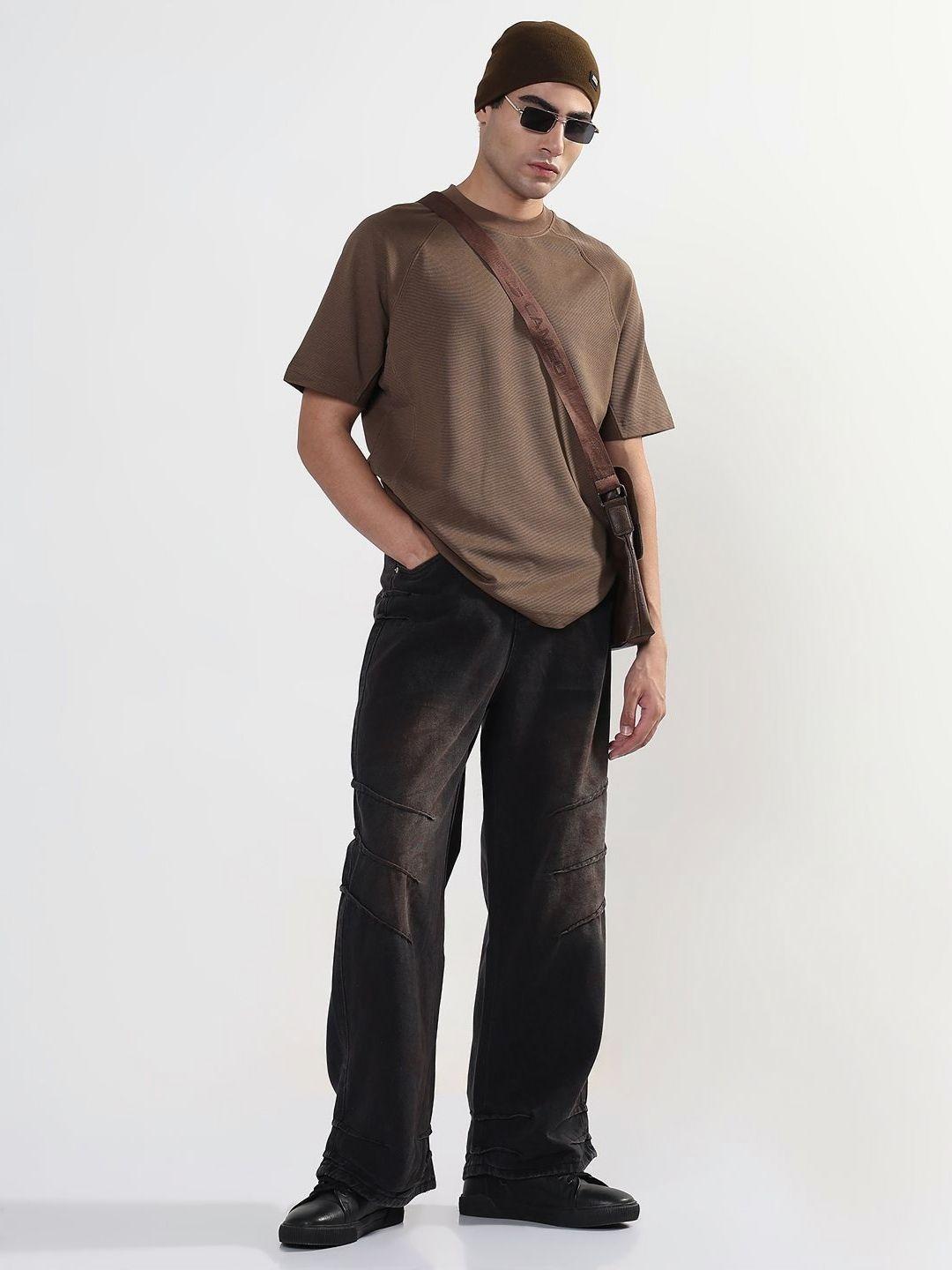
- The target user has a relaxed, slight contrapposto stance. The garment must drape vertically from the shoulders, with a slight tension pull across the chest due to the pose.
- **Strap Interaction (CRITICAL):** The fabric physics must simulate compression under the cross-body bag strap running from the left shoulder to the right hip. The shirt must appear to be *pressed in* by the strap, creating stress folds radiating outward from the strap line.
- **Hemline Interaction:** The user's right hand (viewer's left) is in the pocket. The lower hem of the Henley must bunch slightly above the wrist or tuck naturally behind the forearm on that side, rather than hanging straight down.
- **Occlusion Handling:**
- **The Cross-Body Strap:** This is the primary occlusion. The bag strap must be segmented and layered *over* the generated black Henley. The new shirt cannot obscure the strap.
- **The Bag:** The leather bag on the hip must remain visible and occlude the bottom corner of the shirt.
- **Hands/Arms:** Both arms are visible; the sleeve termination points must blend seamlessly with the user's skin without "ghosting" the old brown sleeves.
PHASE 3: ENVIRONMENT & LIGHTING
- **Light Match:**
- The target scene utilizes soft, diffuse studio lighting, originating primarily from the top-left (indicated by the shadow on the floor to the right and highlights on the beanie).
- The new black garment requires specular highlighting on the left shoulder (viewer's left) and upper chest to define the 3D form; otherwise, the black fabric will lose dimension. Shadows should deepen under the right arm and along the right side of the torso.
- **Color Calibration:**
- The source image is warmer than the target image. The black of the Henley should be color-graded to a neutral/cool black to match the clean, white-background studio aesthetic of the User Image. Ensure black levels match the density of the user's dark sunglasses and jeans shadows.
PHASE 4: IDENTITY PROTECTION
- **Facial Lock:** Absolute freeze required on the user's face, including the beanie, sunglasses, nose, lips, and jawline. The neck area above the new collar line must match the user's skin tone exactly.
- **Body Integrity:** The user's arm musculature and skin tone must be preserved. Do not slim the torso or arms to match the source model; the garment must expand to fit the target user's specific build. The waistline and the transition to the wide-leg jeans must remain unaltered.