Thinking Process
PHASE 1: VISUAL DECONSTRUCTION
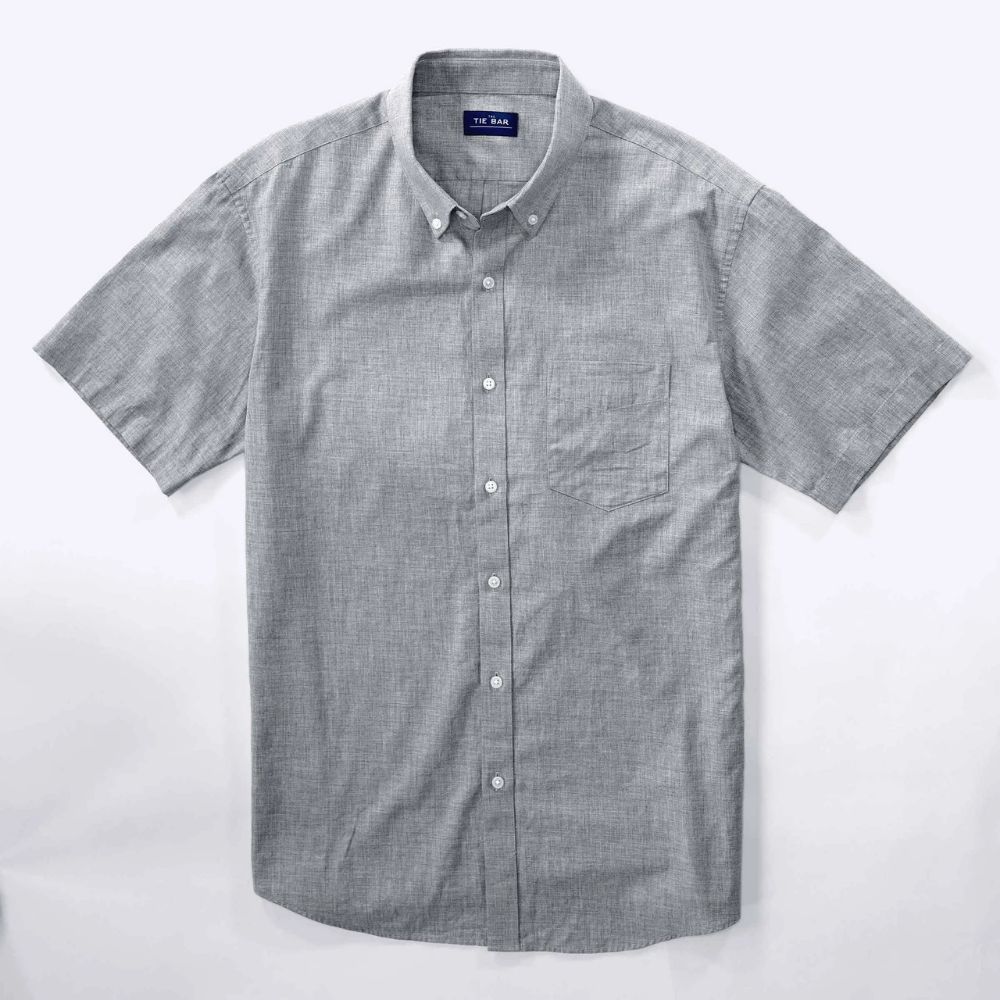
- **Fabric Physics:** The source garment is a heathered grey button-down, likely a Cotton Oxford or Linen blend. It possesses a medium structural stiffness (collar stands, cuffs hold shape) but is lightweight. It has a matte finish with diffuse light scattering; it should absolutely not look shiny or synthetic. The texture is defined by a cross-hatch weave which must be visible.
- **Key Features:** The specific melange/heathered noise pattern of the grey fabric is critical for realism. The single chest pocket on the wearer's left side, the white pearlescent buttons, and the button-down collar points must be preserved. The curved bottom hemline must be maintained if worn untucked.
PHASE 2: FIT & DRAPE SIMULATION
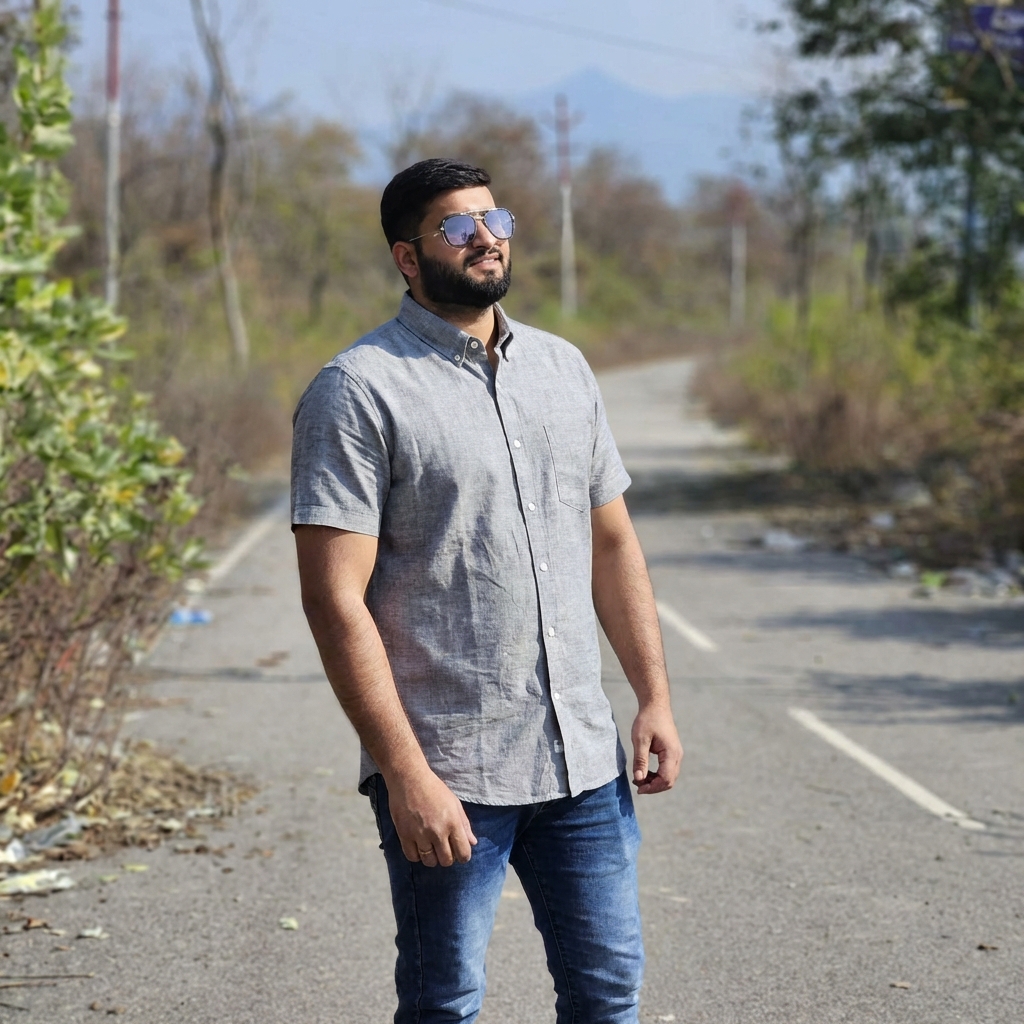
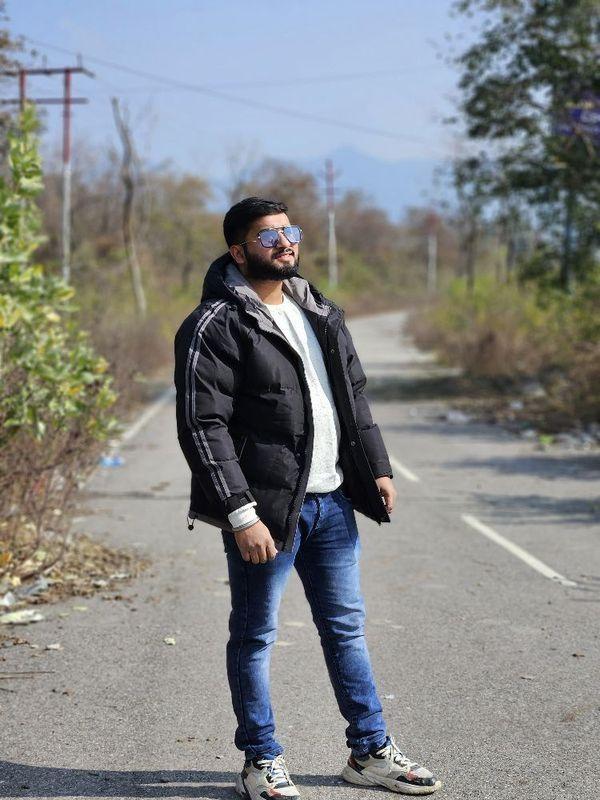
- **Body Mapping:** This is a high-complexity volume reduction transfer. The user is currently wearing a high-volume puffer jacket. The simulation must estimate the underlying torso boundary, significantly reducing the silhouette volume to match the thinness of the cotton shirt. The shirt should hang loosely over the shoulders and chest, tapering slightly at the waist but not clinging. *Crucial:* The source shirt is short-sleeved, while the target user has long sleeves covered by the jacket. Realistic skin texture and arm anatomy must be generated for the exposed forearms and elbows.
- **Occlusion Handling:** The user's beard creates a lower-jaw occlusion that must overlap the new collar. The user's hands are positioned near the hips/thighs; if the shirt is untucked, the hemline must naturally interact with or fall behind the hands depending on depth depth estimation. The sunglasses are a hard occlusion and must remain untouched.
PHASE 3: ENVIRONMENT & LIGHTING
- **Light Match:** The target environment is bright, outdoor daylight with a high sun angle. The light source is coming from the upper left (viewer's perspective), creating sharp, directional shadows. The new shirt must cast self-shadows in the folds on the right side of the torso. High-contrast shading is required to match the hard lighting of the outdoor scene.
- **Color Calibration:** The source cloth is studio-lit (neutral/cool white). It must be warmed slightly to match the sunlight on the shoulders, while the shadow areas of the shirt should adopt a subtle cool blue tint to reflect the ambient skylight of the outdoor setting.
PHASE 4: IDENTITY PROTECTION
- **Facial Lock:** The entire head region, specifically the beard line, jaw structure, hairstyle, and the reflection in the sunglasses, must be frozen and pixel-preserved.
- **Body Integrity:** While the total visual volume will decrease (due to removing the puffer jacket), the user's shoulder width and skeletal hip width must remain constant. Do not slim the user's actual anatomical frame, only remove the excess padding of the original jacket.