Thinking Process
PHASE 1: VISUAL DECONSTRUCTION
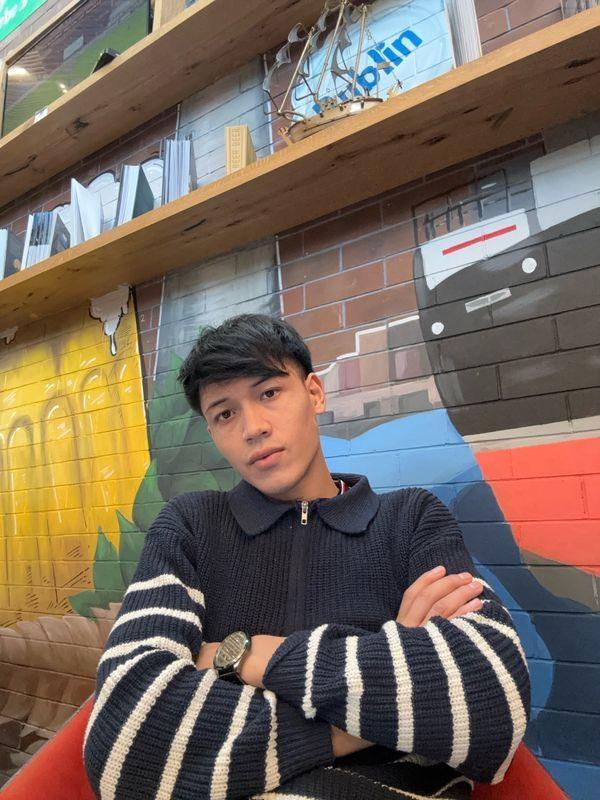
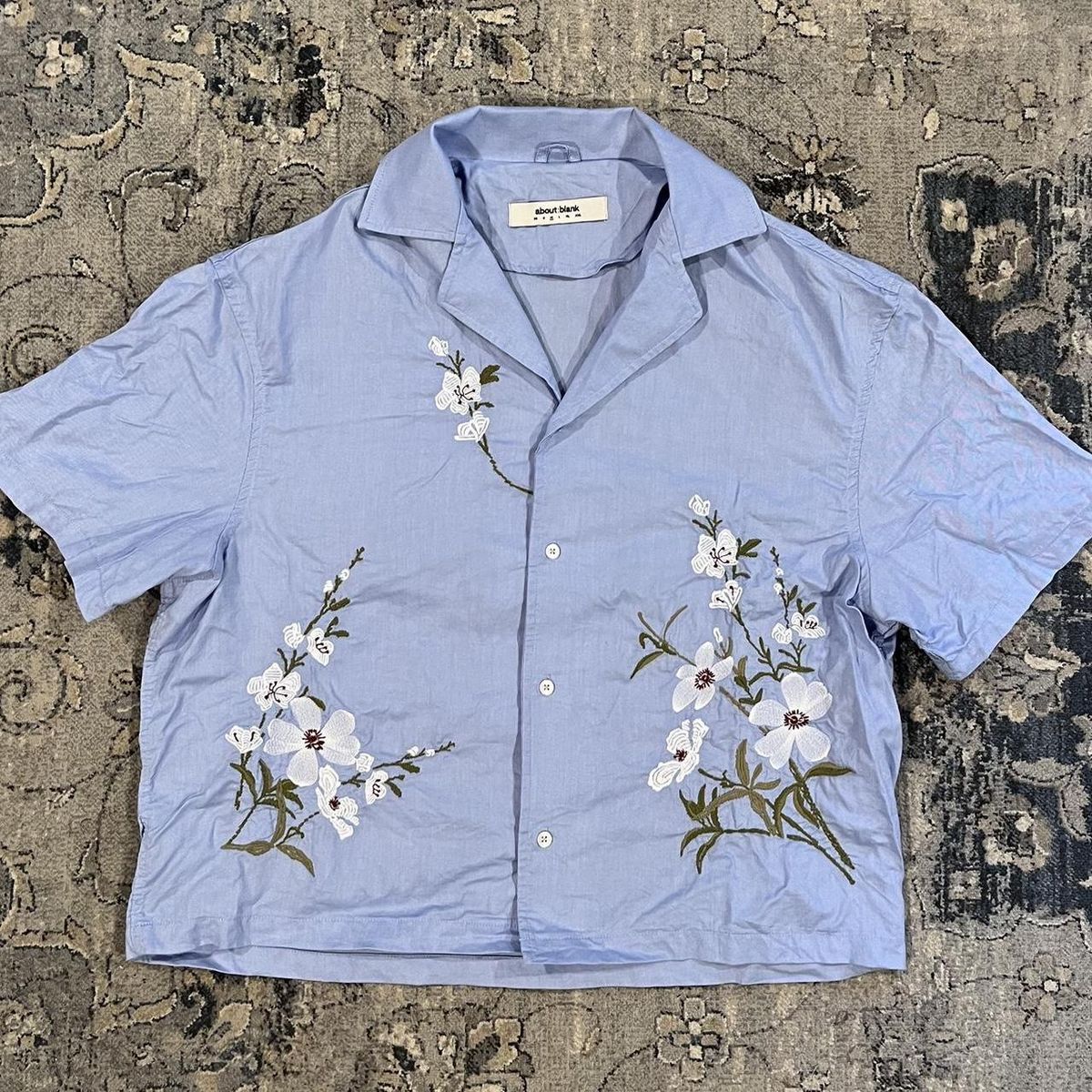
- **Fabric Physics:** The source garment is a woven cotton or linen blend with a matte finish. It possesses medium structural rigidity (evident in the collar stand) but is prone to soft angular wrinkling rather than the elastic stretch of the user's current knit sweater. Light reflection must be diffuse; no specular highlights or sheen should appear on this material.
- **Key Features:** The "camp collar" (open neck) geometry must be preserved and not warped into a crew neck. The white floral embroidery on the lower left and right front panels is a critical design element that must remain distinct. White buttons and the vertical placket line must remain centered relative to the torso's rotation.
PHASE 2: FIT & DRAPE SIMULATION
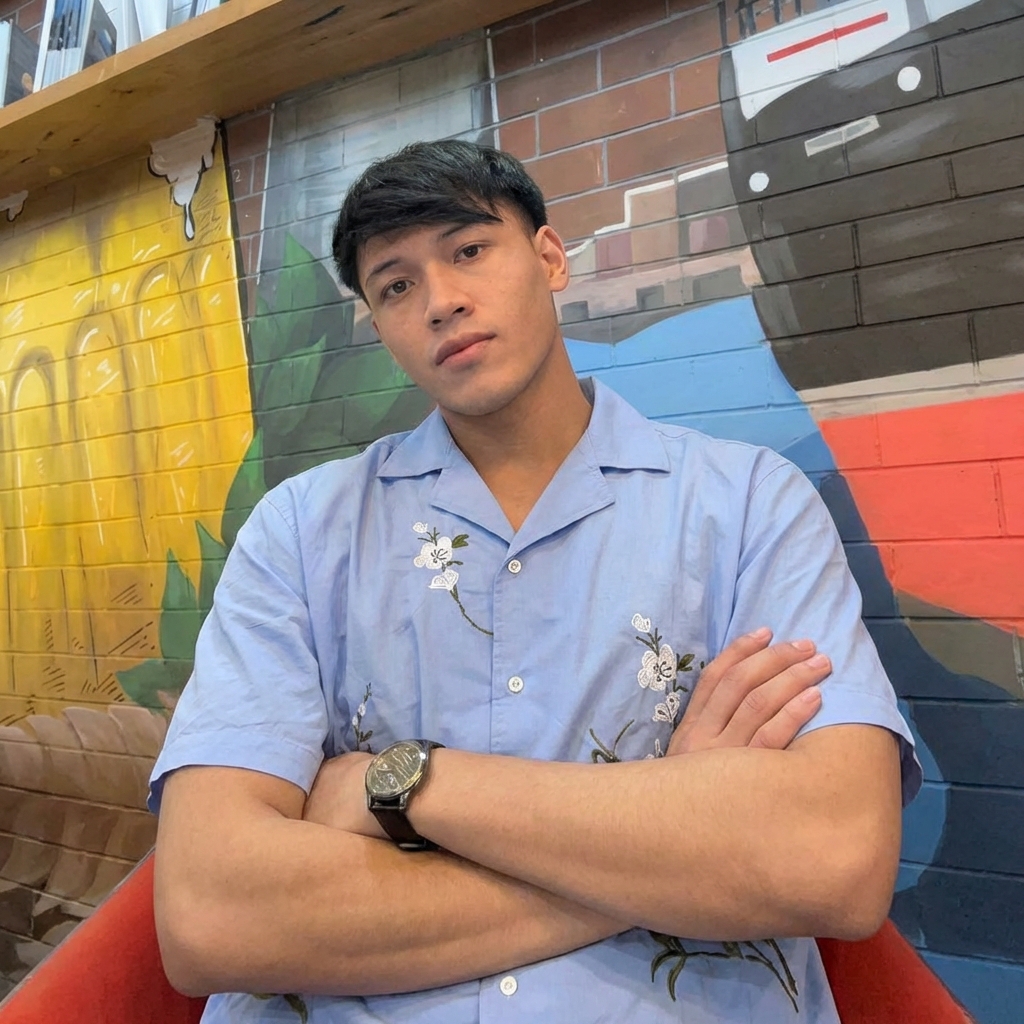
- **Body Mapping:** Due to the "arms crossed" pose, the simulation must account for high compression and tension. The fabric must appear pulled tight across the upper back and shoulders. The front of the shirt must show bunching/folding where the arms press against the torso, rather than hanging flat. The short sleeves of the source garment imply that the lower arms (currently covered by the sweater) will require skin texture generation or masking if the target output includes exposed forearms.
- **Occlusion Handling:** This is a high-complexity occlusion scenario. The user's forearms, hands, and the wrist watch on the left wrist must be segmented and layered *over* the new garment. The shirt's fabric must visually terminate behind the crossed arms, casting contact shadows onto the shirt itself.
PHASE 3: ENVIRONMENT & LIGHTING
- **Light Match:** The user is in a soft, indoor ambient lighting environment (likely overhead diffuse light). The new light blue garment must accept shadows cast by the user's crossed arms and chin. The shading must be soft, avoiding harsh black cutoffs, matching the contrast levels of the user's face.
- **Color Calibration:** The target room has warm tones (yellow wall, red brick, wood). The source garment's cold, daylight-balanced blue must be slightly warmed (color graded) to reflect the ambient light bounce from the surrounding environment, preventing the "cut-and-paste" sticker effect.
PHASE 4: IDENTITY PROTECTION
- **Facial Lock:** The user's entire head, including hair texture, facial features, and neck structure, must remain frozen. The jawline must not be distorted by the new collar placement.
- **Body Integrity:** Strict adherence to the user's physical dimensions is required. Do not slim the torso or alter the shoulder width. The volume of the crossed arms must remain consistent with the original image to maintain the physical plausibility of the pose.