Thinking Process
PHASE 1: VISUAL DECONSTRUCTION
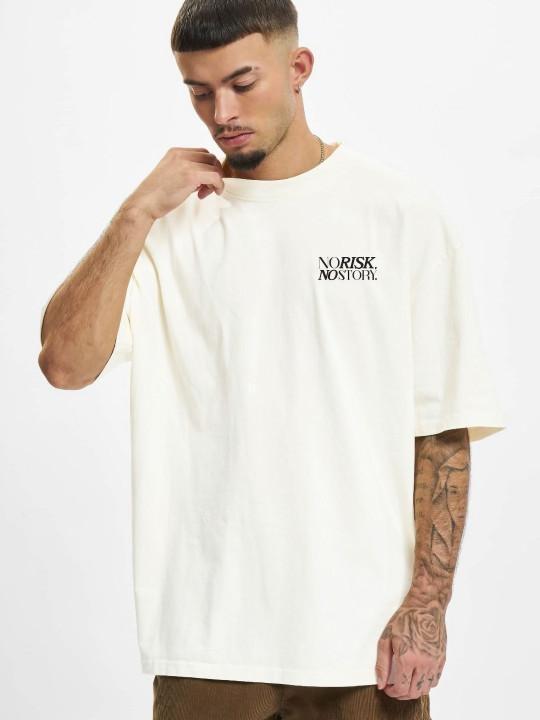
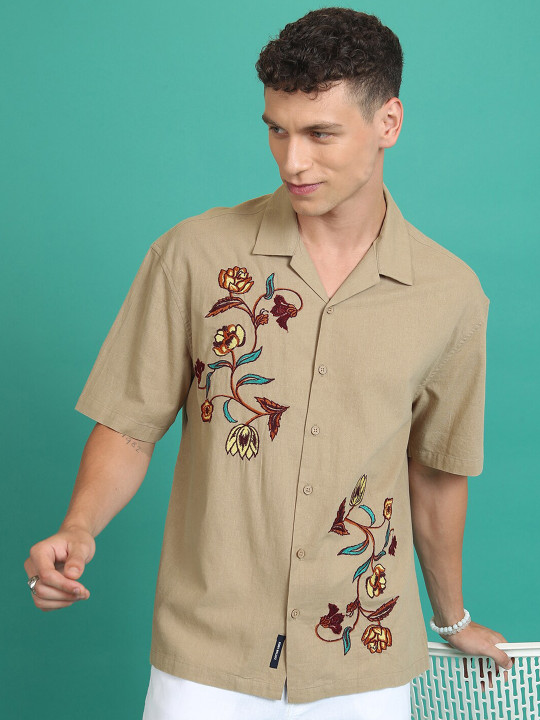
- **Fabric Physics:** The source garment is a linen or linen-blend button-down. It possesses a "dry" matte texture with a visible cross-hatch weave. Unlike the user's current jersey knit t-shirt, this material has structural stiffness; it will crease sharply rather than fold softly. It has zero specular highlights (non-reflective) but should show micro-shadowing in the fabric grain.
- **Key Features:** The large floral embroidery (chest and lower left abdomen) is the primary focal point and must maintain thread-level detail. The "camp collar" (open lapel style) structure must be generated to replace the current crew neck. Brown buttons, the visible placket stitching, and the small black logo tag near the bottom hem must be preserved.
PHASE 2: FIT & DRAPE SIMULATION
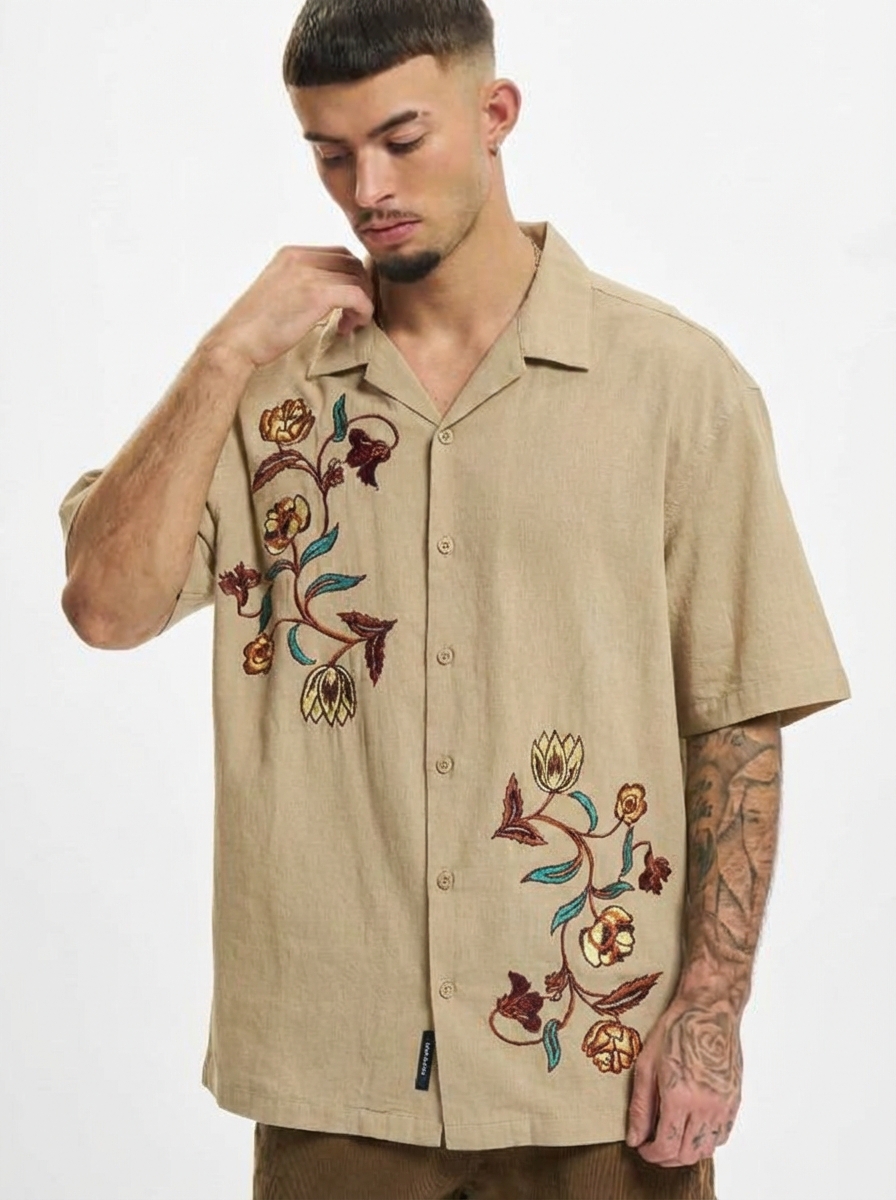
- **Body Mapping:** The user is leaning slightly forward with the right shoulder raised. The new shirt fits loosely (relaxed fit). The simulation must account for gravity pulling the fabric vertically from the pectorals, creating a void between the fabric and the midriff. The sleeve length is similar to the current t-shirt, so the drape over the deltoids should be boxy, not fitted.
- **Occlusion Handling:** **CRITICAL:** The user's right hand is actively grasping the collar area. This is a complex occlusion. The simulation must layer the hand *over* the new shirt. Because the new shirt has an open V-neck/camp collar (unlike the current crew neck), the fabric simulation must deform slightly where the fingers press against the chest/clavicle area to imply contact, or the hand will look like it is floating. The tattoos on the left forearm must remain fully visible.
PHASE 3: ENVIRONMENT & LIGHTING
- **Light Match:** The user image features high-key studio lighting with a neutral/cool white balance. Shadows are soft and fall downward and to the user's left. The new garment must shed the green color-cast/bounce light from the source image's teal background and adopt the neutral white ambient light of the user's environment.
- **Color Calibration:** The beige/tan base tone of the shirt must be desaturated slightly to match the sterile white environment of the target image. The embroidery threads (gold, brown, teal) must react to the brighter exposure of the user image without washing out.
PHASE 4: IDENTITY PROTECTION
- **Facial Lock:** The user's face, neck geometry, ears, and haircut are frozen. The jawline shadow must be recalculated to fall naturally onto the new collar structure.
- **Body Integrity:** The user's shoulder width and arm volume must remain unchanged. Do not warp the user's torso to fit the source model's shape; the garment must warp to fit the user. The distinctive tattoos on the left arm are effectively a biometric identifier and must not be blurred or covered by the new sleeve.