Thinking Process
PHASE 1: VISUAL DECONSTRUCTION
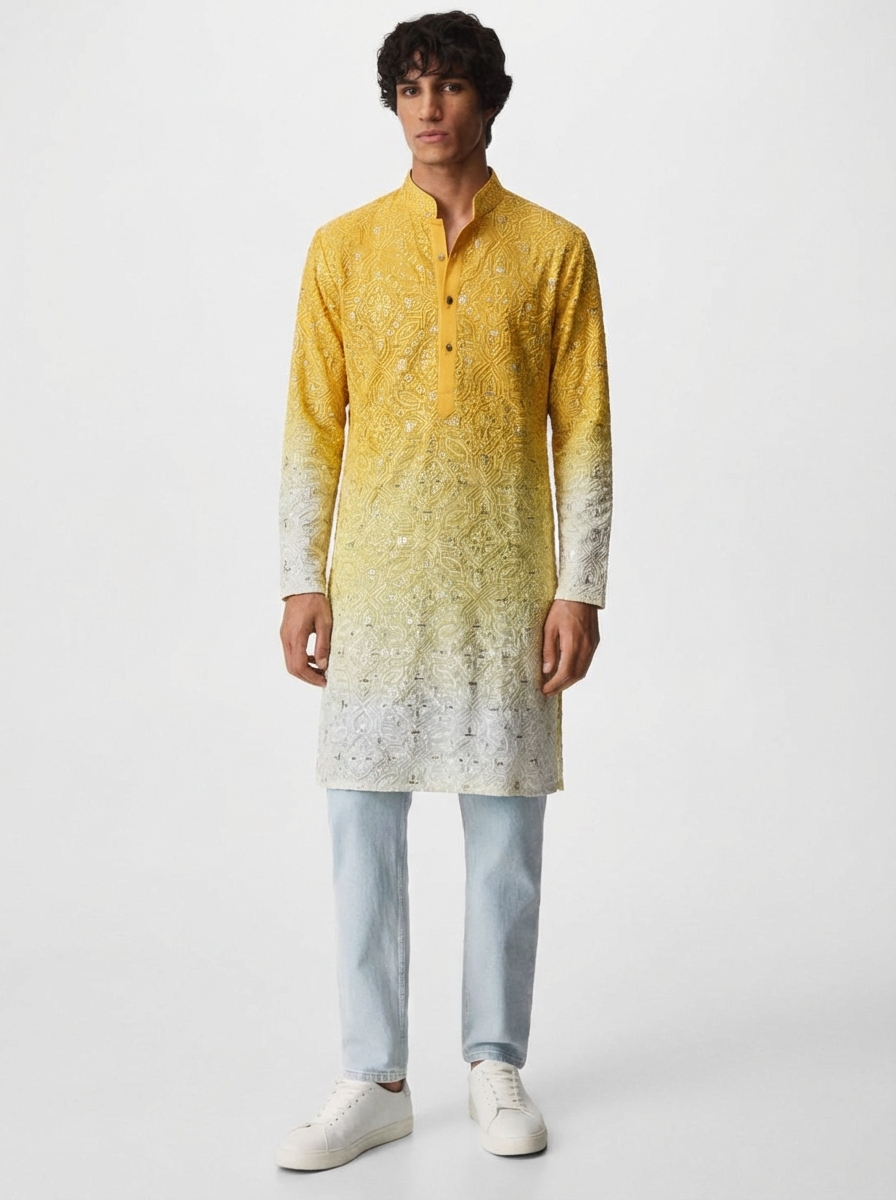
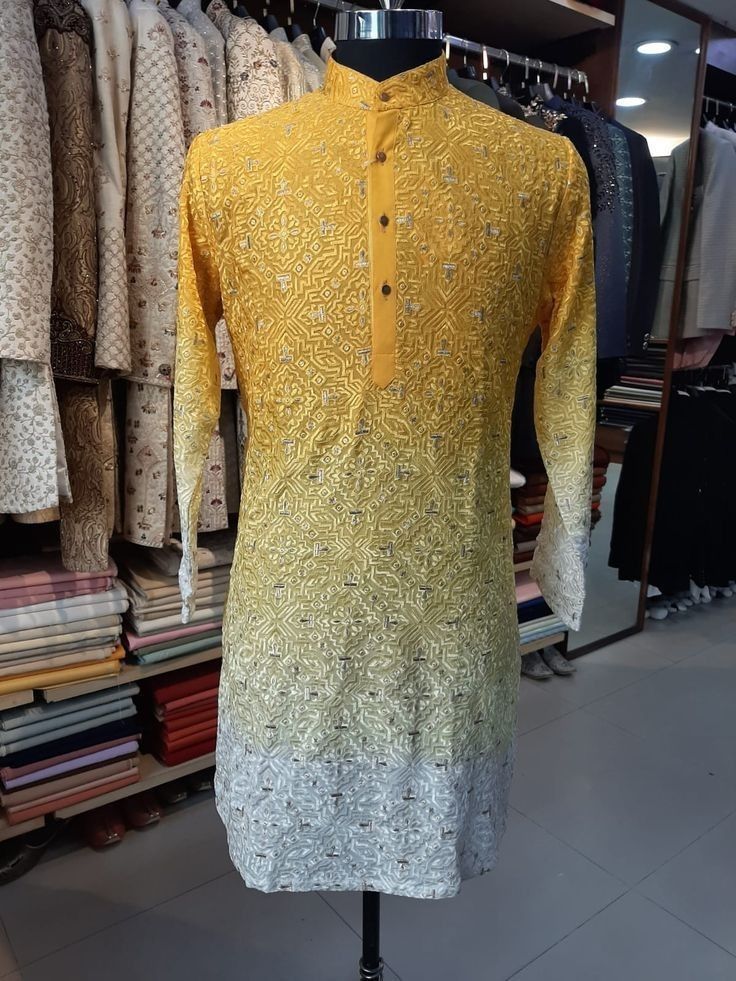
- **Fabric Physics:** The source garment is a heavily embroidered Kurta, likely a silk-cotton blend or Georgette. Unlike the user's current soft cotton shirt, this fabric has significant structural rigidity due to the dense thread work and embellishments. It should not cling tightly to the muscles but rather drape with a semi-stiff, boxy silhouette. The texture contains small sequins or mirror work (abhla) which requires anisotropic specular highlights to simulate light reflection accurately.
- **Key Features:** The ombre/gradient transition from vibrant yellow at the shoulders to pure white at the hem must be preserved without color bleeding. The intricate geometric embroidery pattern (Chikankari style) needs high-frequency normal mapping to retain 3D depth. The mandarin collar (bandhgala) and the central placket with dark buttons are critical focal points. The straight-cut hemline must remain sharp.
PHASE 2: FIT & DRAPE SIMULATION
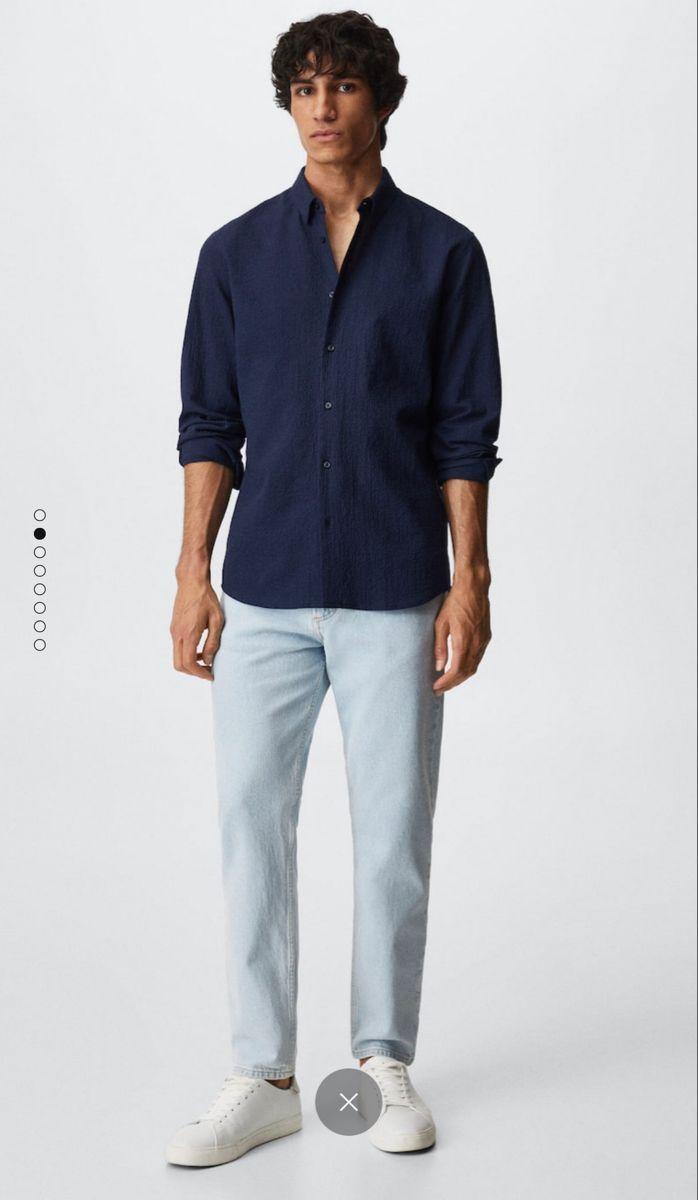
- **Body Mapping:** The user is currently wearing a tucked-in or short-hemmed shirt. The target Kurta is a long tunic. The simulation must extend the garment's hemline down to the user's mid-thigh level, covering the belt line and upper pockets of the jeans. The shoulders must align with the user's natural shoulder width, removing the "mannequin stiffness" but maintaining the Kurta's structural shape. The sleeves must be extended to the wrist bone (undoing the user's current rolled-up sleeve look) and should exhibit slight stacking/creasing at the elbow crook due to the fabric's stiffness.
- **Occlusion Handling:** The user's hands are hanging loosely by the sides; the cuff of the Kurta must fall naturally around the wrist, ensuring the hands remain visible and are not clipped by the new fabric. There is no long hair or jewelry obstructing the chest. The collar area must sit high on the neck, replacing the open collar of the current blue shirt.
PHASE 3: ENVIRONMENT & LIGHTING
- **Light Match:** The user image has a soft, neutral studio lighting setup coming from the upper-front-left, casting soft shadows behind the heels. The source garment was photographed in warm, yellow-hued retail lighting. The Kurta's texture must be color-corrected to neutralize the warm retail cast, ensuring the white bottom section matches the cool white balance of the user's environment. Shadows cast by the Kurta onto the jeans (at the mid-thigh level) must be soft and diffuse.
- **Color Calibration:** The saturation of the yellow needs to be slightly desaturated to match the natural, lower-contrast look of the user's photo. The sequins must reflect the "studio" white light, not the yellow ambient light of the source image.
PHASE 4: IDENTITY PROTECTION
- **Facial Lock:** The user's head, including the specific hairstyle, facial structure, skin tone, and neck anatomy above the Adam's apple, must remain frozen and unaltered.
- **Body Integrity:** The user has a lean/athletic build. The simulation is strictly forbidden from warping the user's torso to fit the mannequin's dimensions. The user's leg position and the visible jeans below the mid-thigh must remain pixel-perfect. Do not artificially bulk up the user's arms to fill the Kurta sleeves.