Thinking Process
PHASE 1: VISUAL DECONSTRUCTION
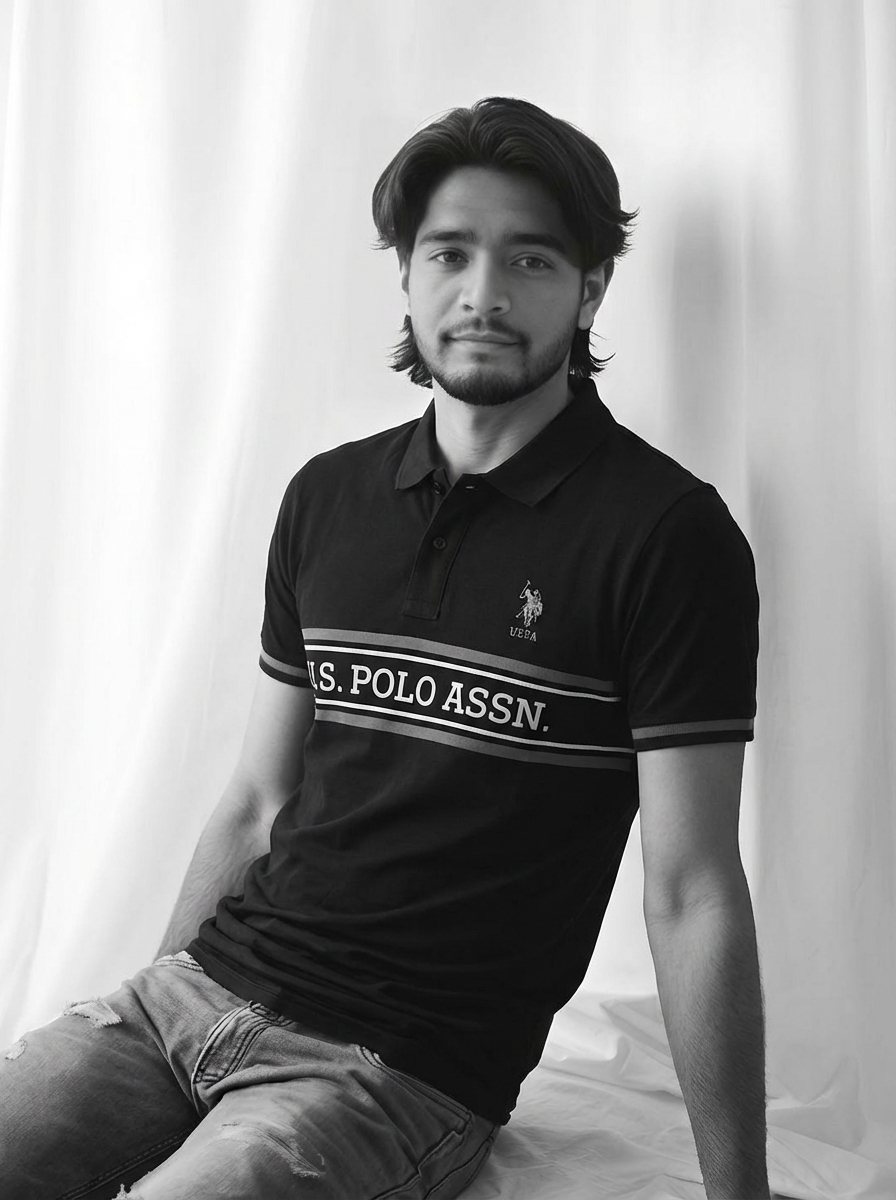
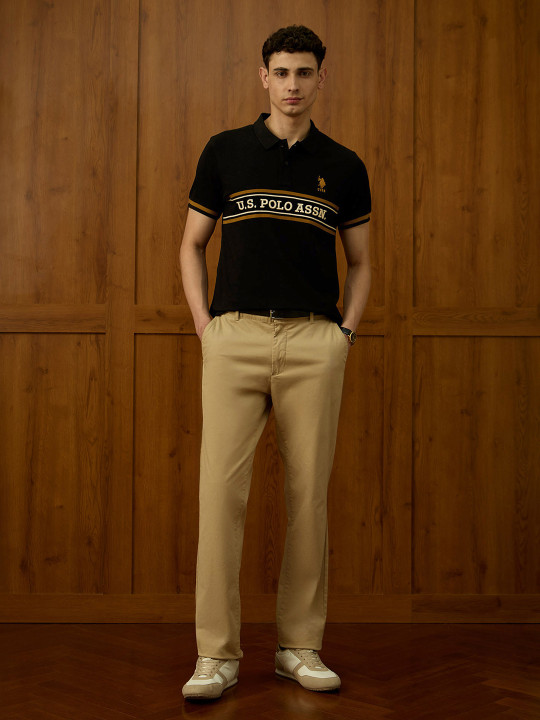
- **Fabric Physics:** The source garment is a Cotton Pique Polo. Unlike the User's current soft jersey t-shirt, this material has higher structural rigidity and a textured weave. It has a lower drape coefficient, meaning it will not cling as tightly to the musculature but rather hold its own shape, particularly at the shoulders and collar. The matte finish of the black cotton will absorb most light, but the texture should show micro-highlights.
- **Key Features:**
1. **Structure:** The ribbed collar and 2-button placket (currently closed) are geometric essentials that replace the current crew neckline.
2. **Branding:** The "U.S. POLO ASSN." text block and horizontal gold/brown stripes across the chest.
3. **Details:** The embroidered horseman logo on the upper left chest and the banded/ribbed cuffs on the short sleeves.
PHASE 2: FIT & DRAPE SIMULATION
- **Body Mapping:**
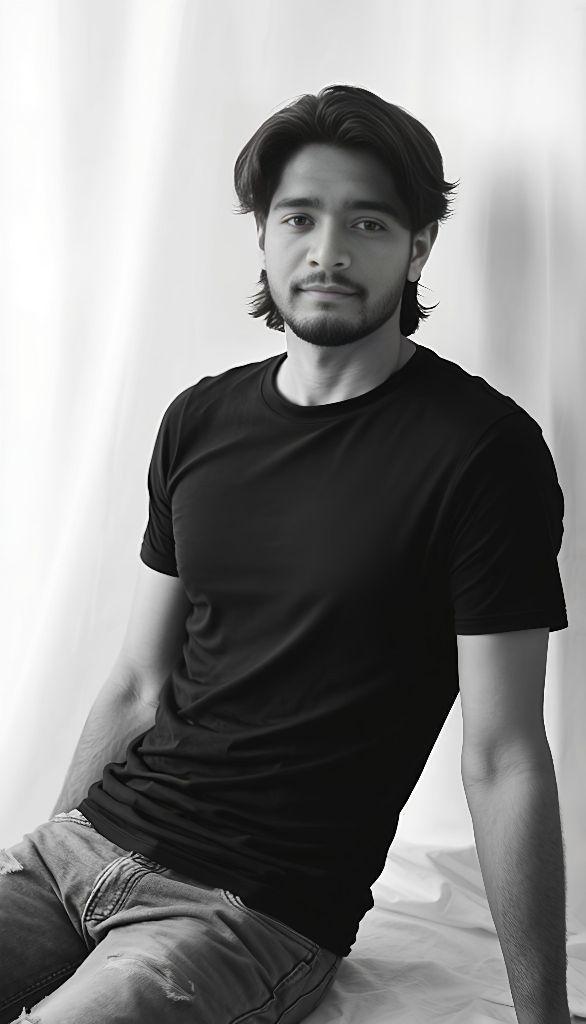
- **Torso:** Due to the user's seated, leaning-back posture, the polo shirt must simulate "stacking" or transverse folding across the abdomen area, similar to the current t-shirt but with thicker, sharper fold lines due to the heavier fabric weight.
- **Shoulders/Armpits:** Since the user's arms are supporting his weight backward, the fabric must pull tight across the pectorals and bunch slightly at the rear deltoids/armpits.
- **Sleeves:** The sleeves must follow the angle of the user's arms. The ribbed cuffs should sit slightly off the skin on the underside due to gravity, rather than hugging the bicep tightly like the current tee.
- **Occlusion Handling:**
- **Hair:** The user's hair is mid-length and touches the nape/neck area. The new polo collar must be generated *under* the hair tips at the back and sides.
- **Lower Body:** The hem of the polo must interact naturally with the waistline of the jeans, potentially bunching where the torso meets the legs in this seated position.
PHASE 3: ENVIRONMENT & LIGHTING
- **Light Match:**
- **Tonal Mapping:** The target image is grayscale (Black & White). The source garment (Black and Gold) must be desaturated and tone-mapped. The gold stripe should convert to a mid-light grey to maintain contrast against the black fabric.
- **Direction:** Lighting is soft, diffused window light coming from the User's Right (Viewer's Left). The left side of the garment (Viewer's Left) must be highlighted, while the right side (Viewer's Right) and the abdominal folds must feature deep, soft shadows.
- **Color Calibration:**
- The black value of the polo must match the black point of the user's current t-shirt to look integrated, ensuring it doesn't look like a "faded" black or a "crushed" black relative to the background contrast.
PHASE 4: IDENTITY PROTECTION
- **Facial Lock:** The user's entire head, including the specific jawline beard texture, hairstyle, and ear visibility, must be frozen. The neck area where the new collar sits is the only blend zone.
- **Body Integrity:** The user's arm width, forearm vascularity, and seated torso volume must be preserved. Do not apply "slimming" algorithms; the polo should add slight bulk compared to the t-shirt due to fabric thickness, strictly adhering to the user's existing biometric volume.