Thinking Process
PHASE 1: VISUAL DECONSTRUCTION
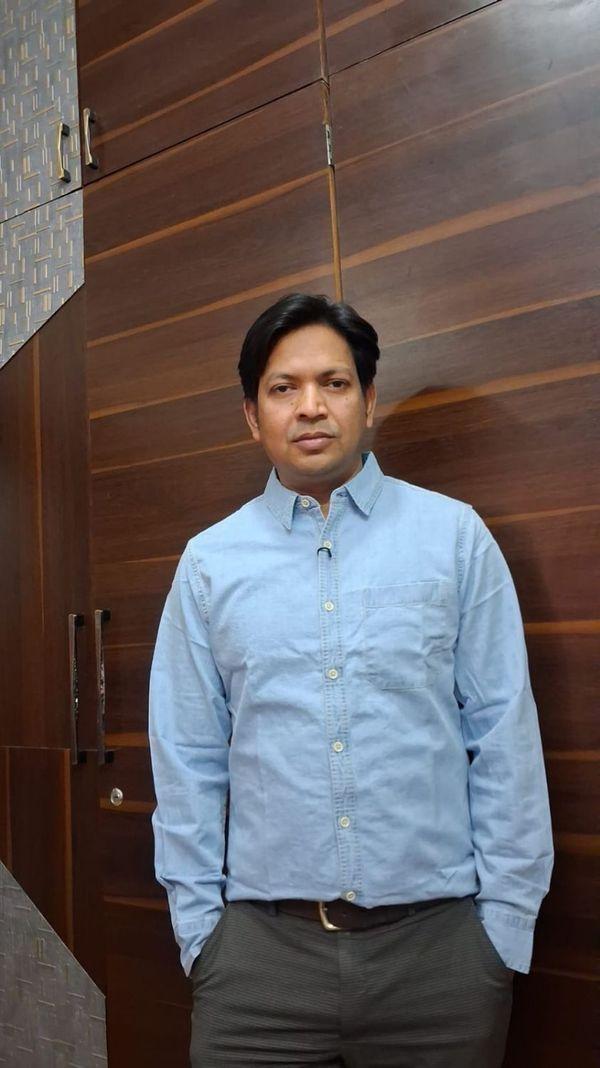
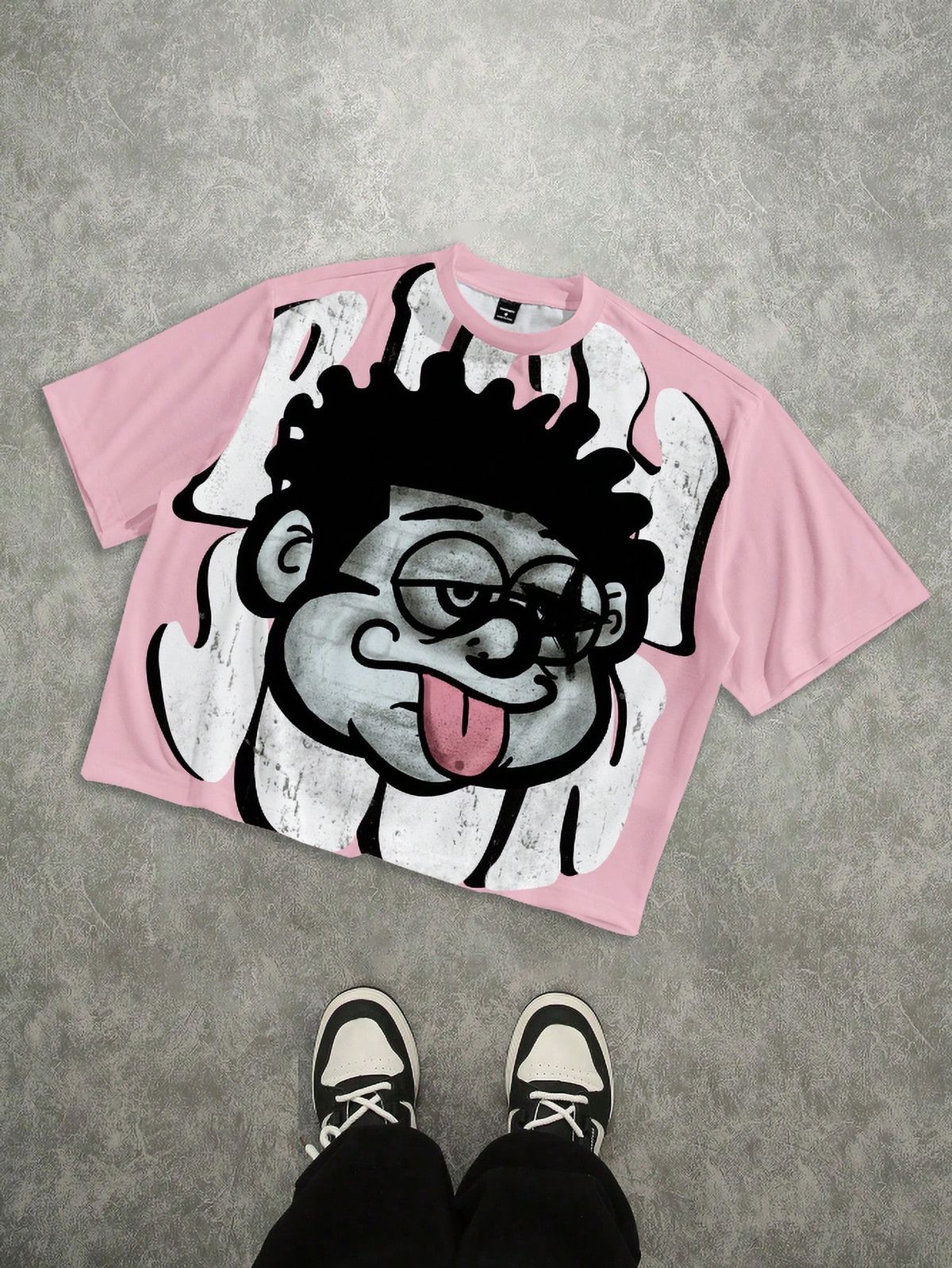
- **Fabric Physics:** The source garment is a medium-weight cotton jersey. It possesses a low specular highlight (matte finish) and high absorption. Unlike the user's current stiff oxford shirt, the target simulation must exhibit soft-body dynamics with pliable folding. Light diffusion should be uniform, avoiding the sharp creases seen in the current button-down.
- **Key Features:** The massive central graphic (cartoon face with glasses) is the primary anchor; it must warp cylindrically around the torso without losing legibility. The ribbed crew-neck collar and the double-stitched hemline are structural details that must replace the current open-collar geometry.
PHASE 2: FIT & DRAPE SIMULATION
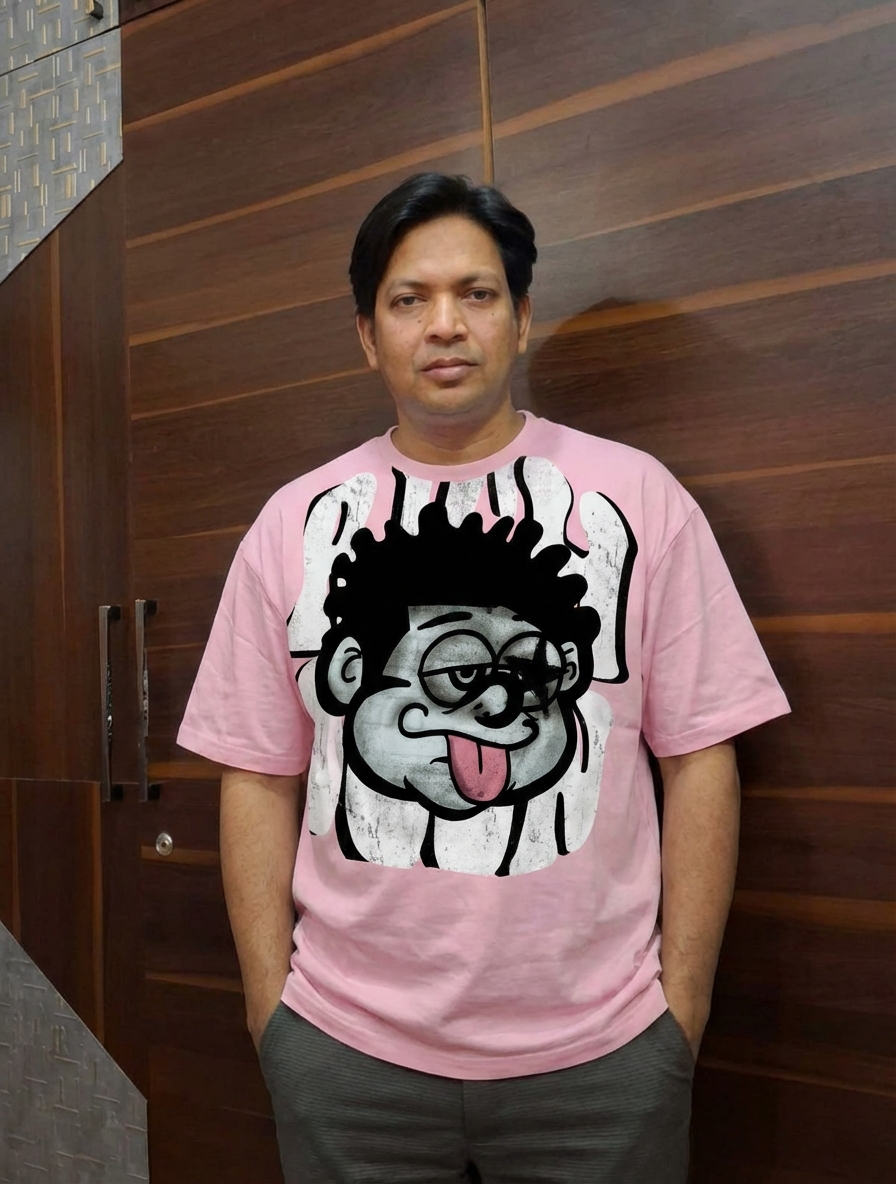
- **Body Mapping:** The user is standing with hands in pockets, creating a tension point at the hips. The source T-shirt is an oversized/streetwear cut. The simulation must transition from a tucked-in silhouette (current) to an untucked silhouette. The T-shirt hem should fall roughly to the mid-zipper level, draping *over* the belt and upper trousers. The fabric must bunch slightly at the wrists where the hands enter the pockets, creating realistic drag wrinkles radiating upward toward the armpits.
- **Occlusion Handling:** The user's forearms disappear into the pockets. The new garment's hemline must interact with the wrists—either draping over them or bunching behind them. The current shirt's collar interacts with the neck; this must be masked out completely to apply the higher crew-neck line. The belt, currently visible, must be realistically occluded by the overhang of the untucked T-shirt.
PHASE 3: ENVIRONMENT & LIGHTING
- **Light Match:** The user's environment has warm, diffuse overhead lighting (likely tungsten), casting soft shadows downward and slightly to the viewer's left. The source cloth is flat-lit with cool white light. The simulation must apply a warm tint to the white areas of the graphic and generate deep ambient occlusion under the chest and armpits to match the room's depth.
- **Color Calibration:** The source pink is highly saturated. It must be desaturated by approximately 10-15% and warmed to integrate with the brown wood background tones. Noise/grain matching must be applied to the clean graphic to match the ISO grain visible on the user's face and background.
PHASE 4: IDENTITY PROTECTION
- **Facial Lock:** The region above the clavicle—specifically the neck skin, jawline, facial structure, and hair—must remain pixel-perfectly frozen. The skin tone on the arms (which will now be exposed due to short sleeves replacing long sleeves) must be generated to match the facial skin tone.
- **Body Integrity:** Strictly maintain the user's torso volume and shoulder width. Do not slim the waist or broaden the shoulders to fit a generic "hero" model. The fabric must deform to the user, not the user to the fabric.