Thinking Process
PHASE 1: VISUAL DECONSTRUCTION
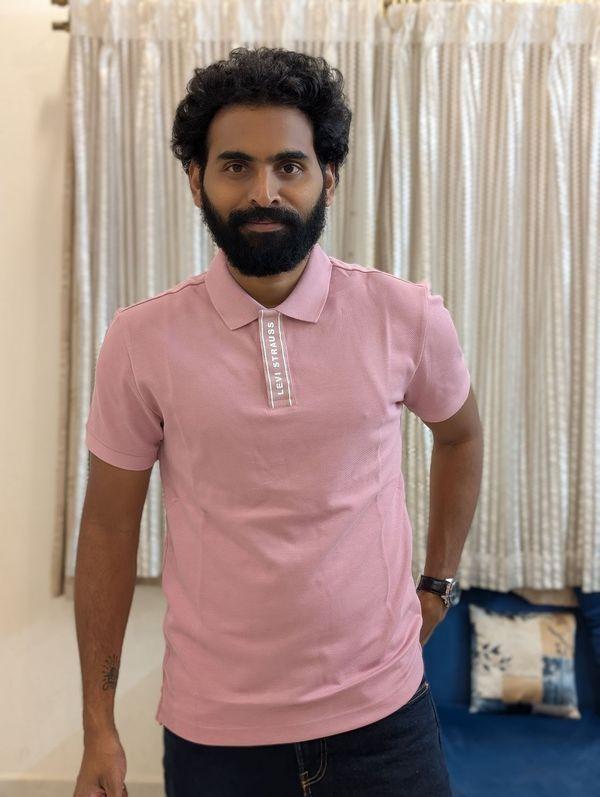
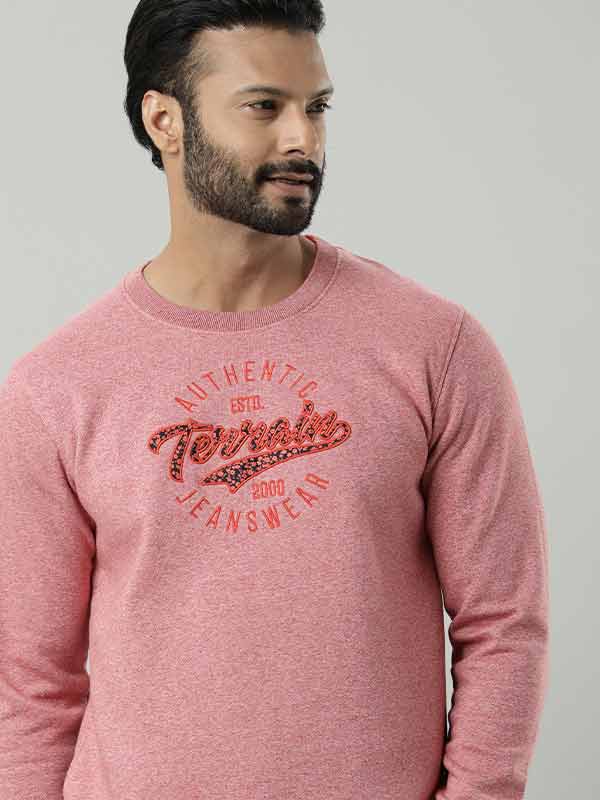
- **Fabric Physics:** The source garment is a heathered cotton-fleece blend sweatshirt (approx. 280-300 GSM). It possesses a matte finish with high light absorption and virtually no specular highlights. The material has medium stiffness; it will form softer, larger folds rather than fine wrinkles, maintaining structural integrity around the shoulders and chest unlike the thinner pique cotton of the user's current polo.
- **Key Features:** The central chest graphic ("AUTHENTIC ESTD. Terrain JEANSWEAR 2000" in black and red script/block letters) must remain centered and undistorted by the body's curvature. The ribbed crew-neck collar, the specific "heathered" texture (interwoven red/white fibers), and the dropped shoulder seam construction must be preserved.
PHASE 2: FIT & DRAPE SIMULATION
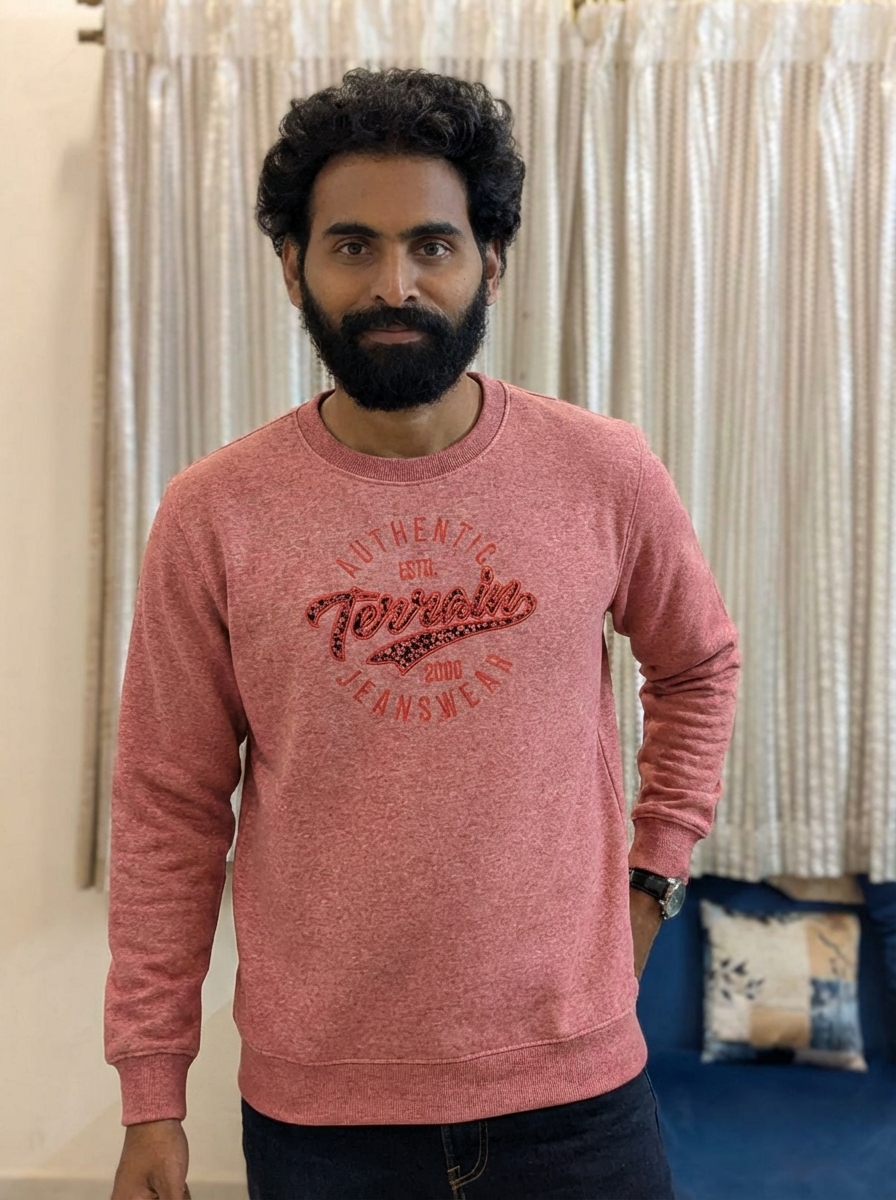
- **Body Mapping:** The simulation must generate long sleeves extending to the wrists, replacing the user's current short sleeves. The fit should be "regular/relaxed," meaning the fabric will drape vertically from the chest apex, avoiding the tight "muscle-fit" contour of the current polo. Expect fabric bunching at the inner elbows due to the relaxed arm position and slight compression folds near the armpits. The hemline should fall just below the belt line of the jeans.
- **Occlusion Handling:**
1. **Beard:** The user's beard is voluminous and extends downward. The new crew-neck collar is higher than the current polo neckline; the beard must be segmented and layered *over* the new collar.
2. **Watch:** The watch on the left wrist creates a collision object. The new long sleeve must either drape loosely over the watch or bunch slightly above it; it cannot clip through the hardware.
3. **Jeans:** The hem of the sweatshirt must naturally obscure the top of the jeans/belt, replacing the tucked/semi-tucked look of the current shirt.
PHASE 3: ENVIRONMENT & LIGHTING
- **Light Match:** The user's environment features soft, diffuse, warm-toned indoor lighting (likely 3000K-3500K) coming from the front-top-left. The source garment, currently lit by neutral studio flash, must be "warmed" to match the ambient beige reflections of the curtains.
- **Color Calibration:** Shadows on the sweatshirt must be cast downward and slightly to the viewer's right to match the facial shadows. Deep ambient occlusion must be applied inside the sleeve folds and under the arms to ground the garment in the 3D space. The salmon/red hue of the sweatshirt must adapt to the warm room tone without turning orange.
PHASE 4: IDENTITY PROTECTION
- **Facial Lock:** Absolute freeze on the facial region from the chin upwards, including the specific volume and curl pattern of the hair. The skin tone on the face and hands must remain unaltered.
- **Body Integrity:** The user's shoulder width and torso volume must be maintained. Do not apply "slimming" algorithms. The tattoo on the right forearm will likely be covered by the new sleeves; however, if the simulation exposes the wrist, the skin texture/tattoo must be preserved, not generated as generic skin.