Thinking Process
PHASE 1: VISUAL DECONSTRUCTION
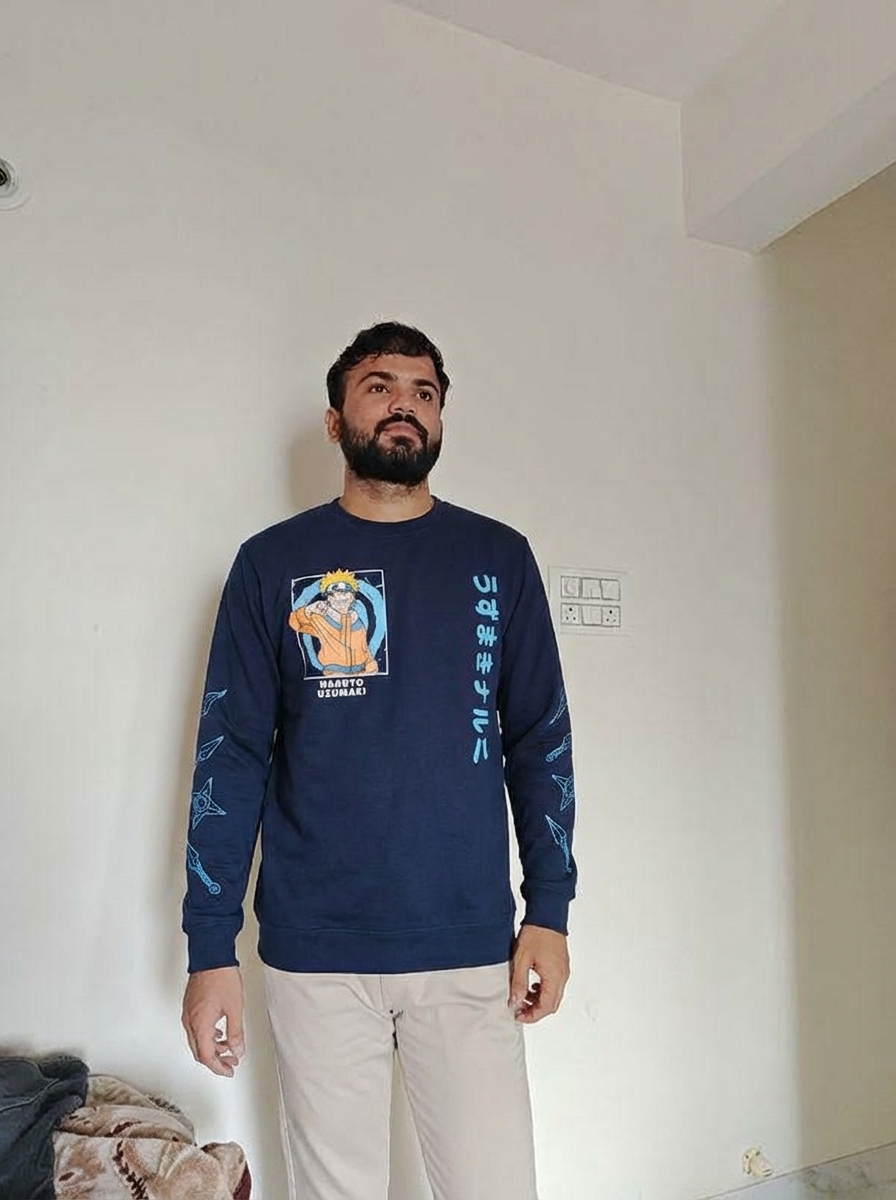
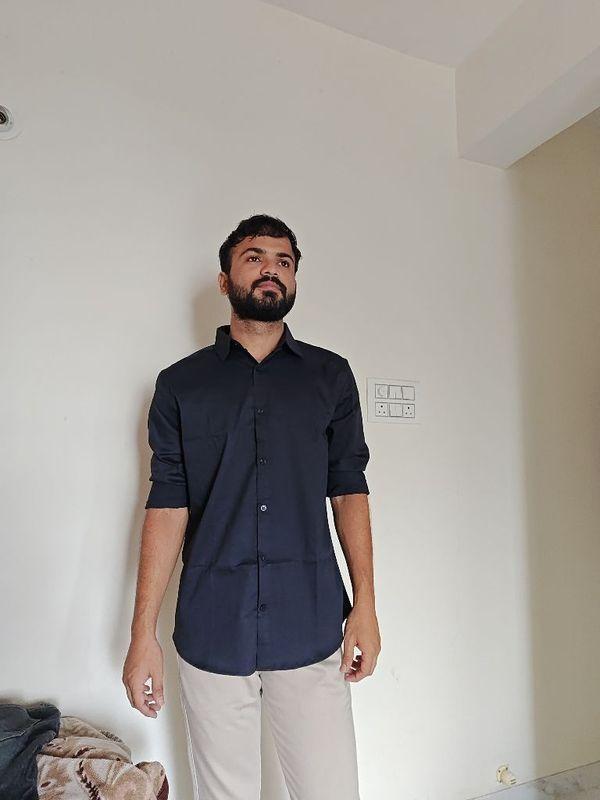
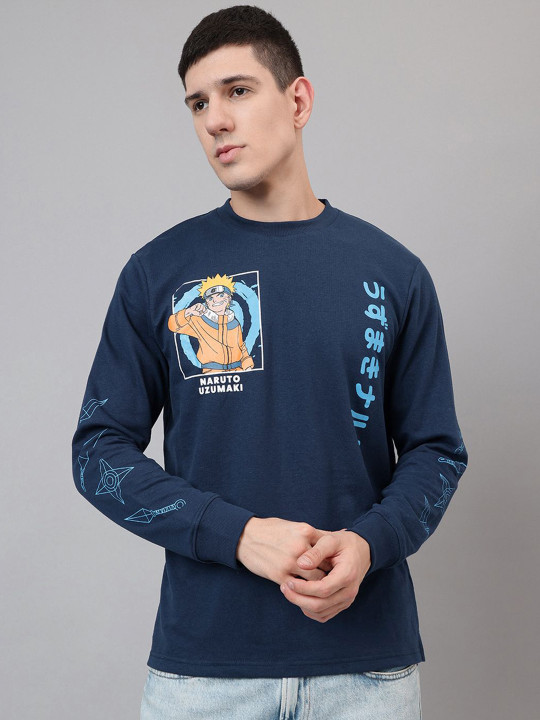
- **Fabric Physics:** The source garment is a mid-weight cotton jersey or French terry knit. It has a matte finish with low light reflectivity, unlike the slight sheen of the user's current woven shirt. The simulation must replicate the soft drape and elasticity of knitwear, avoiding sharp, stiff creases typical of starched collars or button-downs.
- **Key Features:**
- **Graphics:** The central "Naruto Uzumaki" chest illustration (orange/yellow accents), the vertical Japanese text on the left torso, and the light blue shuriken/kunai line art on the sleeves are non-negotiable anchor points.
- **Structural Details:** The ribbed crew neck collar and ribbed wrist cuffs must be preserved.
- **Hemline:** The straight, double-stitched bottom hem typical of t-shirts/sweatshirts must replace the current curved shirt tail.
PHASE 2: FIT & DRAPE SIMULATION
- **Body Mapping:** The user is in a neutral standing pose with arms slightly abducted. The knit fabric should drape smoothly over the deltoids and pectorals, relaxing around the midsection. Unlike the current button-down which holds its own shape, the new garment must conform more closely to gravity, creating soft vertical folds rather than horizontal stress lines. The sleeves must extend fully to the wrist bone, bunching slightly above the ribbed cuff due to friction and gravity.
- **Occlusion Handling:**
- The user's hands are visible at the bottom of the frame; the new sleeves must terminate at the wrists, ensuring the hands remain layered *over* or emerging naturally from the cuff.
- There are no hair or jewelry occlusions, but the user's beard interacts slightly with the collar area; the new crew neck must sit below the beard line without clipping.
PHASE 3: ENVIRONMENT & LIGHTING
- **Light Match:** The user's environment features soft, diffuse overhead lighting, casting downward shadows with a slight bias to the viewer's right. The studio-lit brightness of the source garment must be dimmed. Shadows must be generated under the armpits, beneath the chest graphic, and within the fabric folds to match the contrast ratio of the user's face and pants.
- **Color Calibration:** The user's photo has a warm, indoor tungsten/LED cast with slight ISO grain. The source garment is cool-toned navy. A warm color grading overlay (approx. 2500K-3000K shift) and slight noise injection must be applied to the new garment to integrate it into the room's atmosphere.
PHASE 4: IDENTITY PROTECTION
- **Facial Lock:** The user's entire head region—specifically the beard texture, jawline, lips, nose, eyes, and hair—must be strictly frozen. No skin tone alteration is permitted on the face or neck.
- **Body Integrity:** The user's shoulder width, chest volume, and posture must remain unchanged. The beige trousers must remain untouched; the new garment must simply composite over the waistline where the previous shirt was, without slimming the waist or altering the user's physical build.