Thinking Process
PHASE 1: VISUAL DECONSTRUCTION
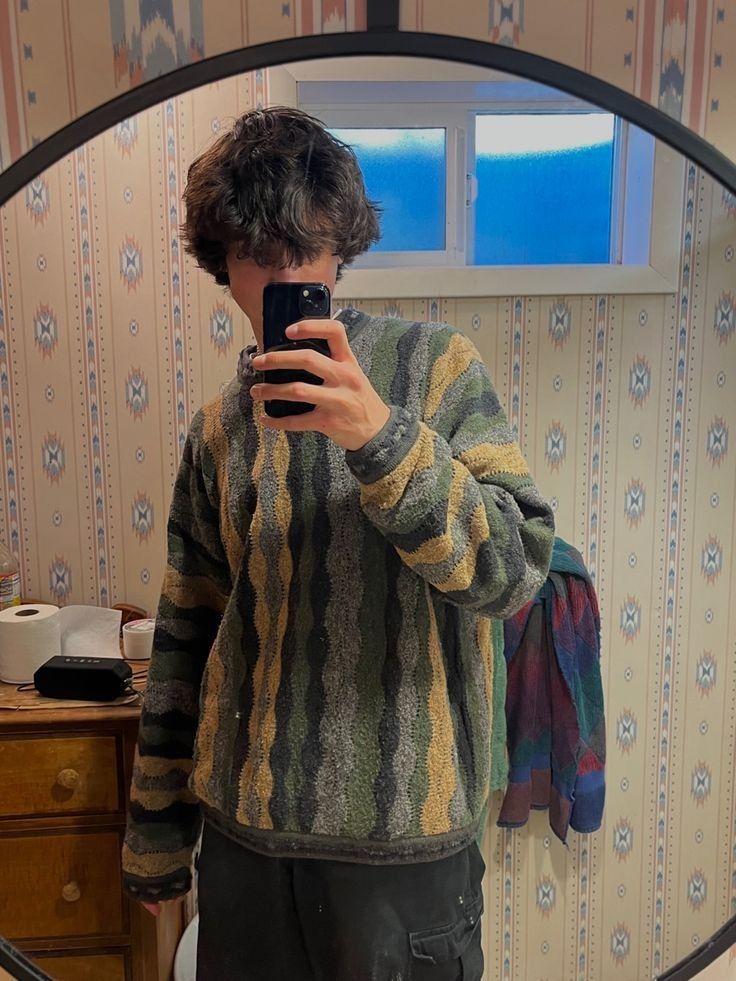
- **Fabric Physics:** The source garment is a heavy-gauge, textured knit (likely chenille or coarse wool blend) with high surface friction. It possesses significant weight and thickness. It does not reflect light specularly (matte finish); instead, the texture creates deep micro-shadows within the weave. The simulation must treat this as a semi-rigid soft body that resists sharp creasing, preferring soft, bulky rolls.
- **Key Features:** The vertical, wavy stripe pattern (alternating mustard yellow, forest green, and charcoal grey) must maintain alignment across the torso. The thick, ribbed crew-neck collar, heavy ribbed cuffs, and the specific "fuzzy" surface texture are non-negotiable details. The drop-shoulder seam placement must be calculated to maintain the oversized aesthetic.
PHASE 2: FIT & DRAPE SIMULATION
- **Body Mapping:**
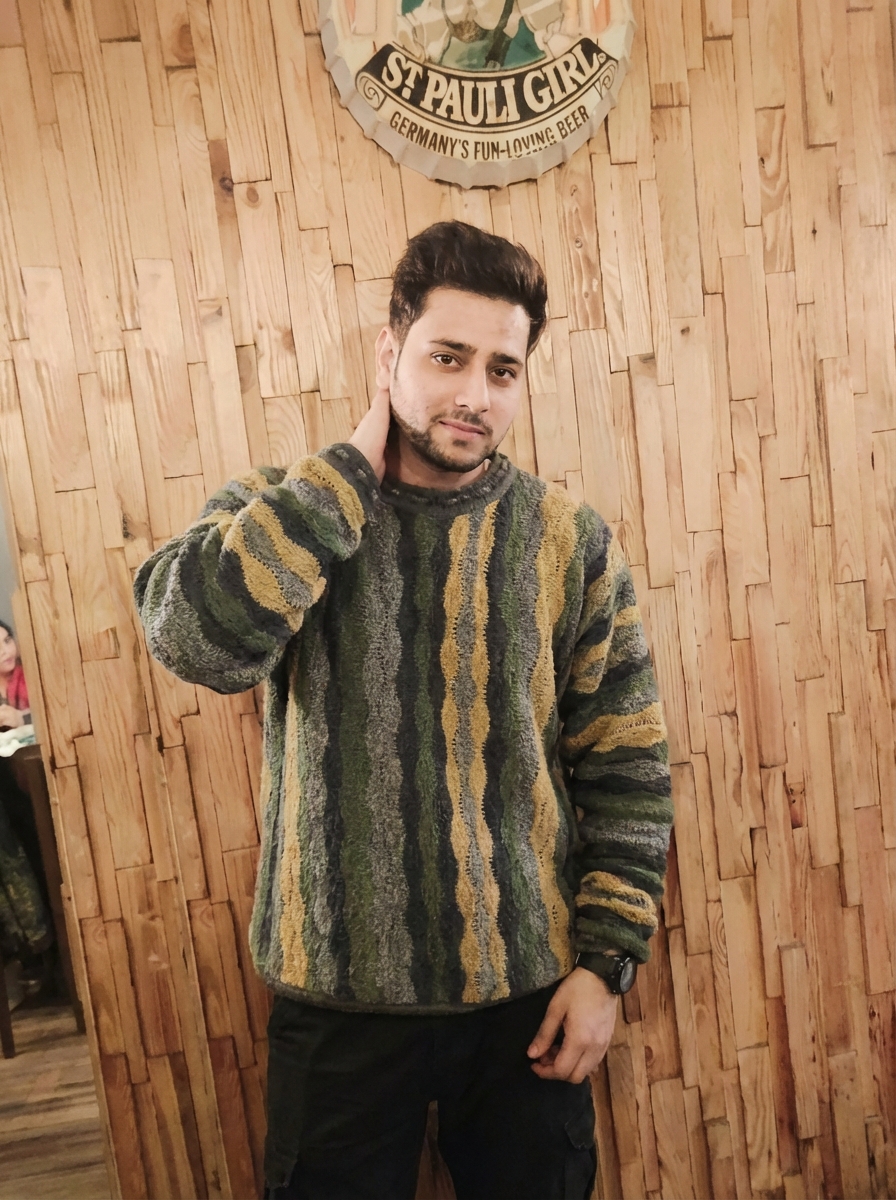
- **Right Arm (raised):** Due to the arm being bent at an acute angle behind the head, the heavy knit fabric must bunch significantly at the inner elbow (antecubital fossa) and the shoulder seam must lift upward. Gravity will pull the sleeve down the forearm, potentially exposing the wrist.
- **Torso:** The garment is loose-fitting. It should drape vertically from the chest, bridging over the abdominal area rather than clinging to the skin, creating a cylindrical silhouette consistent with thick sweaters.
- **Left Arm:** The sleeve should stack slightly above the wrist cuff due to the garment's length.
- **Occlusion Handling:**
- **Right Hand/Wrist:** The user's hand and wrist are positioned against the neck. The new garment's collar and shoulder area must be rendered *behind* this hand/wrist assembly.
- **Left Wrist:** The wristwatch is a hard occlusion object. The sweater cuff must interact with it (either tucking behind it or sitting loosely over it, but the watch face must remain visible/layered on top if the sleeve is pulled up).
- **Neck/Hair:** The user's neck skin and beard line must mask over the new crew neck collar.
PHASE 3: ENVIRONMENT & LIGHTING
- **Light Match:** The User Image features warm, artificial indoor lighting (approx. 2700K-3000K) coming from the front-top, casting soft shadows against the wooden wall. The Source Garment (currently in cool, diffuse daylight) must be color-graded to match this warmer temperature. The green and yellow tones of the sweater must shift towards the orange/warm spectrum to integrate.
- **Color Calibration:** Reduce the contrast of the source garment slightly to match the softer dynamic range of the user's camera. Apply a subtle warm wash (sepia/orange tint) to the garment's texture map. Generate ambient occlusion shadows in the garment folds (especially the bent elbow) consistent with the overhead light source.
PHASE 4: IDENTITY PROTECTION
- **Facial Lock:** The user's entire head region—specifically the pompadour hairstyle, facial hair (beard/stubble), eyes, and jawline—must remain strictly frozen. The boundary between the new crew neck and the user's neck skin requires precise segmentation to avoid "floating head" artifacts.
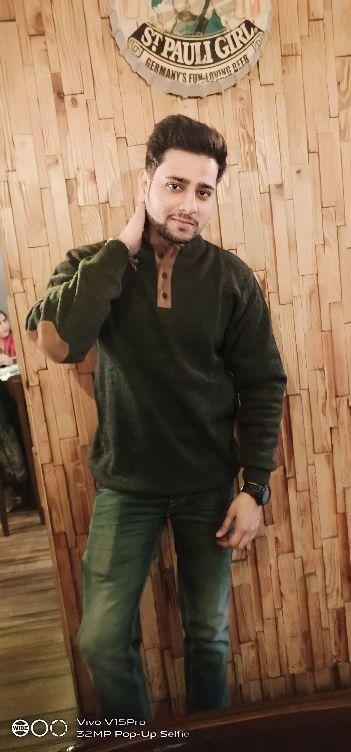
- **Body Integrity:** Do not alter the user's shoulder width or waist size. The simulation must simply add the volumetric thickness of the wool sweater *on top* of the existing body mesh. The user's legs/jeans must remain untouched.