Thinking Process
PHASE 1: VISUAL DECONSTRUCTION
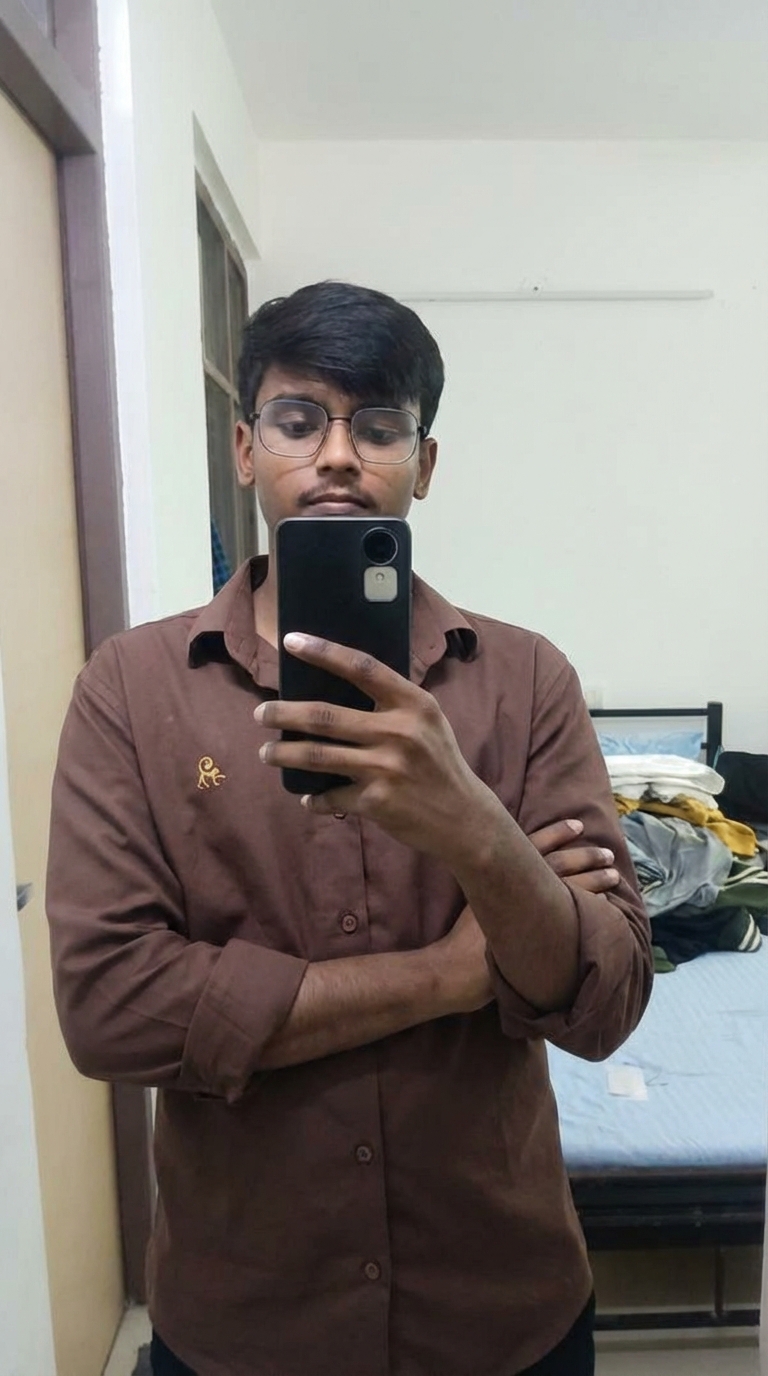
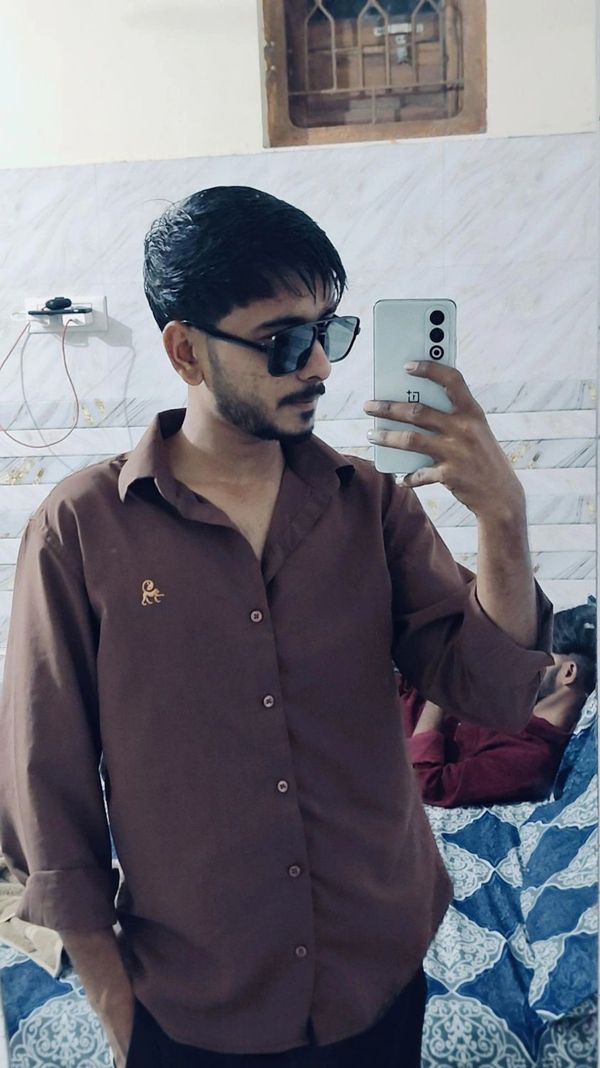
- **Fabric Physics:** The source garment is a woven cotton or cotton-blend poplin. It exhibits a matte finish with low specular reflection. It has medium stiffness—enough to hold the collar shape and placket structure, but soft enough to create sharp, angular drag lines at stress points (elbows, armpits). It should not behave like the thick fleece currently on the user; it requires a thinner, more structured drape simulation.
- **Key Features:**
- **Color:** Deep cocoa/chocolate brown.
- **Details:** The small golden/yellow graphic logo on the left chest must be preserved and positioned correctly on the user's pectorals.
- **Hardware:** Brown 4-hole buttons on the center placket.
- **Collar:** Standard spread collar, unbuttoned at the top.
- **Sleeve Styling:** The source image shows asymmetrical styling (one sleeve rolled, one loose). The simulation must resolve this consistency, ideally applying the "loose/buttoned cuff" texture to both arms to match the target's full-coverage pose, or realistically simulating the rolled fabric bulk on the forearms if that style is retained.
PHASE 2: FIT & DRAPE SIMULATION
- **Body Mapping:**
- **Shoulders & Chest:** The shirt must sit flatter on the shoulders than the current puffy sweatshirt. The collar needs to wrap around the neck rather than hug it like the crewneck.
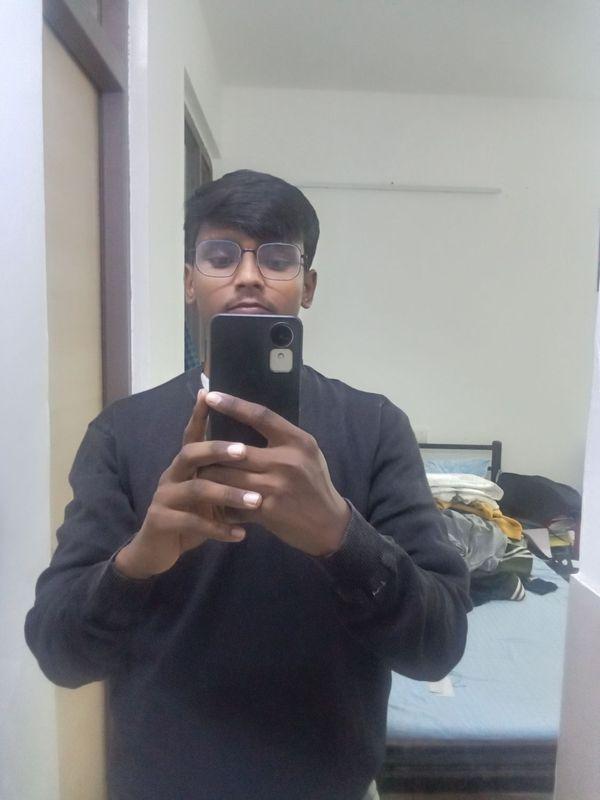
- **Arm Bend:** The user is holding a phone with both hands, creating a sharp angle at the elbows. The physics engine must generate horizontal bunching/creasing at the inner elbow and tension across the outer elbow.
- **Gravity:** The fabric should hang vertically from the chest down, but will be interrupted by the arms pressing against the torso.
- **Occlusion Handling:**
- **Primary Occlusion (High Priority):** The user is holding a black smartphone with both hands directly in front of the upper chest/sternum area. The new garment must be rendered exclusively *behind* the phone, the fingers, and the wrists.
- **Secondary Occlusion:** The user's chin is tucked slightly downwards; the shirt collar must sit naturally under the jawline without clipping.
PHASE 3: ENVIRONMENT & LIGHTING
- **Light Match:**
- **Target Lighting:** The user's room has soft, diffuse, top-down indoor lighting (cool white/fluorescent tone). Shadows are soft and spread out (ambient occlusion is high).
- **Shadow Cast:** The phone and hands will cast a drop shadow onto the chest of the new brown shirt. This shadow is critical for depth perception.
- **Color Calibration:**
- The source image has high-contrast, harsh lighting. The brown texture must be "neutralized" and then re-lit to match the softer, flatter lighting of the target room. The brown must not appear too saturated or "sunny" compared to the muted background of the dorm room.
PHASE 4: IDENTITY PROTECTION
- **Facial Lock:** Absolute pixel-freeze on the user's face, including the glasses, frames, eyebrows, and hairline. The neck skin visible above the sweatshirt line should be preserved and seamlessly blended with the new open collar.
- **Body Integrity:** The user's shoulder width and arm volume must remain constant. The transition from the thick sweatshirt to the thin shirt will naturally make the silhouette appear slightly less bulky, but the underlying anatomical mesh (skeletal structure) must not be slimmed or altered.