
Thinking Process
PHASE 1: VISUAL DECONSTRUCTION
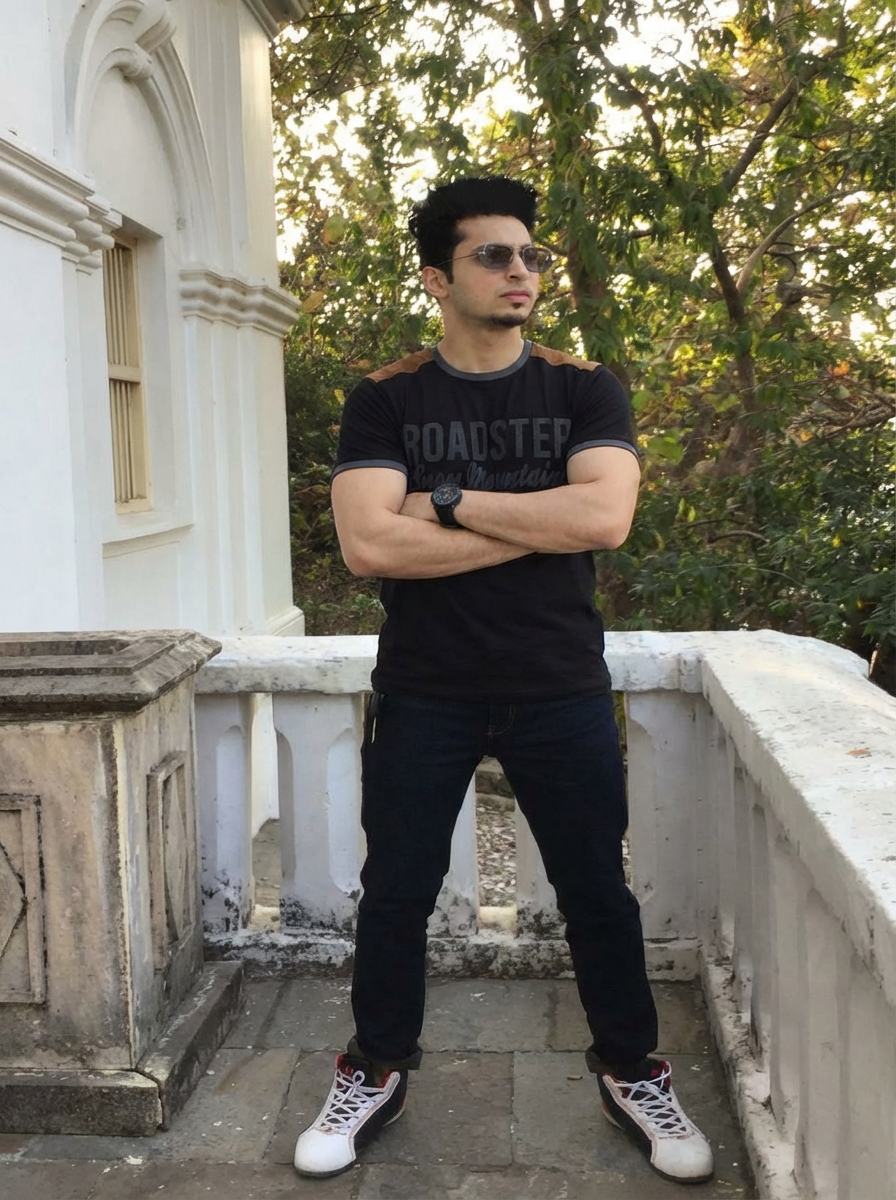
- **Fabric Physics:** The source garment is a matte cotton jersey blend. It possesses low reflectivity and soft shadow transitions. The shoulder patches appear to be faux-suede or microsuede, requiring a distinct texture map that absorbs more light than the main cotton body. The grey trim at the collar and sleeves is a ribbed knit, slightly stiffer than the main body.
- **Key Features:** The central typography ("ROADSTER", "Snow Mountains", "Alaska", "SINCE 1978") is critical and must be preserved but accurately warped. The brown shoulder yoke patches must retain their distinct color and suede texture. The contrast grey piping on the sleeve cuffs and crew neck collar must be clearly visible.
PHASE 2: FIT & DRAPE SIMULATION
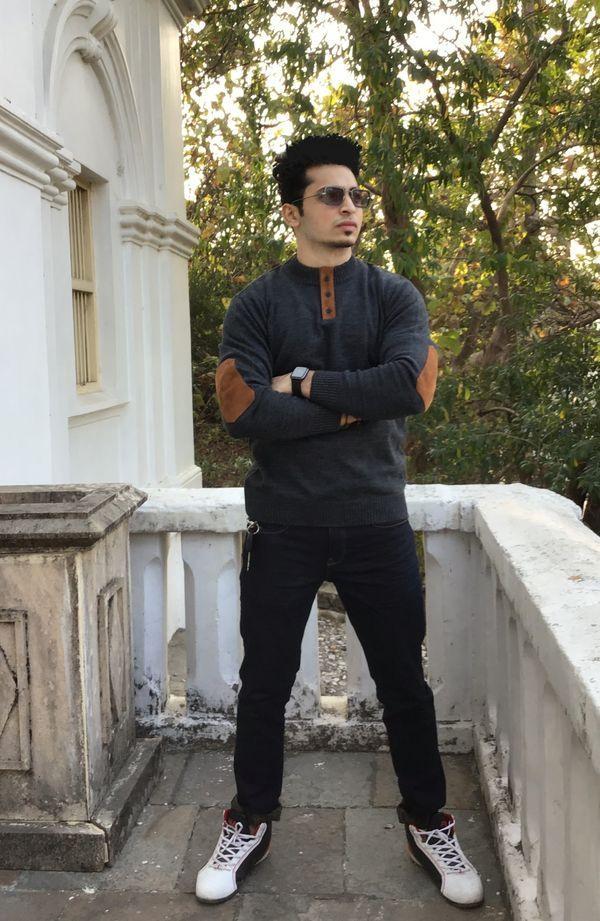
- **Body Mapping:** The user is in a "crossed arms" pose. The fabric tension will be high across the upper back and shoulders. The front graphic will be partially obscured and heavily folded where the biceps press against the pectorals. Significant compression folds (bunching) must occur at the armpits. Since the target is currently wearing a bulky sweater and the source is a fitted t-shirt, the overall silhouette volume must be reduced to reflect the thinner material closer to the skin.
- **Occlusion Handling:** The user's forearms and hands are crossed *over* the torso. The new garment must be rendered strictly *behind* the crossed arms and watch. The left wrist watch and the right hand are high-priority occlusion zones; the t-shirt graphic must be masked out where these limbs overlap the chest.
PHASE 3: ENVIRONMENT & LIGHTING
- **Light Match:** The target environment features strong natural daylight entering from the user's right (image left), creating hard shadows on the user's left side (image right). The black t-shirt must exhibit high-contrast lighting: bright, warm highlights on the right shoulder/pectoral and deep, obscured shadows under the crossed arms and on the left side of the torso.
- **Color Calibration:** The source image is cool studio lighting. The target image has warm, natural outdoor tones with potential green spill from the foliage. The black value of the t-shirt must be lifted slightly and warmed to match the ambient outdoor light, ensuring it doesn't appear as a void of pure black but interacts with the environment.
PHASE 4: IDENTITY PROTECTION
- **Facial Lock:** The user's sunglasses, nose, mouth, jawline beard, and spiked hairstyle must be completely frozen. The neck area (where the new collar sits) requires careful blending to match the user's skin tone.
- **Body Integrity:** Do not slim the user's broad shoulder width or arm muscle mass. While the garment volume decreases (sweater to t-shirt), the underlying anatomical structure of the chest and deltoids must remain robust and unaltered.