Thinking Process
PHASE 1: VISUAL DECONSTRUCTION
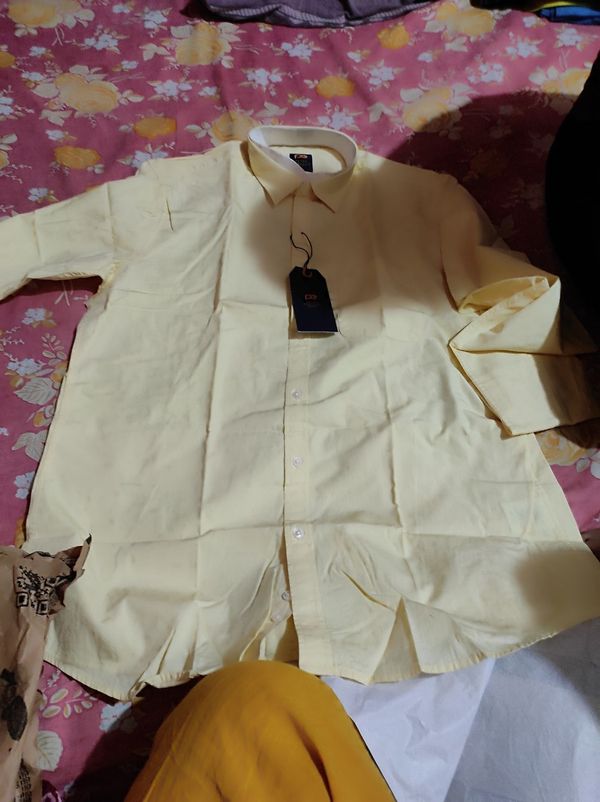
- **Fabric Physics:** The source garment appears to be a lightweight woven cotton or linen blend. Unlike the user's current knit sweater, this material has low elasticity and moderate stiffness. It is matte (non-reflective) but will show distinct, sharp creasing rather than soft folds. Light diffusion should be high, with no specular highlights.
- **Key Features:** The structured spread collar with a contrasting white inner band is a critical focal point. Visible details include the center front placket, standard 4-hole white buttons, the chest pocket area (if present/visible), and the curved "shirttail" hemline. The black retail tag hanging from the button is a foreign object and should ideally be removed for a realistic try-on, unless strictly requested otherwise.
PHASE 2: FIT & DRAPE SIMULATION
- **Body Mapping:** Due to the woven nature of the target shirt, it must not cling to the biceps or pectorals like the current knitwear. The simulation must introduce "ease" (air gap) between the skin and fabric.
- **Right Arm:** Because the user's arm is flexed upward, the fabric must compress and bunch significantly at the inner elbow (antecubital fossa) and pull tight across the outer elbow point. Gravity will cause the sleeve cuff to slide slightly down the forearm, exposing the wrist.
- **Shoulders:** The shoulder seam must sit at the acromion bone, transitioning into a vertical drape down the torso, avoiding the "shrink-wrapped" look.
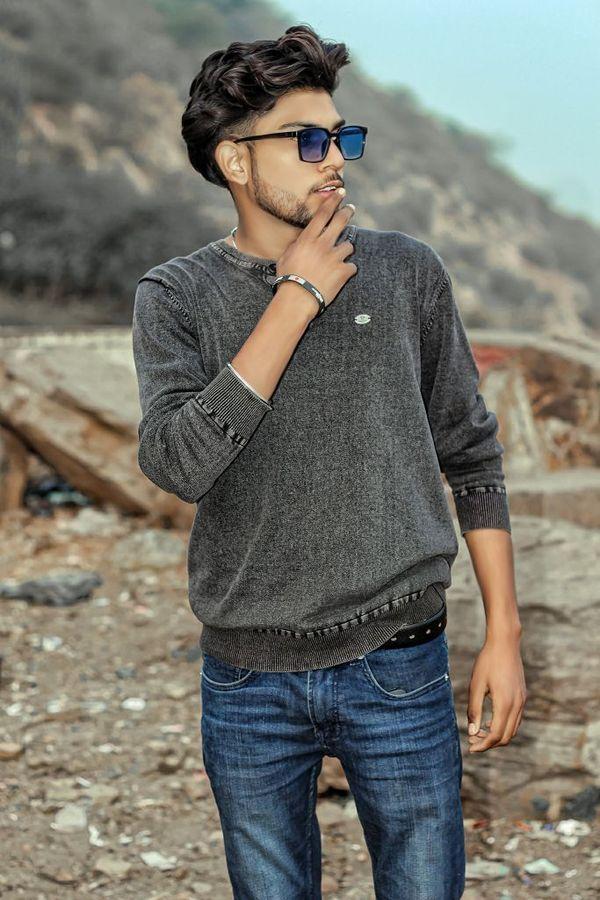
- **Occlusion Handling:** **CRITICAL:** The user's right hand and fingers are touching the chin. The new garment's collar and upper chest area must be rendered *behind* this hand. The user's beard and jawline must also layer over the collar structure.
PHASE 3: ENVIRONMENT & LIGHTING
- **Light Match:** The user is in a natural, outdoor environment with soft, diffused daylight coming from overhead/front-left. The source garment is currently lit by warm, directional indoor artificial light.
- **Shadows:** The new shirt requires soft ambient occlusion in the folds. Cast shadows from the collar onto the neck and from the right hand onto the chest must be generated to match the scene's global illumination.
- **Color Calibration:** The source image has a warm/yellow color cast from indoor bulbs. This must be neutralized (white balanced) before applying the shirt to the user. The pale yellow of the shirt must be color-graded to match the cooler, desaturated tones of the outdoor background to prevent it from looking "pasted on."
PHASE 4: IDENTITY PROTECTION
- **Facial Lock:** The entire head region—including the voluminous hair, sunglasses, nose, beard, and the specific position of the fingers touching the face—must remain pixel-perfectly frozen.
- **Body Integrity:** The simulation is strictly forbidden from altering the user's body mass index or skeletal structure. The user's shoulder width and arm thickness must remain constant; only the clothing volume changes. Do not slim the waist or enhance the chest muscles.