Thinking Process
PHASE 1: VISUAL DECONSTRUCTION
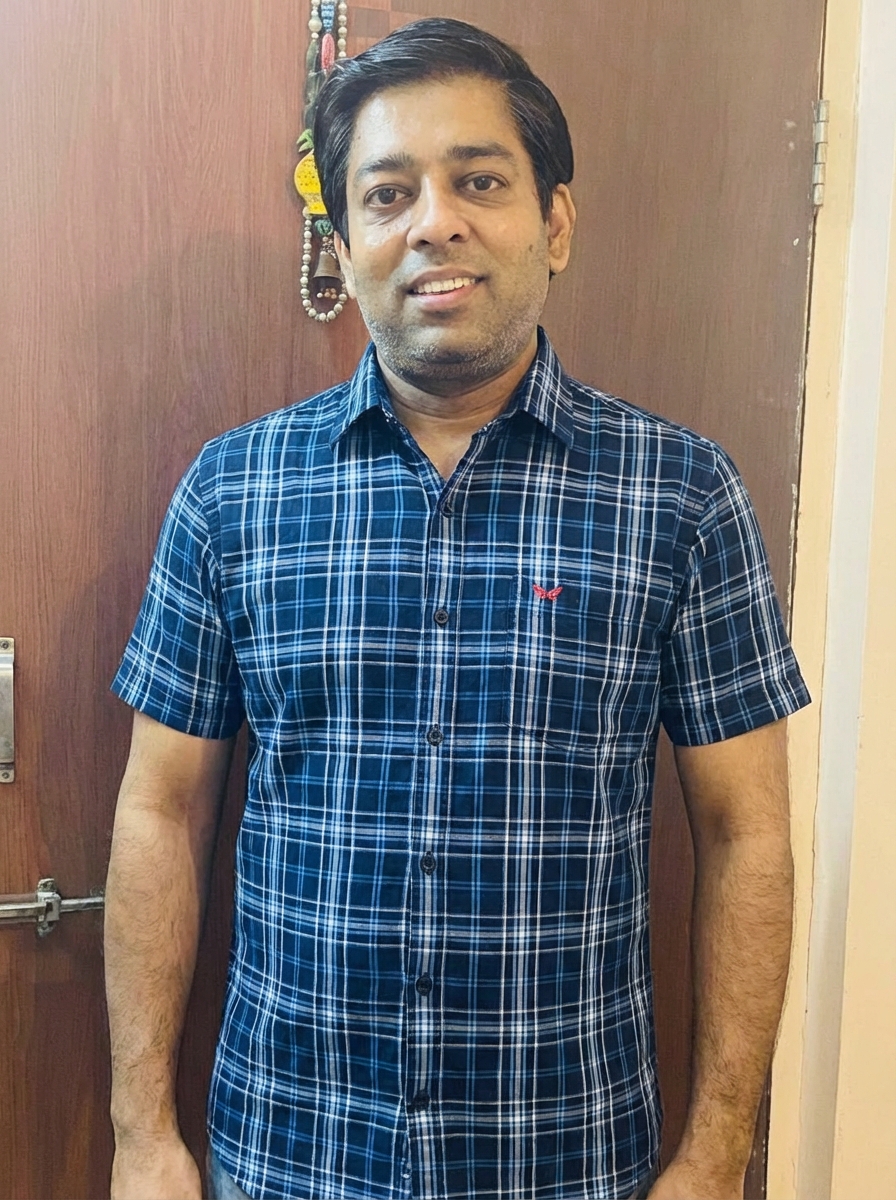
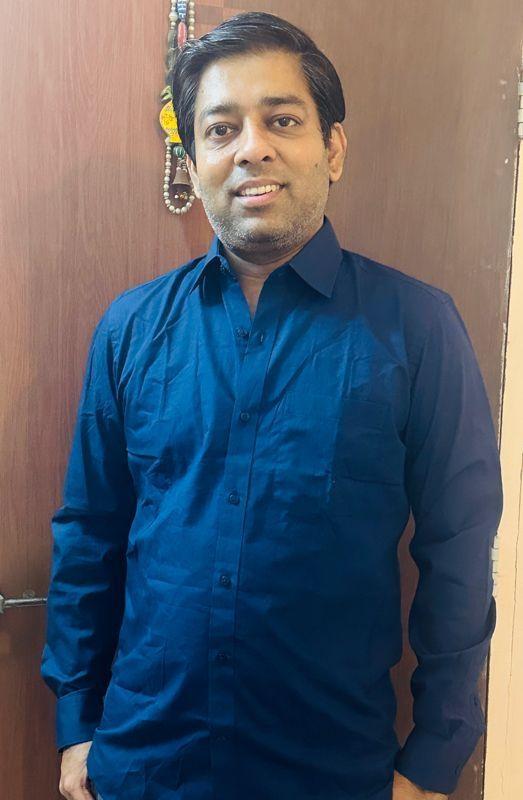
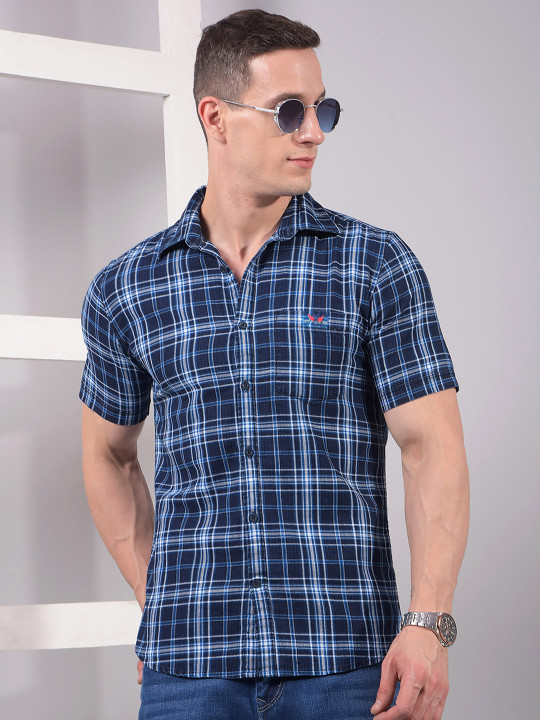
- **Fabric Physics:** The source garment appears to be a lightweight woven cotton or linen blend with a matte finish. Unlike the user's current shirt, which shows a slight synthetic sheen, the new garment should exhibit low specular reflection and softer, more diffuse light scattering. The structure is semi-rigid at the collar and button placket but pliable across the torso.
- **Key Features:** The specific plaid/checkered pattern alignment must be maintained across seams. Crucial details include the spread collar structure, the chest pocket on the wearer's left side containing the small red logo embroidery, the visible hem stitching on the short sleeves, and the dark buttons contrasting against the lighter check lines.
PHASE 2: FIT & DRAPE SIMULATION
- **Body Mapping:** The target user has a standard build, distinct from the athletic "V-taper" of the source model. The fabric simulation must relax the waist taper of the source shirt to accommodate the user's straighter torso silhouette. Critical physics change: The source is short-sleeved while the user wears long sleeves. The simulation must terminate the fabric drape at the mid-bicep, requiring texture in-painting for the user's exposed forearms which are currently covered by blue fabric. The shirt should hang vertically from the chest apex, avoiding the tight "muscle fit" seen in the source image.
- **Occlusion Handling:** The user's neckline and jaw are clear, but the current high collar must be fully masked out. There are no major occlusions like long hair or necklaces crossing the torso. The user's hands are at the peripheral bottom; the shirt hem must fall naturally behind the wrist area without clipping.
PHASE 3: ENVIRONMENT & LIGHTING
- **Light Match:** The user's environment has warm, overhead indoor lighting (likely tungsten), casting soft shadows downward and slightly to the viewer's left. The source image is cool-toned studio lighting. To integrate, the cool white/blue checks of the source shirt must be warmed with a yellow/orange tint to match the ambient room tone. Shadows must be generated under the new collar and beneath the chest pocket to match the depth of the user's facial shadows.
- **Color Calibration:** The stark white lines in the plaid pattern must be reduced in luminance (brightness) to match the exposure of the user's room. The deep blues of the source shirt should be slightly desaturated and shifted warmer to harmonize with the wooden door background.
PHASE 4: IDENTITY PROTECTION
- **Facial Lock:** Absolute pixel preservation is required for the user's head, facial features, hair, and neck skin above the Adam's apple. The facial boundary must remain untouched by the collar transfer.
- **Body Integrity:** Strictly forbidden to apply the source model's muscular physique to the target user. The user's shoulder width, chest volume, and waist circumference must be preserved exactly to ensure the Virtual Try-On represents a realistic fit for *him*, not a morph of the model.