Thinking Process
PHASE 1: VISUAL DECONSTRUCTION
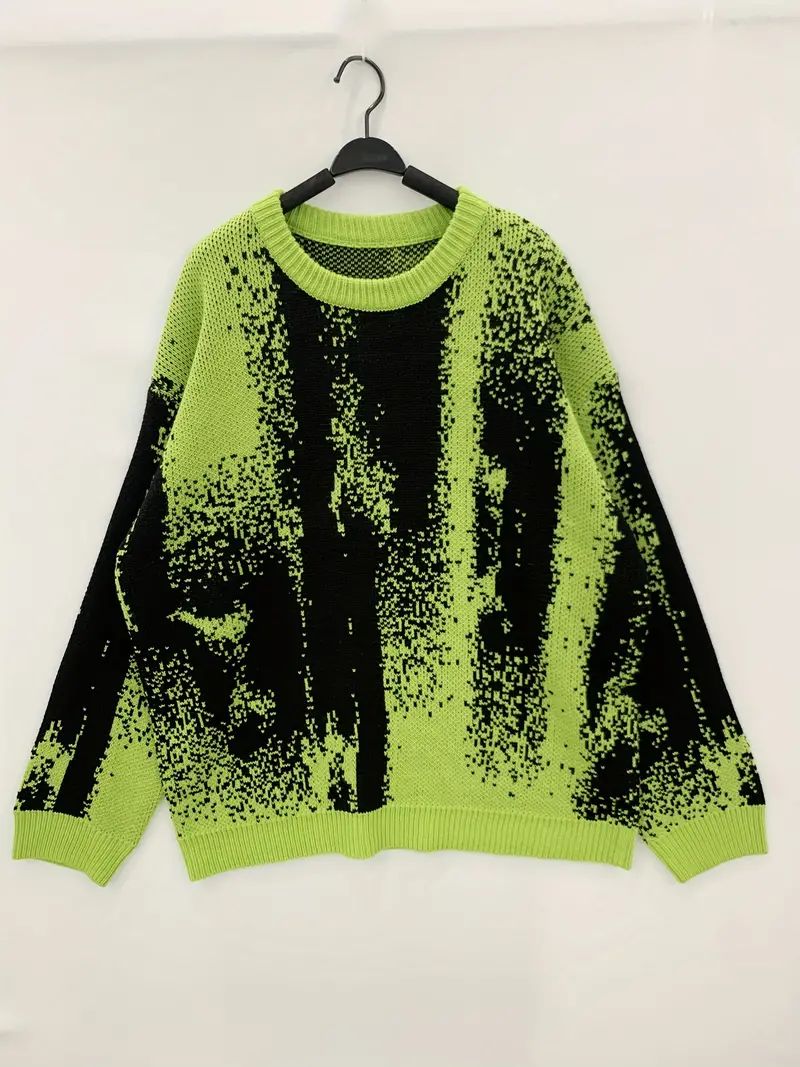
- **Fabric Physics:** The source garment is a medium-weight knit (acrylic or cotton blend) with a matte finish. Unlike the user's current crisp cotton shirt, this material has low specularity (absorbs light) and high friction. It requires soft-body simulation; folds must be rounded and heavy, not sharp or creased. The surface texture must exhibit visible ribbing at the collar, cuffs, and hem.
- **Key Features:** The distinct lime green and black "digital noise" pattern must wrap volumetrically around the torso, not appear as a flat overlay. The ribbed crew-neck collar, the elasticated ribbed cuffs, and the bottom hemline structure are critical boundaries that define the garment's silhouette.
PHASE 2: FIT & DRAPE SIMULATION
- **Body Mapping:**
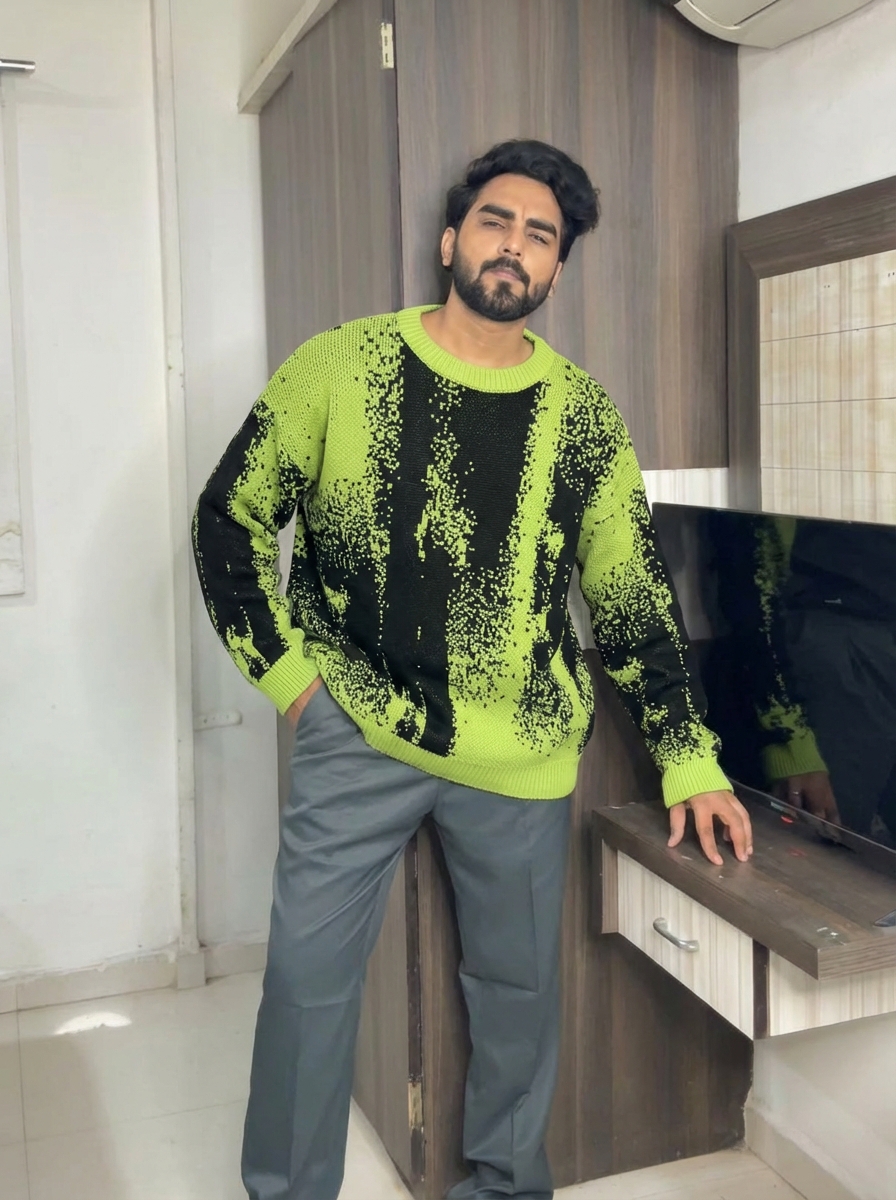
- **Torso:** The sweater is a pullover and should not be tucked in. It must hang loosely over the waistband of the grey trousers, likely obscuring the belt. Gravity will pull the fabric vertically, but the user's slight lean to his right will cause minor diagonal shearing folds across the chest.
- **Right Arm (Pocket):** Significant bunching is required at the inner elbow due to the bent arm. The sleeve cuff will likely ride up slightly or bunch heavily at the wrist where the hand enters the pocket.
- **Left Arm (Resting):** The fabric should drape relatively straight with minor accumulation near the wrist/watch area where the arm meets the furniture.
- **Occlusion Handling:**
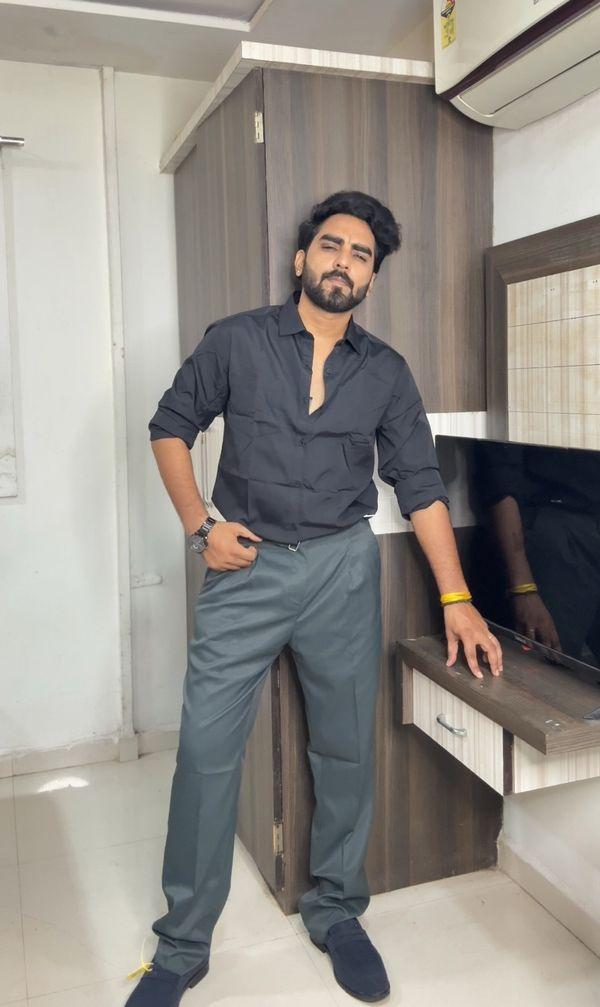
- **Right Hand:** The wrist enters the trouser pocket. The sweater hem must interact physically here—either being pushed up by the wrist or draping over the top of the trouser pocket entry.
- **Accessories:** The watch (right wrist) and yellow band (left wrist) are currently visible. If the sweater sleeves are long, these may be covered. If the sleeves are pulled up, these items must be layered *over* the garment skin.
- **Beard/Neck:** The user's beard is short but may cast a small shadow on the new, higher crew-neck collar.
PHASE 3: ENVIRONMENT & LIGHTING
- **Light Match:** The room utilizes overhead, diffused artificial lighting (likely LED), casting soft shadows downward and slightly to the user's right (evidenced by the shadow behind the legs). The sweater must generate self-shadowing in the armpits, under the chest, and deep in the fabric folds at the elbows to match the scene's ambient occlusion.
- **Color Calibration:** The source image is studio-lit and high contrast. The lime green must be slightly desaturated and color-graded to match the cooler, slightly lower-contrast interior lighting of the user's room to prevent a "glowing" artifact effect.
PHASE 4: IDENTITY PROTECTION
- **Facial Lock:** The user's hair volume, beard, facial structure, and skin tone must remain pixels-perfectly frozen. The neckline transition must be seamless, replacing the open collar of the shirt with the crew neck of the sweater without altering the neck width.
- **Body Integrity:** Strict prohibition on slimming or bulking effects. The silhouette will naturally expand slightly due to the thickness of the knit fabric compared to the thin dress shirt, but the user's underlying shoulder width and stance must remain unaltered.