Thinking Process
PHASE 1: VISUAL DECONSTRUCTION
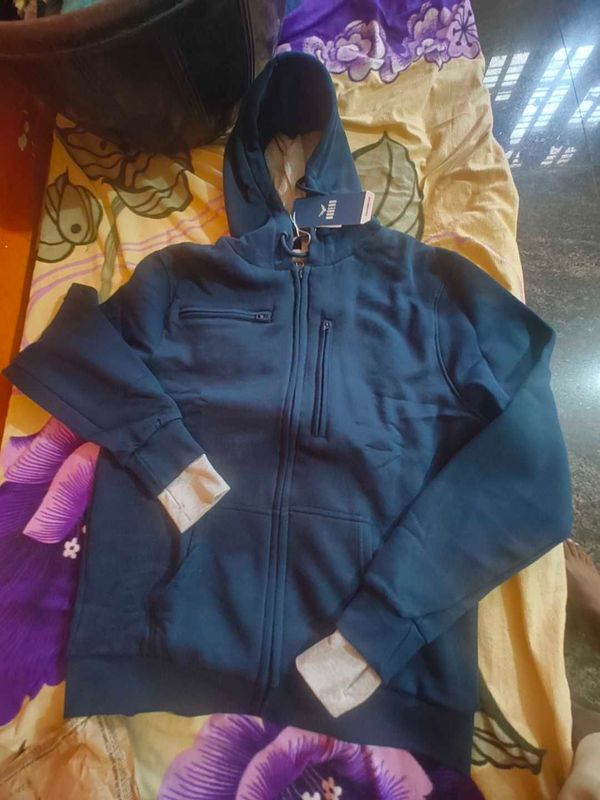
- **Fabric Physics:** The source garment is a heavyweight cotton-blend fleece or jersey material. It possesses a matte finish with high light absorption and low specularity. The simulation must render the fabric with soft structural rigidity, ensuring the hood and collar areas hold shape rather than collapsing like silk, while the torso area allows for softer folding.
- **Key Features:** The distinct petrol-blue color must be maintained. Crucial details include the vertical central zipper (and its waviness), the horizontal zippered chest pocket on the left breast, the kangaroo pockets, and most importantly, the contrasting light grey/beige ribbed cuffs and hood lining. The brand tag attached to the hood drawstring should be digitally removed.
PHASE 2: FIT & DRAPE SIMULATION
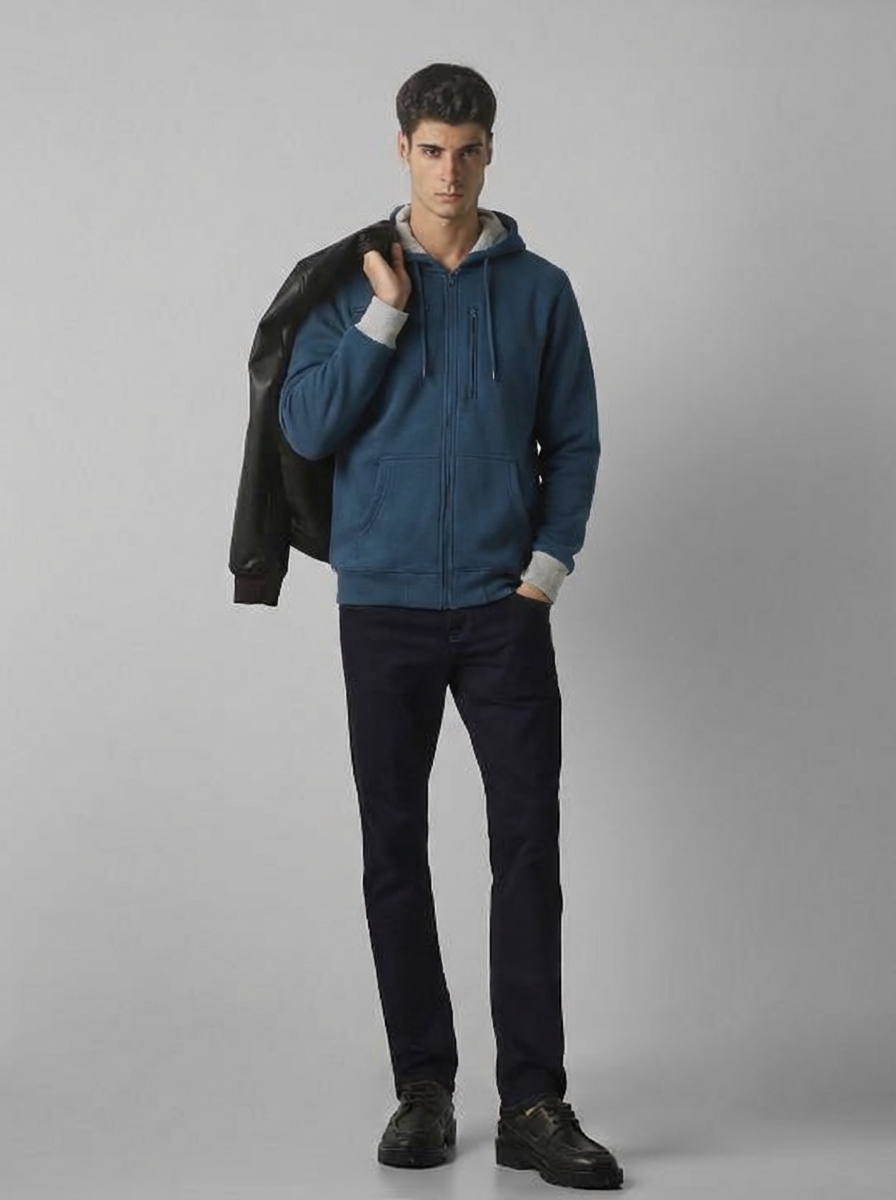
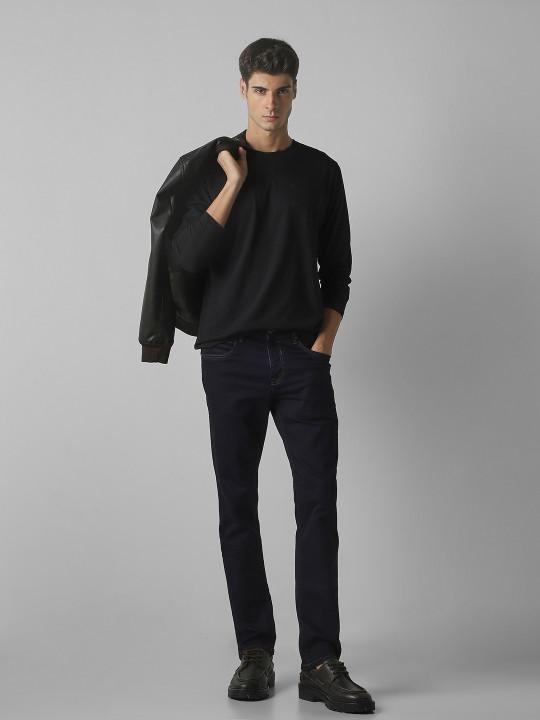
- **Body Mapping:** On the user's left arm (hanging straight), the sleeve should bunch slightly at the wrist above the cuff, adhering to gravity. On the user's right arm (raised), the fabric must exhibit tension across the deltoid and substantial bunching at the inner elbow crease. The hoodie is a relaxed fit and should not cling tightly to the torso like the current black t-shirt; it should add slight volumetric bulk to the silhouette.
- **Occlusion Handling:** **CRITICAL:** The user is holding a black leather jacket over his right shoulder. The virtual hoodie must be rendered as the *base layer*, passing *underneath* the held leather jacket. The user's right hand and the bulk of the leather jacket must be masked as foreground elements to ensure the hoodie does not render on top of them. The hoodie's hood component needs to settle around the back of the neck, visibly tucked behind the held leather jacket where they intersect.
PHASE 3: ENVIRONMENT & LIGHTING
- **Light Match:** The target environment utilizes soft, diffuse studio lighting with a neutral/cool temperature, coming primarily from the front-left. The source garment image has harsh, warm, directional flash lighting. The garment's texture map must be neutralized to remove the yellow cast from the room and the harsh specular highlights from the flash. Shadows on the new garment must be soft and fall to the user's right and rear.
- **Color Calibration:** The source blue is currently oversaturated due to the camera flash. It requires desaturation and a slight cool-tone shift to match the grey studio background and the color grading of the target image. The light grey cuffs must reflect the studio white balance, avoiding any yellow tint.
PHASE 4: IDENTITY PROTECTION
- **Facial Lock:** The user's entire head, including hair texture, facial structure, skin tone, and neck anatomy, must be frozen and pixel-preserved.
- **Body Integrity:** The user's slim build must be maintained; the hoodie should add fabric volume but not alter the underlying skeletal structure. The lower body (jeans, shoes) and the prop (held leather jacket) are immutable and must not be warped or resized.