Thinking Process
PHASE 1: VISUAL DECONSTRUCTION
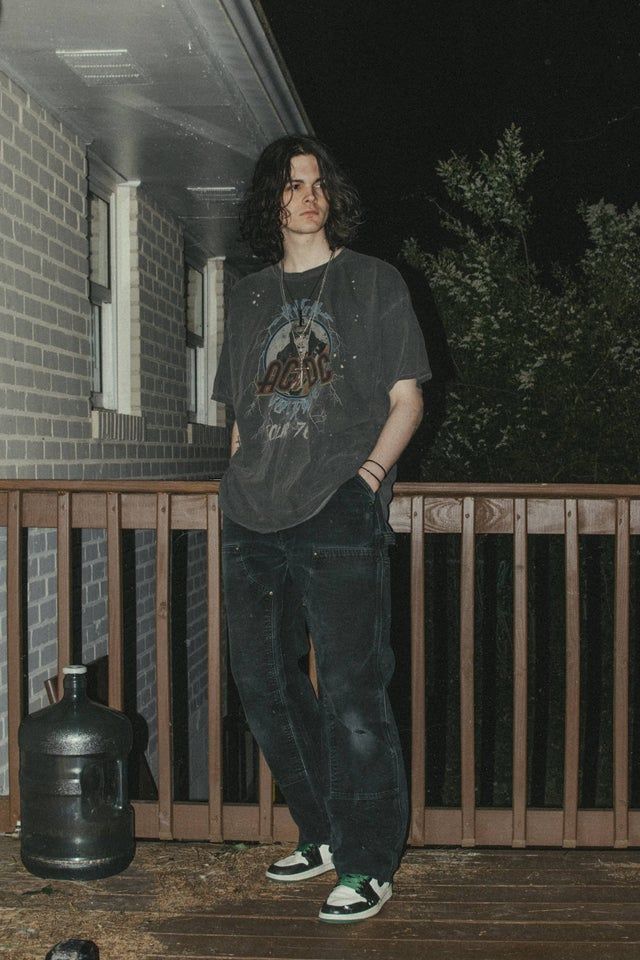
- **Fabric Physics:** The source garment is a heavyweight, vintage-wash cotton jersey. It possesses a high friction coefficient (low sheen/matte finish) and significant structural stiffness typical of "streetwear" oversized tees, meaning it will create angular folds rather than fluid, silk-like drapes. Light absorption should be high due to the charcoal/black dye.
- **Key Features:** The central "AC/DC" graphic print with its specific weathering/cracking must be preserved without distortion. The distress marks (holes) near the collar and shoulder seams, as well as the slightly stretched crew neck ribbing, are essential texture details. The drop-shoulder seam construction must be retained to maintain the oversized aesthetic.
PHASE 2: FIT & DRAPE SIMULATION
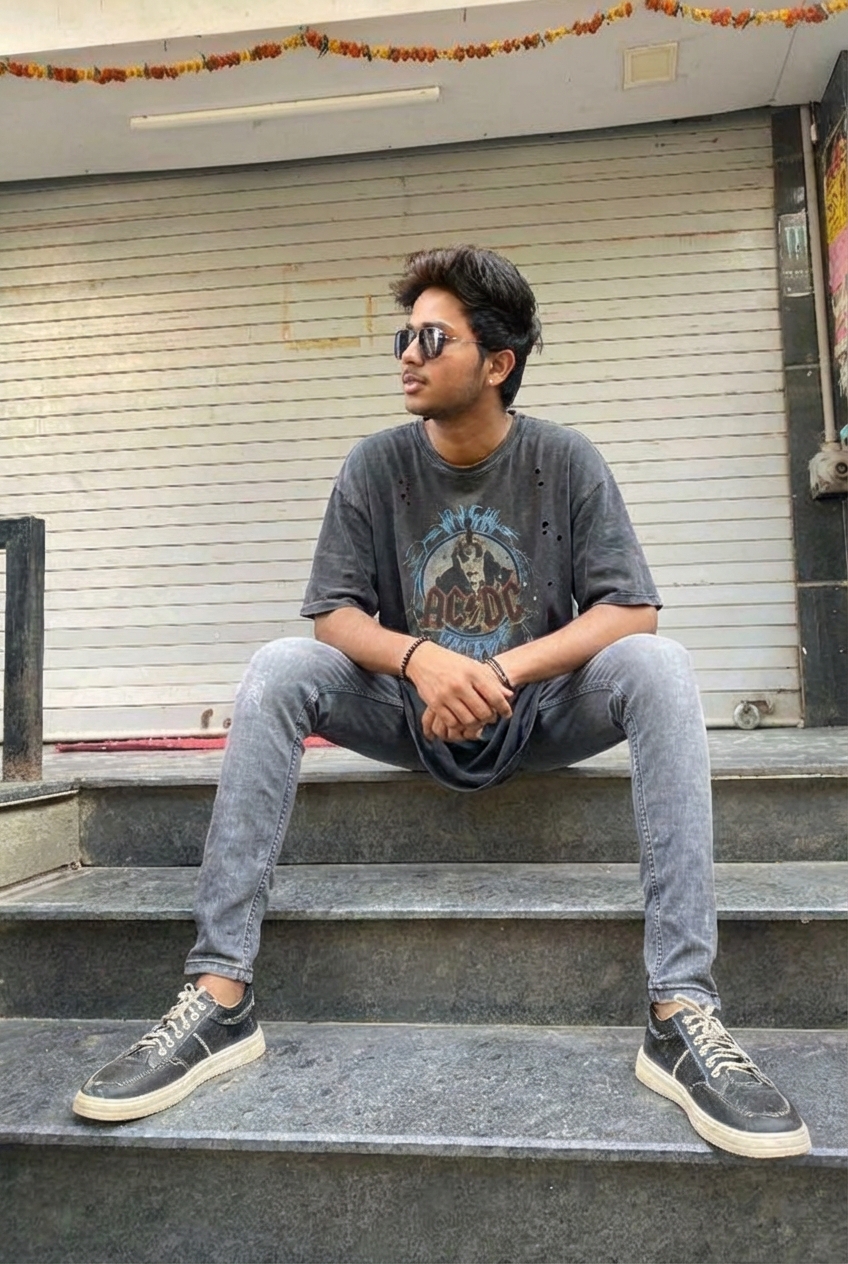
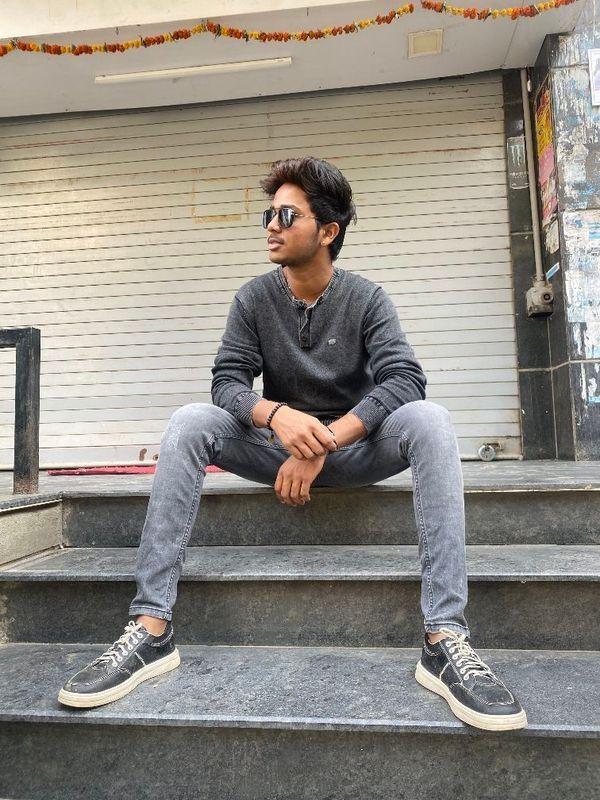
- **Body Mapping:** Due to the user's seated, forward-leaning posture (elbows resting near knees), the garment represents a complex fluid dynamics challenge. Gravity dictates the fabric must hang vertically towards the ground, pulling away from the user's abdomen (creating a gap between chest and stomach). The fabric should bunch significantly at the lower torso/lap area where it meets the thighs. The short sleeves must drape naturally over the deltoids, requiring the generation of skin texture for the user's currently covered forearms.
- **Occlusion Handling:** The user's hands are clasped between the legs; the hemline of the oversized tee will likely interact with the wrists or upper thighs. The bracelet on the right wrist acts as a boundary layer and must layer *over* any skin generation or fabric drape. The necklace seen in the source image is *not* part of the garment and should be removed; only the user's existing accessories (sunglasses, bracelet) remain.
PHASE 3: ENVIRONMENT & LIGHTING
- **Light Match:** The source image utilizes harsh, direct flash photography (high contrast, frontal fall-off), while the target environment is diffuse, ambient daylight (soft shadows, likely overcast). The source texture must be "de-lit" to remove the flash highlights and then re-lit to match the target's top-down, soft ambient lighting. Shadows on the new garment must cast downward, particularly under the chest and within the fold crevices created by the seated posture.
- **Color Calibration:** The source garment's blacks are washed out by the flash; they must be deepened to a true charcoal/faded black to match the contrast levels of the user's grey jeans. The color temperature must be shifted from the cool/flash tone of the source to the neutral/warm daylight balance of the target scene.
PHASE 4: IDENTITY PROTECTION
- **Facial Lock:** The user's entire head region, including the specific hairstyle volume, sunglasses, jawline, and ear geometry, must be masked and frozen.
- **Body Integrity:** The user's shoulder width and skeletal structure must remain unaltered. Crucially, the "slimming" effect often caused by warping algorithms must be disabled to maintain the user's athletic build. The skin tone generated for the exposed arms (replacing the current long sleeves) must perfectly match the user's facial complexion and lighting conditions.