Thinking Process
PHASE 1: VISUAL DECONSTRUCTION
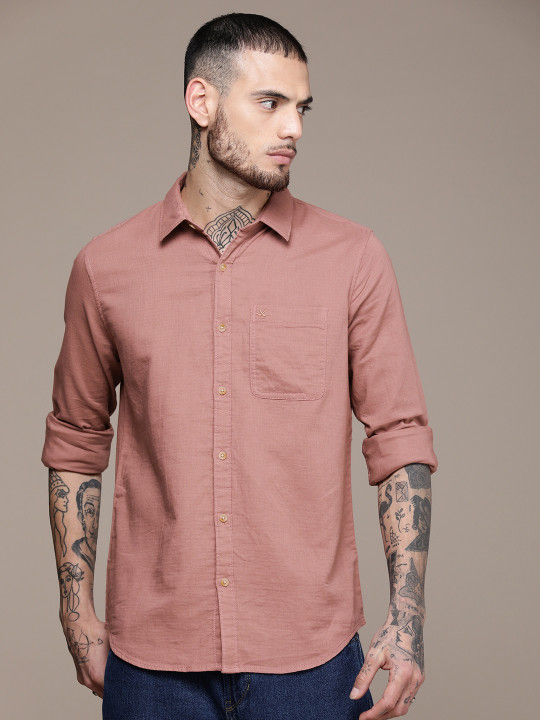
- **Fabric Physics:** The source garment is a matte, medium-weight cotton or cotton-linen blend. Unlike the user's current high-specularity leather jacket, this material must diffuse light with zero gloss. It has a structured drape but allows for soft micro-wrinkles, particularly around tension points.
- **Key Features:** The rolled-up sleeves (hitting just below the elbow) are a defining geometric feature that must be preserved. The single left-chest pocket, the small embroidered logo on that pocket, the visible button placket with contrast buttons, and the curved bottom hemline are mandatory retention points.
PHASE 2: FIT & DRAPE SIMULATION
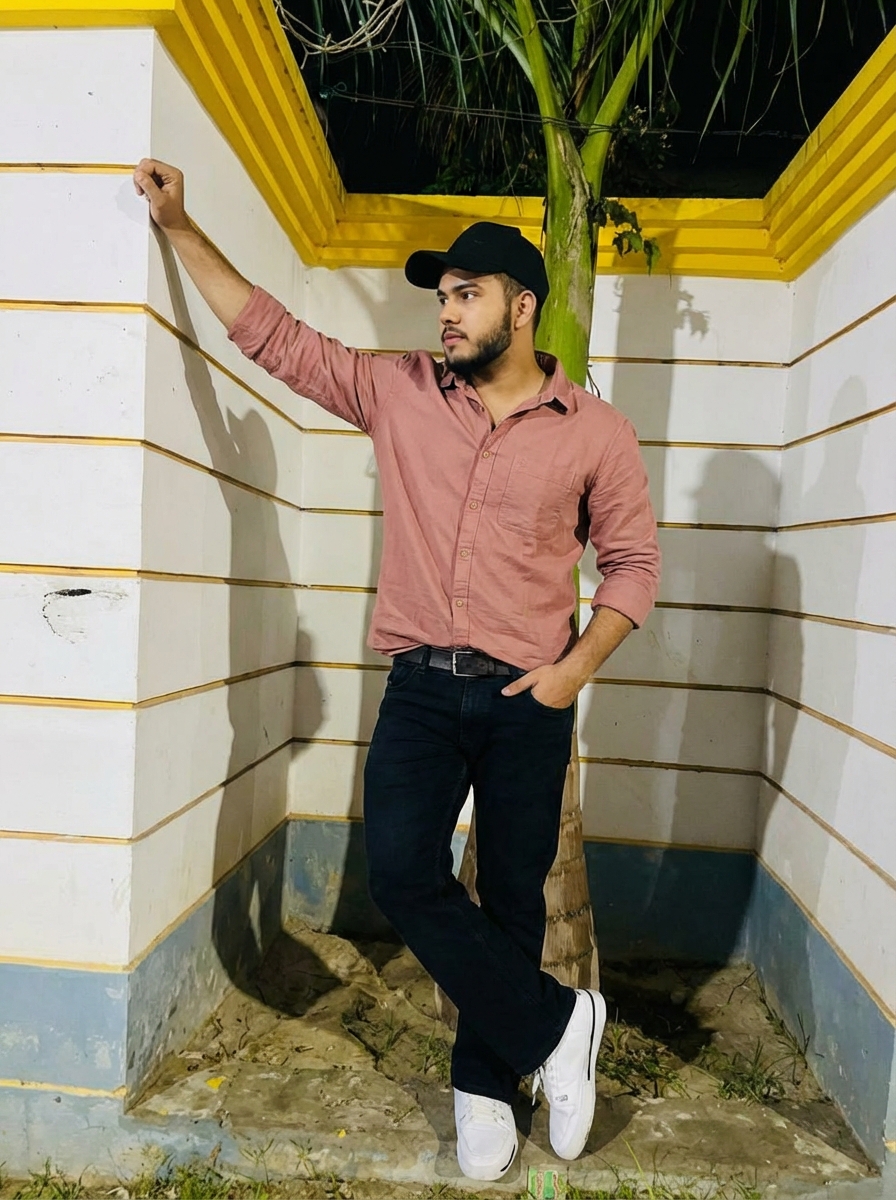
- **Body Mapping:** Due to the user's raised right arm (leaning against the wall), the simulation must calculate "axillary pull" (tension) from the right armpit across the chest. The fabric on the right side of the torso must lift and stretch diagonally upward. The rolled sleeve on the right arm will sit higher on the bicep compared to the left arm due to this extension. The left side should hang looser, following gravity.
- **Occlusion Handling:** The user's left hand is tucked into the jeans pocket. The new shirt's hemline must be simulated to interact with this area—either draping slightly over the wrist or bunching above the pocket entry point. The black cap and the user's neck area must be layered strictly *over* the new shirt collar.
PHASE 3: ENVIRONMENT & LIGHTING
- **Light Match:** The user image utilizes a direct, hard flash or strong frontal artificial light source, creating sharp, dark shadows on the wall behind him. The new garment must shed the soft studio lighting of the source image and adopt high-contrast shading. The center of the chest should be brightest, with rapid fall-off into deep shadows within the fabric folds.
- **Color Calibration:** The source garment is a muted/dusty pink. Under the harsh, cool-toned flash of the target environment, the pink saturation should be slightly desaturated in the highlights and deepened in the fold shadows to match the scene's dynamic range.
PHASE 4: IDENTITY PROTECTION
- **Facial Lock:** The user's entire facial structure, facial hair (beard/stubble), and the black cap must remain pixel-perfect frozen. The transition from the neck to the new collar must be seamless without altering the neck width.
- **Body Integrity:** Strictly forbid any morphing or slimming of the user's torso width or arm muscle definition. The silhouette of the new shirt must respect the user's existing lean/athletic build without inflating or compressing the volume.