Thinking Process
PHASE 1: VISUAL DECONSTRUCTION
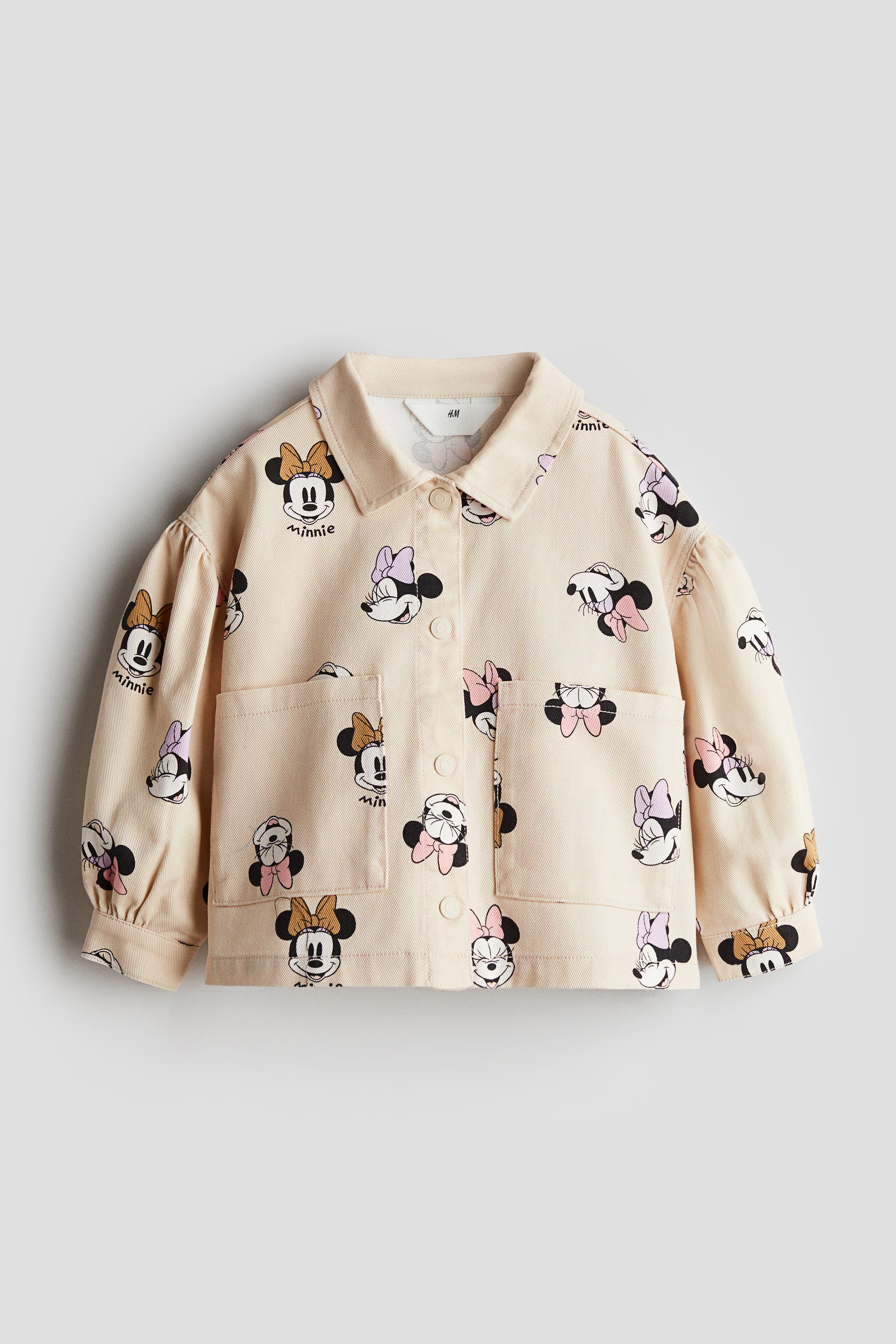
- **Fabric Physics:** The source garment is a heavy cotton twill or light denim with structural rigidity. Unlike the user's current soft knit top, this material possesses high bending resistance and low shear. It will not cling to the torso but rather maintain a boxy silhouette. The surface is matte with micro-texture; light reflection should be diffuse rather than specular.
- **Key Features:** The puffed/gathered shoulder seams must be preserved to create volume at the upper arm, distinct from the user's current fitted sleeve. The Minnie Mouse all-over print pattern, front button placket, and two large front patch pockets must retain their aspect ratio and not appear stretched. The collar structure requires stiffness, standing slightly away from the neck rather than laying flat against the skin.
PHASE 2: FIT & DRAPE SIMULATION
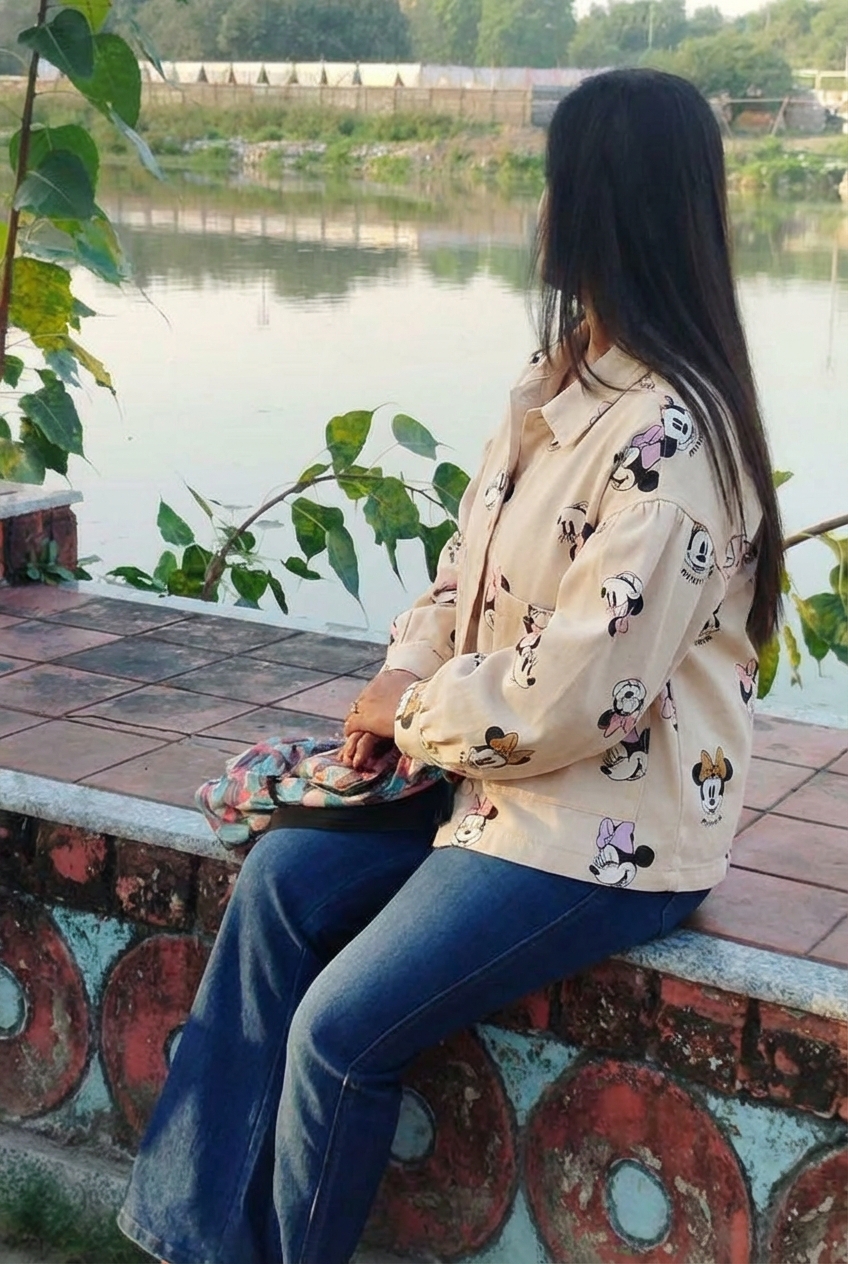
- **Body Mapping:** Due to the user's seated, slightly hunched posture, the jacket's back panel will curve convexly. The rigid fabric will create "tents" or gaps between the body and the garment, specifically at the lower back and waist, rather than following the spinal curve. The puffed sleeves will add significant volume to the upper arms. The bottom hem interacts with the seated position; the fabric will fold and bunch horizontally where it meets the lap/thighs, rather than hanging straight down.
- **Occlusion Handling:** This is a high-complexity occlusion scenario.
1. **Hair:** The user's long, dark hair cascades over the right shoulder and back. This entire hair volume must be segmented and layered *over* the new jacket.
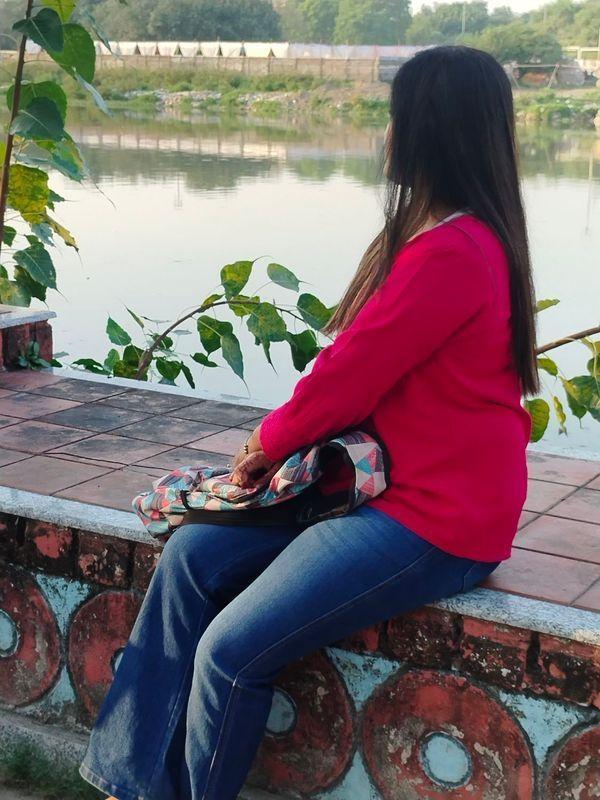
2. **Bag:** The patterned bag on the user's lap occludes the lower front torso. The jacket must be masked out where the bag exists, appearing tucked behind or resting on top of the bag depending on length.
3. **Hands:** The user's hands grasping the bag must remain visible; the jacket cuffs should terminate at the wrist bone, potentially bunching slightly if the sleeve is long.
PHASE 3: ENVIRONMENT & LIGHTING
- **Light Match:** The target environment features natural, outdoor daylight, likely overcast or late afternoon (soft, diffuse lighting). The light source appears to be coming from the upper left, casting soft shadows to the right. The studio-lit brightness of the source jacket must be reduced (exposure lowered) to match the slightly lower contrast and natural haze of the outdoor scene. Self-shadowing must be generated under the collar, inside the sleeve crumples, and beneath the bust line.
- **Color Calibration:** The source jacket is warm beige/cream. It needs to absorb the cool ambient tones of the lake and sky in the shadow areas (slight blue shift in blacks) while maintaining warm highlights. The white balance of the jacket must be shifted slightly cooler to integrate with the outdoor color temperature.
PHASE 4: IDENTITY PROTECTION
- **Facial Lock:** The user's profile (nose, jawline, cheek) and the specific flow and texture of the long dark hair are strictly inviolable. No pixels above the neck line (other than the collar overlay) should be altered.
- **Body Integrity:** Strict prohibition on body slimming. The simulation must respect the user's seated mass. Since the source garment is a structured jacket, the final silhouette should visually add bulk to the upper body compared to the current thin pink top; do not warp the jacket to look "fitted" or slim down the arms.