Thinking Process
PHASE 1: VISUAL DECONSTRUCTION
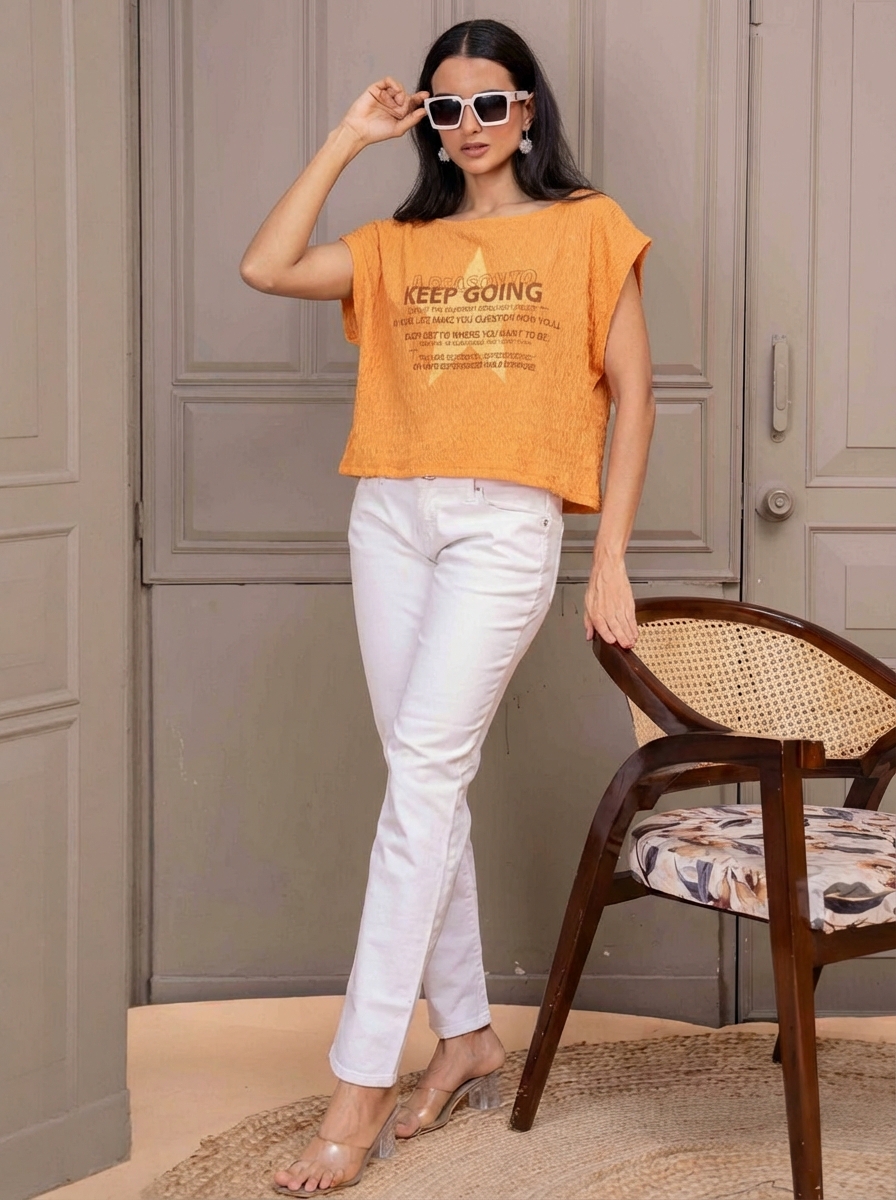
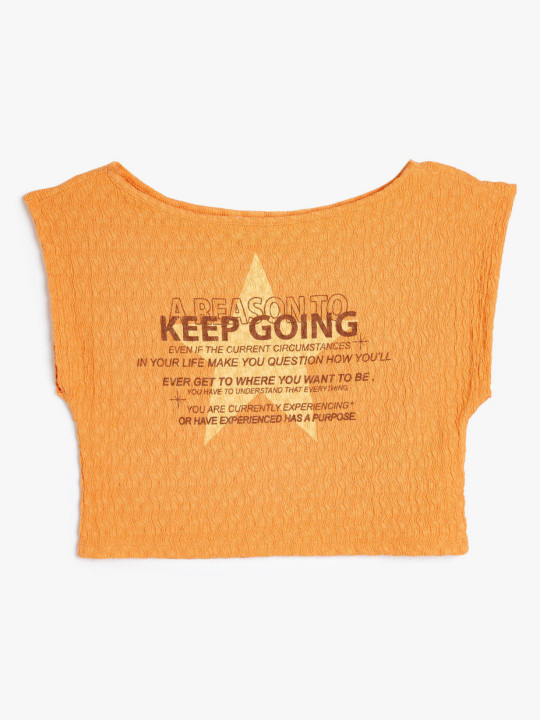
- **Fabric Physics:** The source garment features a "plissé" or crinkled texture, likely a cotton-synthetic blend. It has a matte finish with high surface roughness due to the micro-pleats. Light behavior must be diffuse; there should be no specular highlights (shine) typical of silk or leather. The texture acts as a micro-displacement map, creating tiny self-shadows within the fabric grooves.
- **Key Features:**
1. **Typography & Graphic:** The text block "A REASON TO KEEP GOING" and the underlying faint yellow star graphic must be preserved.
2. **Texture:** The distinct vertical wavy crinkle pattern across the entire surface.
3. **Hemlines:** The edges (sleeves and bottom hem) appear to have a "lettuce edge" or raw finish due to the crinkle stretch, which must remain uneven and not straight-cut.
4. **Neckline:** A wide boat-neck cut, differing significantly from the user's current V-neck straps.
PHASE 2: FIT & DRAPE SIMULATION
- **Body Mapping:**
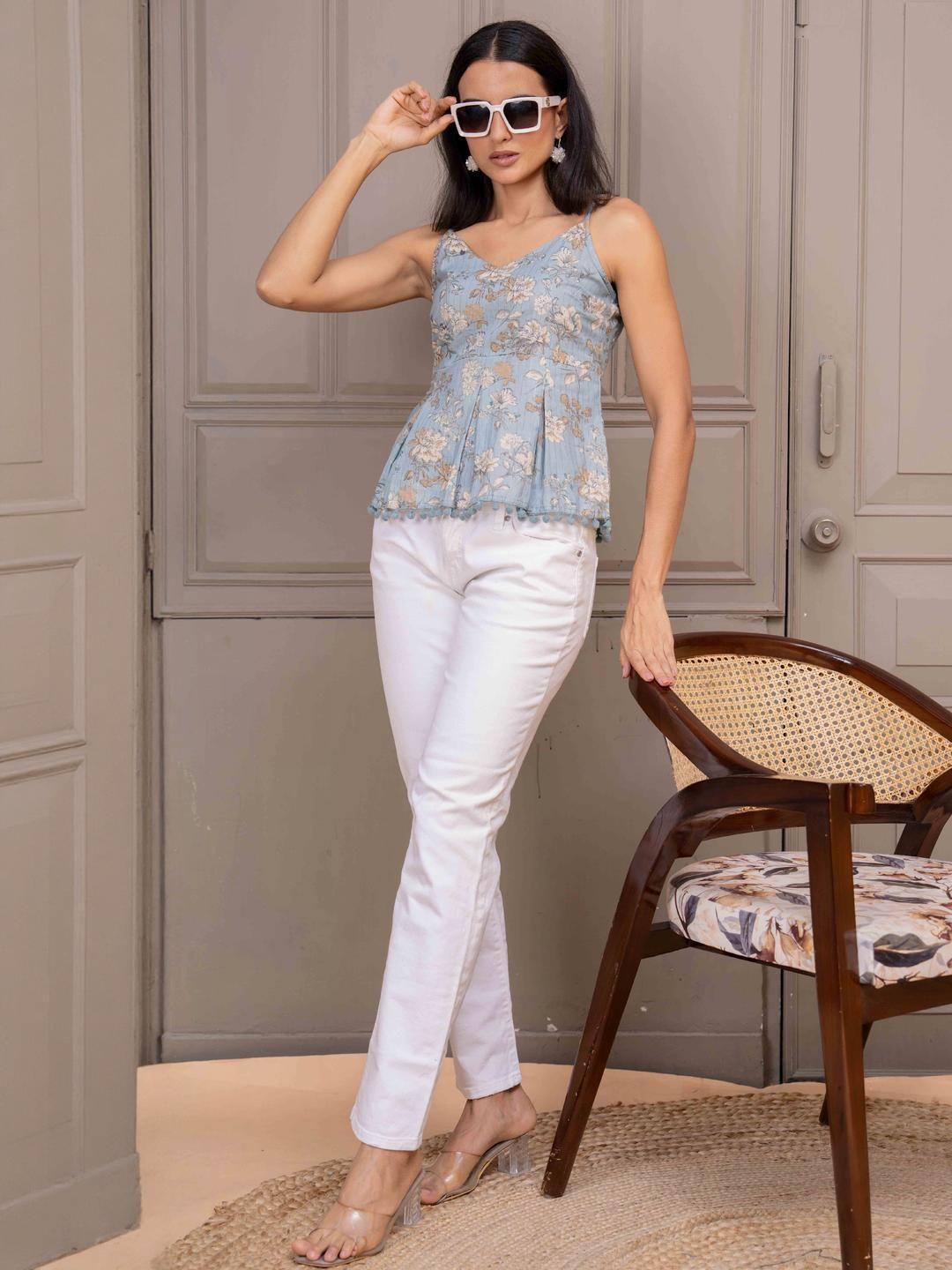
1. **Shoulder Interaction:** The user's right arm is raised. The new garment's right armhole must lift and compress/bunch slightly in the armpit area to simulate tension.
2. **Torso Drape:** Unlike the current fitted/cinched camisole, the source garment is a boxy crop top. It should drape vertically from the bust line, leaving negative space between the fabric and the user's waist. It must *not* curve inward at the waist.
3. **Gravity:** The user is leaning slightly to her left (viewer's right). The fabric weight should shift slightly toward the chair side, causing diagonal drag lines from the right shoulder toward the left hip.
- **Occlusion Handling:**
1. **Hair:** The user has dark hair falling over both shoulders and down the upper back/nape. This is the primary occlusion layer and must be segmented and composited *on top* of the new orange garment.
2. **Accessories:** The sunglasses held in the right hand are close to the face but clear of the torso area. Ensure the arm/shoulder connection point is masked cleanly so the new sleeve doesn't bleed onto the bare arm.
PHASE 3: ENVIRONMENT & LIGHTING
- **Light Match:** The user image utilizes soft, diffused studio lighting originating from the front-left (indicated by the shadow behind the chair and the highlight on the right cheekbone). The orange top must cast a slight drop shadow onto the white jeans at the waistline. The "crinkles" in the orange fabric must have highlights on the left ridges and shadows in the right grooves to match the scene's global illumination.
- **Color Calibration:** The user environment features warm, neutral earth tones (beige floor, grey door). The high-saturation orange of the source cloth may appear unnatural if pasted directly. A subtle warm grading (slight shift toward yellow/beige in the highlights) is required to integrate the garment into the room's ambient temperature.
PHASE 4: IDENTITY PROTECTION
- **Facial Lock:** The user's entire head, including the sunglasses being held, earrings, neck structure, and jawline, must remain pixel-perfectly frozen.
- **Body Integrity:** Strictly prohibit any warping of the user's exposed arms or lower body (white jeans). Although the new shirt is looser, the user's underlying waist width and arm thickness must not be artificially slimmed or expanded to fit the clothing mesh.