Thinking Process
PHASE 1: VISUAL DECONSTRUCTION
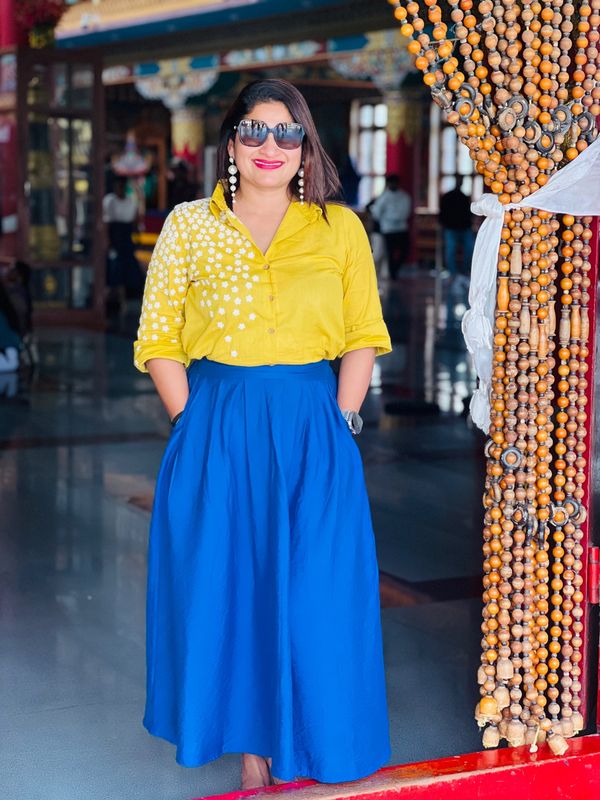
- **Fabric Physics:** The source garment is a medium-weight cotton or linen blend with a matte finish. It possesses structural stiffness around the collar and cuffs but drapes softly around the torso. It diffuses light rather than reflecting it (low specularity). The simulation must account for the fabric's tendency to crease rather than stretch.
- **Key Features:** The asymmetric white floral embroidery on the wearer's right shoulder/chest is the defining visual element and must be mapped correctly to the target's right side (which is partially turned away). The structured collar, front button placket (visible due to the torso twist), and the rolled-up sleeve cuffs must be preserved.
PHASE 2: FIT & DRAPE SIMULATION
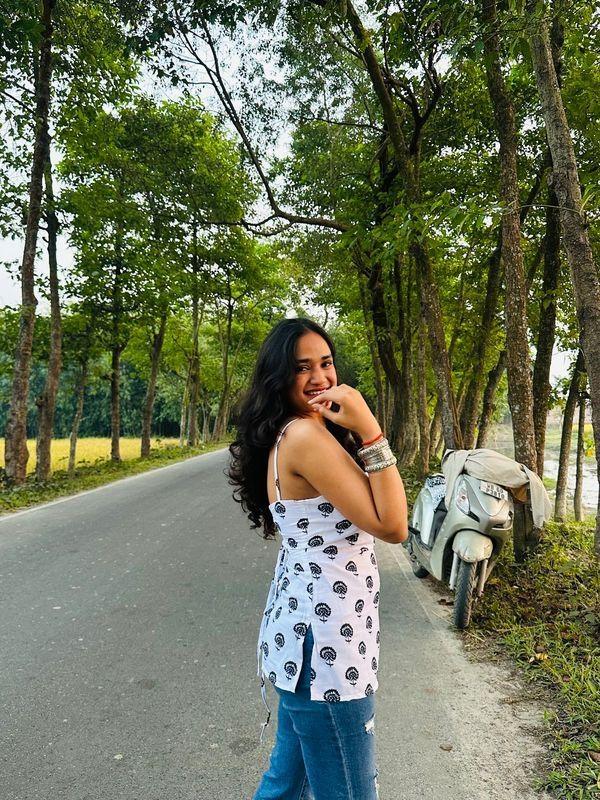
- **Body Mapping:** The target is in a dynamic, twisted pose (turning back over the left shoulder). The simulation must generate diagonal tension wrinkles across the back and side of the ribcage to reflect this torsion. Unlike the current strappy top, the new garment has sleeves; these must drape naturally over the shoulders and arms, following gravity. The shirt should likely be rendered with a relaxed fit, potentially untucked or loosely tucked to match the casual vibe of the jeans.
- **Occlusion Handling:**
1. **Hair:** The user's voluminous dark hair covers the upper back and left shoulder. The yellow shirt collar and back yoke must be rendered strictly *behind* the hair layer.
2. **Left Arm/Hand:** The left hand and wrist (including the silver bracelet) obscure the upper chest/neck area. The garment sleeve must interact realistically with the forearm, or the bracelet must overlap the sleeve cuff.
PHASE 3: ENVIRONMENT & LIGHTING
- **Light Match:** The user is in an outdoor environment with soft, diffused daylight filtered through trees (dappled lighting). The light source appears ambient and overhead. The bright, indoor-lit yellow of the source shirt must be adjusted to accept soft, cool shadows consistent with the tree canopy. Shadows cast by the user's hair onto the shoulder of the shirt must be rendered.
- **Color Calibration:** The source yellow is highly saturated. It requires subtle desaturation and a slight cool-tone shift to match the ambient color temperature of the gray asphalt and green foliage. Avoid "studio bright" popping; the fabric must absorb the environmental bounce light.
PHASE 4: IDENTITY PROTECTION
- **Facial Lock:** The user's face (eyes, nose, mouth), jawline, and ear visible through the hair must remain completely unaltered. The pose of the head must remain locked.
- **Body Integrity:** The user's arm circumference and shoulder width must be preserved. Do not slim the waist or arms to fit the garment; the garment must expand to fit the user's existing skeletal structure. The skin tone on the exposed face and hands must remain untouched.