Thinking Process
PHASE 1: VISUAL DECONSTRUCTION
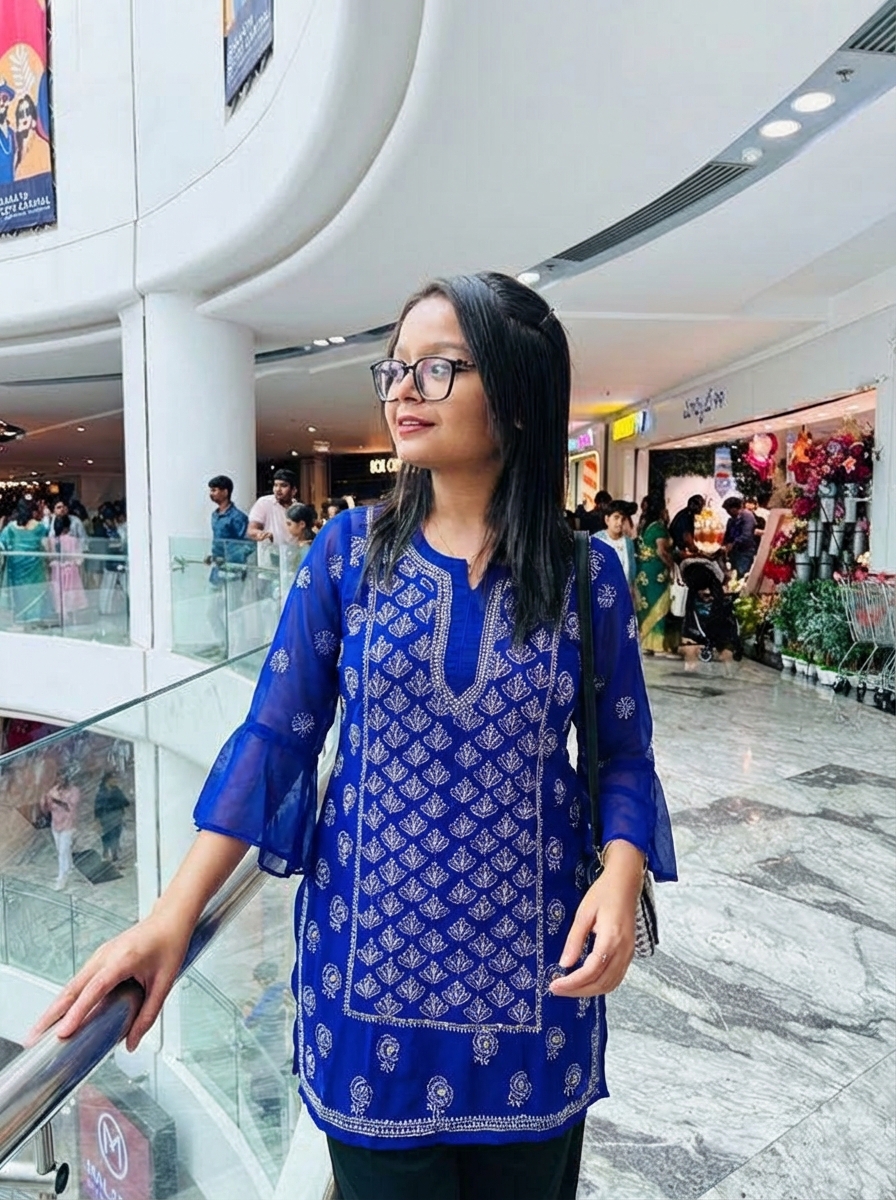
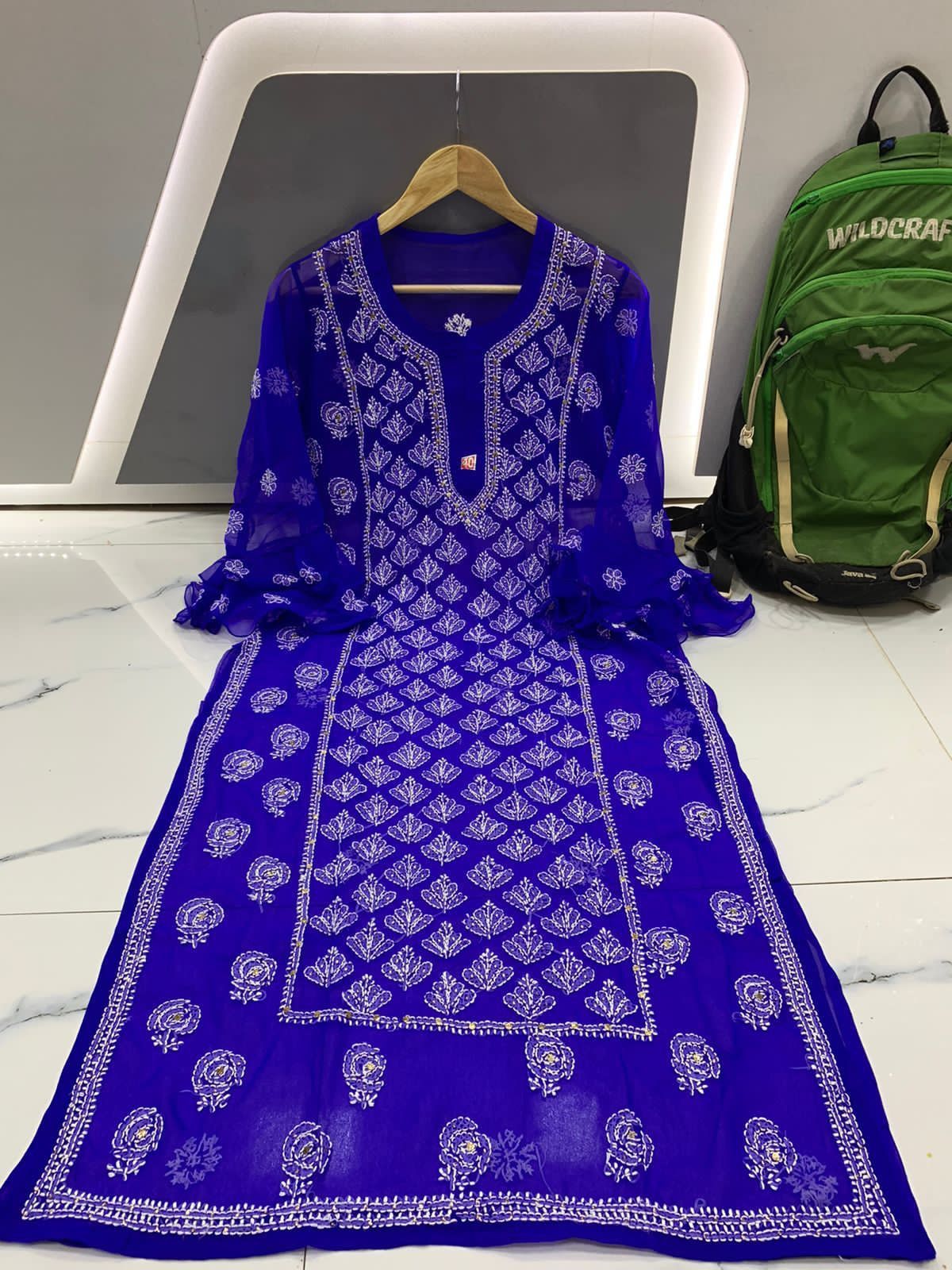
- **Fabric Physics:** The source garment appears to be a Georgette or Chiffon blend. It is lightweight, semi-sheer (especially at the sleeves), and highly flowy. It has a low bending stiffness, meaning it will drape heavily under gravity rather than holding a rigid shape. The material has a matte finish but will show soft specular highlights on the folds.
- **Key Features:**
- **Embroidery:** The intricate white Chikankari-style embroidery pattern covering the front bodice and scattered motifs on the skirt must remain high-contrast and sharp.
- **Sleeves:** The distinct flared/bell sleeves with ruffle detailing at the cuffs are a critical silhouette element.
- **Transparency:** The sleeves are unlined and sheer (skin should be partially visible underneath), while the bodice is opaque/lined.
- **Neckline:** The specific V-slit neckline design must be preserved.
PHASE 2: FIT & DRAPE SIMULATION
- **Body Mapping:**
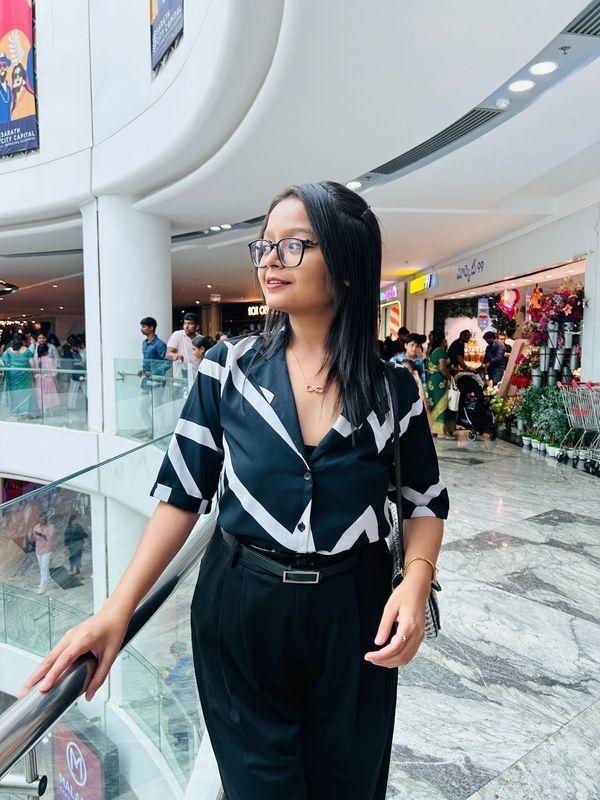
- **Silhouette Change:** The current user is wearing a tucked-in shirt. The target Kurti is a long tunic intended to be worn **untucked**. The simulation must generate the lower portion of the Kurti extending past the waist and hips, draping over the user's black trousers.
- **Right Arm:** As the user's right arm is extended to hold the railing, the fabric on the upper arm will pull tight, while the bell sleeve cuff will hang vertically due to gravity, exposing the wrist.
- **Left Arm:** The arm is relaxed; the sleeve should drape straight down with the ruffle pooling slightly at the wrist.
- **Occlusion Handling:**
- **Bag Strap:** The black shoulder bag strap on the user's left shoulder MUST be segmented and layered **over** the new blue garment. The fabric should show slight compression where the strap presses down.
- **Hair:** The strands of hair falling over the user's shoulders and near the right ear must be masked and composited **on top** of the new neckline/shoulders.
- **Right Hand:** The hand resting on the rail must remain visible; the long sleeve ends before the hand or drapes around the wrist, not covering the fingers.
PHASE 3: ENVIRONMENT & LIGHTING
- **Light Match:** The user is in a commercial mall setting with diffuse, cool-white overhead LED lighting. There are no harsh directional shadows. The new blue garment must adopt this flat, ambient lighting. Shadows within the fabric folds should be soft and cool-toned, not black.
- **Color Calibration:** The source image has warm/neutral studio lighting. The blue of the Kurti needs to be color-graded slightly cooler (cyan shift) to match the ambient temperature of the mall environment so it doesn't look like a pasted sticker.
PHASE 4: IDENTITY PROTECTION
- **Facial Lock:** The user's face, specifically the glasses frames, eyes, nose, and jawline, is a strictly frozen zone. No texture bleeding from the blue garment should touch the neck above the clavicle.
- **Body Integrity:** Do not slim the user's waist or alter the arm thickness. The Kurti fits loosely; the simulation must respect the user's actual shoulder width and torso volume, allowing the garment to hang naturally rather than shrink-wrapping the body.