Thinking Process
PHASE 1: VISUAL DECONSTRUCTION
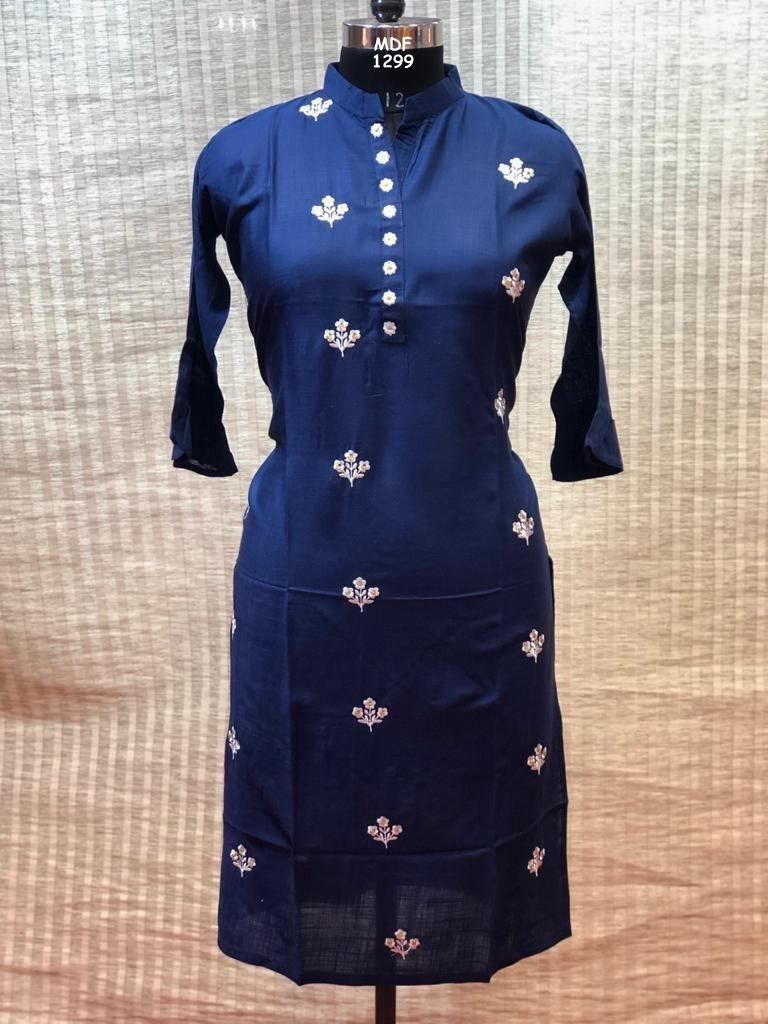
- **Fabric Physics:** The source garment appears to be a medium-weight cotton or khadi blend. It has a matte finish with low specular reflection. The physics engine must treat this as semi-structured material—it will hold its shape better than silk but is softer than denim. It requires crisp, distinct fold lines rather than fluid draping.
- **Key Features:** The Mandarin collar and the central button placket with white buttons are critical structural anchors. The specific placement of the white floral embroidery motifs (scattered pattern) must be preserved without distortion. The 3/4 to full-length sleeves and the side slits (chak) typical of this silhouette must be maintained.
PHASE 2: FIT & DRAPE SIMULATION
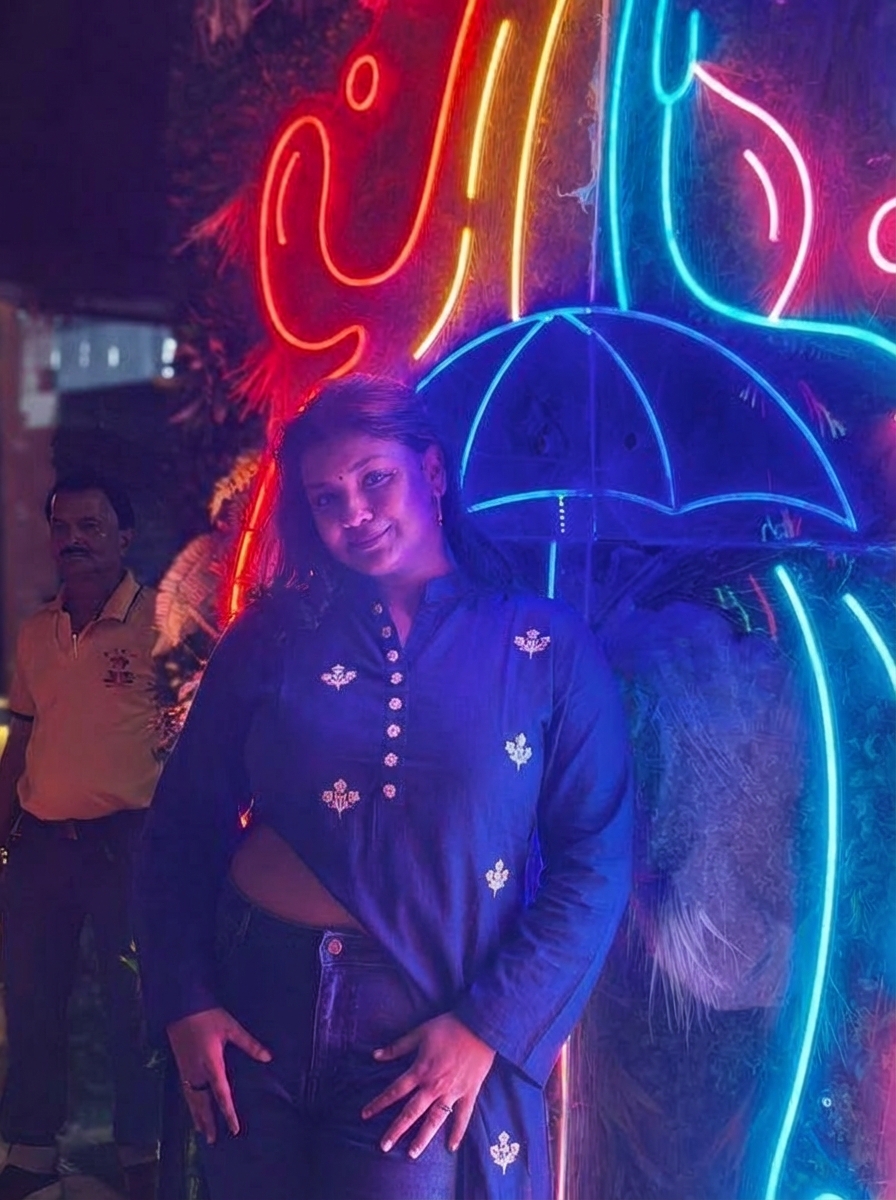
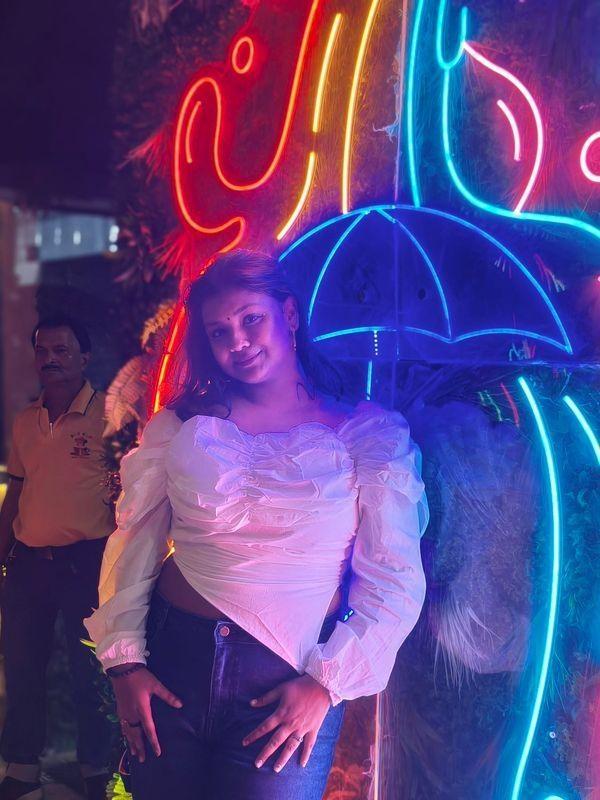
- **Body Mapping:** The target garment is a long tunic (kurta), significantly longer than the user's current crop top. The simulation must extend the fabric past the waist, covering the exposed midriff and the upper portion of the jeans. The garment fits straight; therefore, it should drape vertically from the bust to the hips, likely pulling slightly tight across the wider hip area given the user's pose. The sleeves must follow the slight bend of the user's arms, creating horizontal stacking wrinkles at the inner elbows.
- **Occlusion Handling:**
1. **Hair:** The user's long hair resting on both shoulders is a critical occlusion layer and must be segmented to lay *over* the new kurta collar and shoulders.
2. **Hands:** Both hands are interacting with the lower body (thumbs hooked/resting on thighs). Since the kurta is long, the fabric needs to fall *behind* the hands, or appear compressed where the hands press against the body. The wrist/hand boundaries must be strictly masked.
PHASE 3: ENVIRONMENT & LIGHTING
- **Light Match:** The user environment is dominated by complex neon lighting—strong blue ambient light from the umbrella prop on the right and reddish/orange backlight from the left. The source garment's flat studio lighting must be neutralized. The Navy Blue fabric must absorb the red spectrum (appearing nearly black in shadow areas) and reflect the blue neon highlights intensely. The white embroidery threads must pick up the ambient blue tint, losing their stark white studio appearance.
- **Color Calibration:** A strong cool-tone filter is required for the garment to integrate. The deep blue of the kurta will shift towards a vibrant electric indigo in the highlights and deep purple/black in the shadows to match the environmental color cast.
PHASE 4: IDENTITY PROTECTION
- **Facial Lock:** The user's facial features, specifically the eyes, nose, lips, and the unique blue lighting cast across the face, must remain frozen. The jawline boundary must be preserved where it meets the new Mandarin collar.
- **Body Integrity:** The simulation must strictly adhere to the user's natural hip and bust measurements. Do not warp the user's torso to fit the mannequin's shape; the straight-cut kurta must widen at the bottom to accommodate the user's hips naturally without slimming or liquefying the body boundaries.