Thinking Process
PHASE 1: VISUAL DECONSTRUCTION
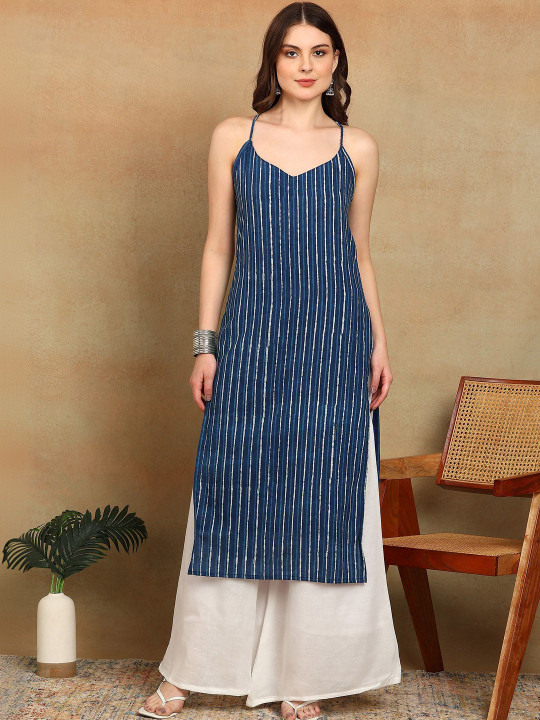
- **Fabric Physics:** The source garment appears to be a medium-weight woven cotton or cotton-blend. It possesses a matte finish with low specular reflection, meaning it should not shine but rather absorb light diffusely. The structure is semi-rigid; it holds a straight line against gravity but will fold rather than drape like fluid silk. The vertical stripes suggest a metallic or foil print which should catch light slightly more than the base blue fabric.
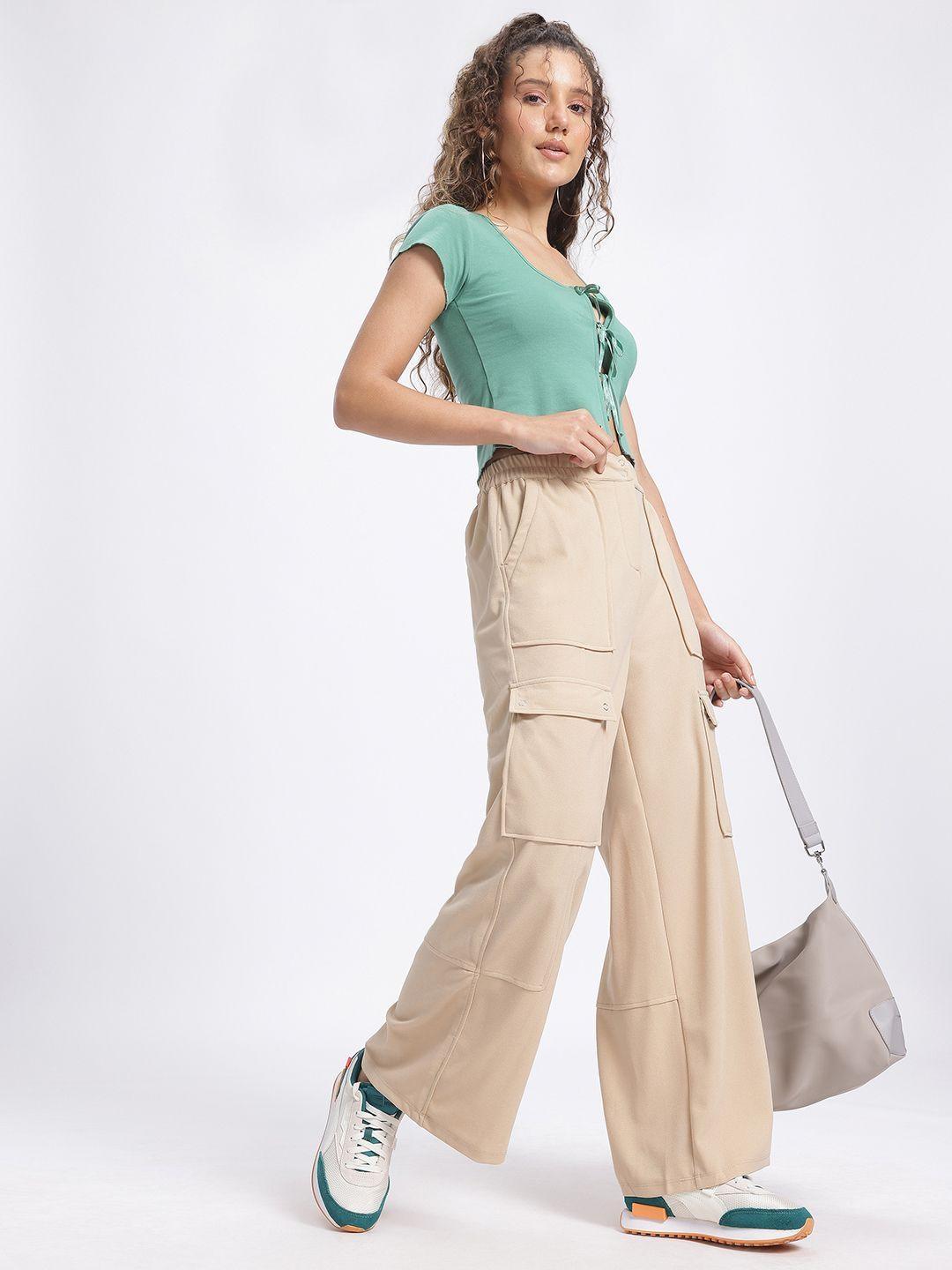
- **Key Features:** The spaghetti straps and deep V-neckline are structural imperatives that differ significantly from the target's current t-shirt. The vertical linear pattern must remain consistent and not warp excessively. The garment length is a "Kurti" style, extending well past the hips to approximately knee-length, featuring likely side slits that allow for movement.
PHASE 2: FIT & DRAPE SIMULATION
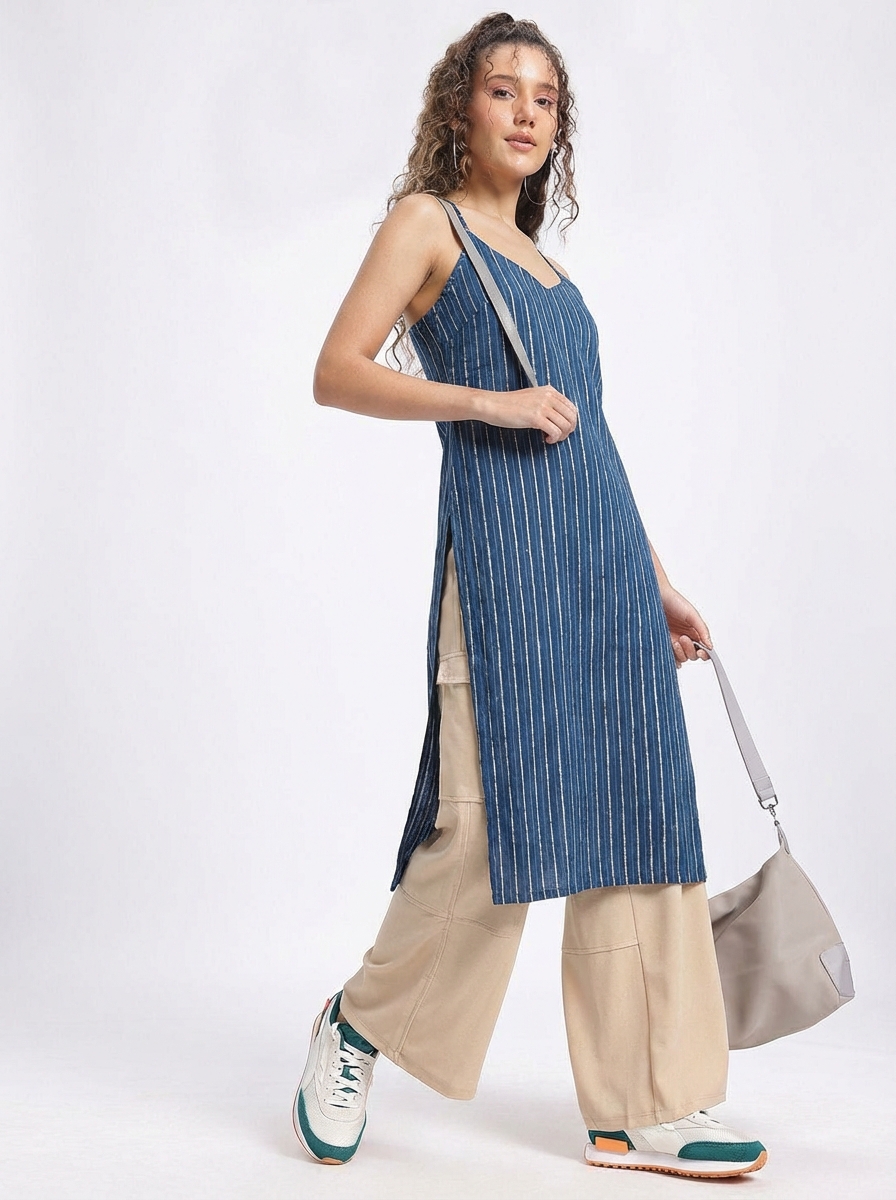
- **Body Mapping:** Due to the target's walking pose (legs spread), the long Kurti must drape dynamically. The hemline should swing slightly to follow the forward movement of the right leg and the backward drag of the left leg. Crucially, the garment must drape *over* the bulky waistband of the target's existing cargo pants, likely creating a subtle ridge or bump where the pants underneath press against the fabric. The upper chest area must transition from the target's current covered shoulders to the source's bare-shoulder spaghetti strap design, requiring the generation of accurate skin texture on the target's deltoids and clavicle.
- **Occlusion Handling:**
1. **Hair:** The user's long, curly hair falls over both shoulders and the upper chest. The new garment straps and neckline must be threaded *under* these hair locks.
2. **Right Hand:** The user's right hand rests near the waist/hip. The fabric must deform slightly around the wrist and fingers if they contact the body, or hang naturally behind the hand if there is a gap.
3. **Bag Strap:** The grey bag strap on the user's left shoulder must be segmented and layered *on top* of the new garment's strap/shoulder area.
PHASE 3: ENVIRONMENT & LIGHTING
- **Light Match:** The user image utilizes soft, high-key studio lighting, predominantly from the front-left, casting soft shadows to the user's right. The deep blue of the Kurti must accept this diffuse illumination, showing brighter highlights on the left bodice and deeper, soft shadows in the folds on the right side and under the bust.
- **Color Calibration:** The source image has a warm, earthy background, while the user image is cool/neutral white. The blue of the Kurti must be color-graded to remove any warm yellow cast from the source environment to match the sterile white balance of the user's studio setting.
PHASE 4: IDENTITY PROTECTION
- **Facial Lock:** The user's entire head, facial expression, jawline, and the specific texture/volume of the curly hair must be frozen and masked precisely.
- **Body Integrity:** The user's arm thickness and shoulder width must remain unaltered. While the garment silhouette changes (tight crop top to loose long tunic), the underlying body mesh (hips, legs) must not be warped. Inpainting is required to generate realistic skin tone for the arms and shoulders where the green t-shirt sleeves are removed, matching the existing skin tone of the face and hands perfectly.