Thinking Process
PHASE 1: VISUAL DECONSTRUCTION
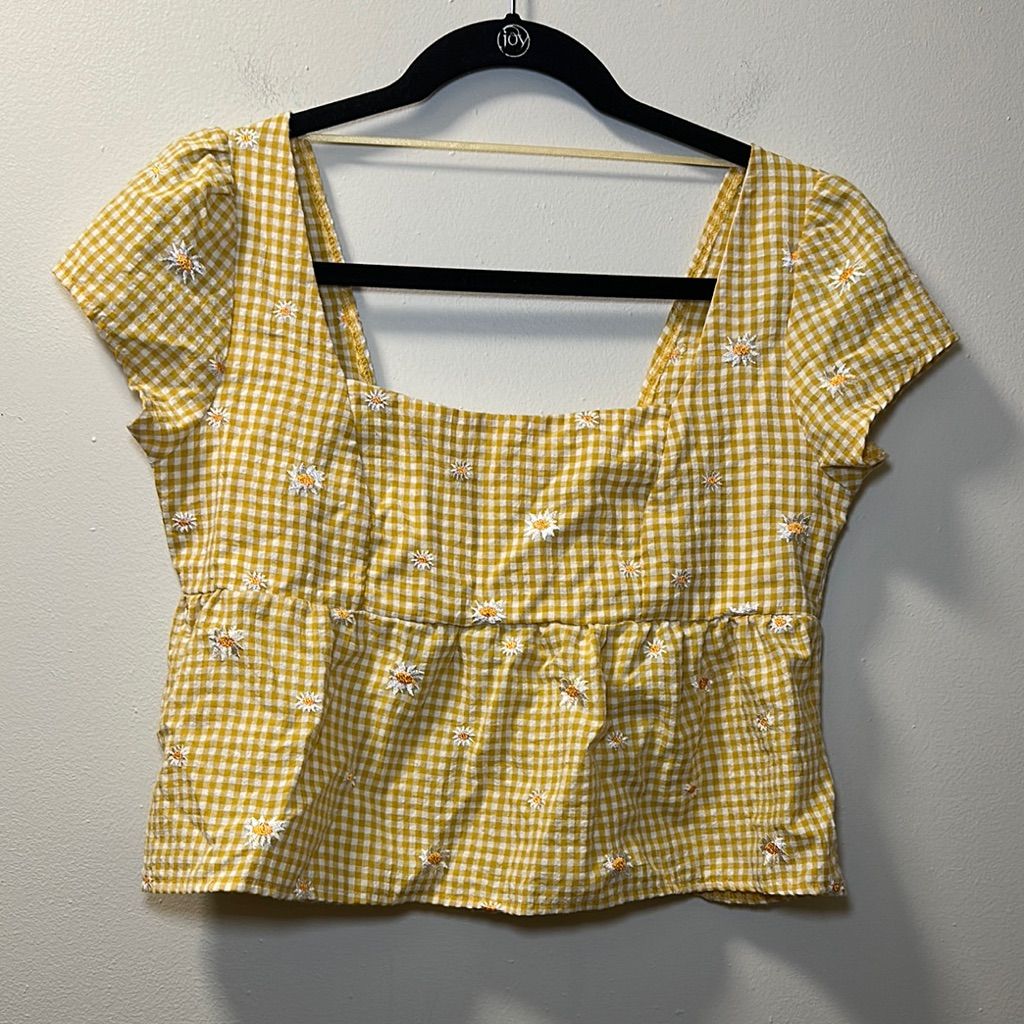
- **Fabric Physics:** The source garment is a woven cotton or cotton-blend gingham. It has a matte finish with low specular highlights. The material has medium structural integrity (stiffness)—it will hold the puff shape of the sleeves and the square neckline but will drape vertically from the under-bust seam without clinging tightly like spandex.
- **Key Features:**
- **Square Neckline:** Must replace the current V-neck geometry.
- **Embroidery:** Small white daisy embroidery must retain 3D texture/bump mapping and not appear as a flat print.
- **Sleeve Structure:** Short cap/puff sleeves with gathering at the shoulder seam.
- **Peplum/Hem:** The garment has a seam under the bust and flares slightly; the hem is straight and cropped, significantly shorter than the user's current tunic.
PHASE 2: FIT & DRAPE SIMULATION
- **Body Mapping:**
- **Torso:** The garment is a crop top style. The simulation must drape the fabric from the shoulders, allowing it to rest on the bust and fall loosely over the midsection, terminating near the natural waistline.
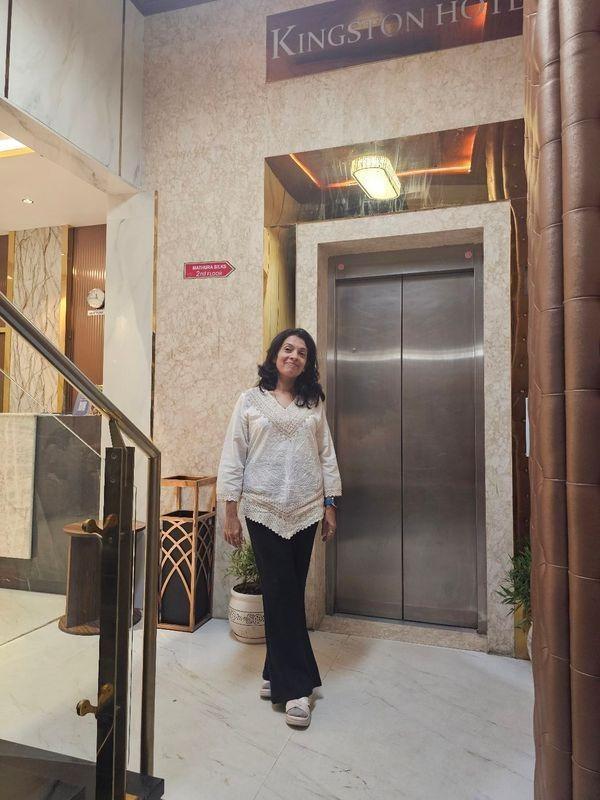
- **Arm Generation:** Since the user is currently wearing long sleeves and the target is short-sleeved, the simulation requires generative inpainting to reconstruct the user's forearms and elbows with accurate skin tone and lighting where the white sleeves currently exist.
- **Neckline Interaction:** The wide square neck will expose the collarbone area (décolletage), requiring accurate skin texture mapping where the current high-neck tunic covers.
- **Occlusion Handling:**
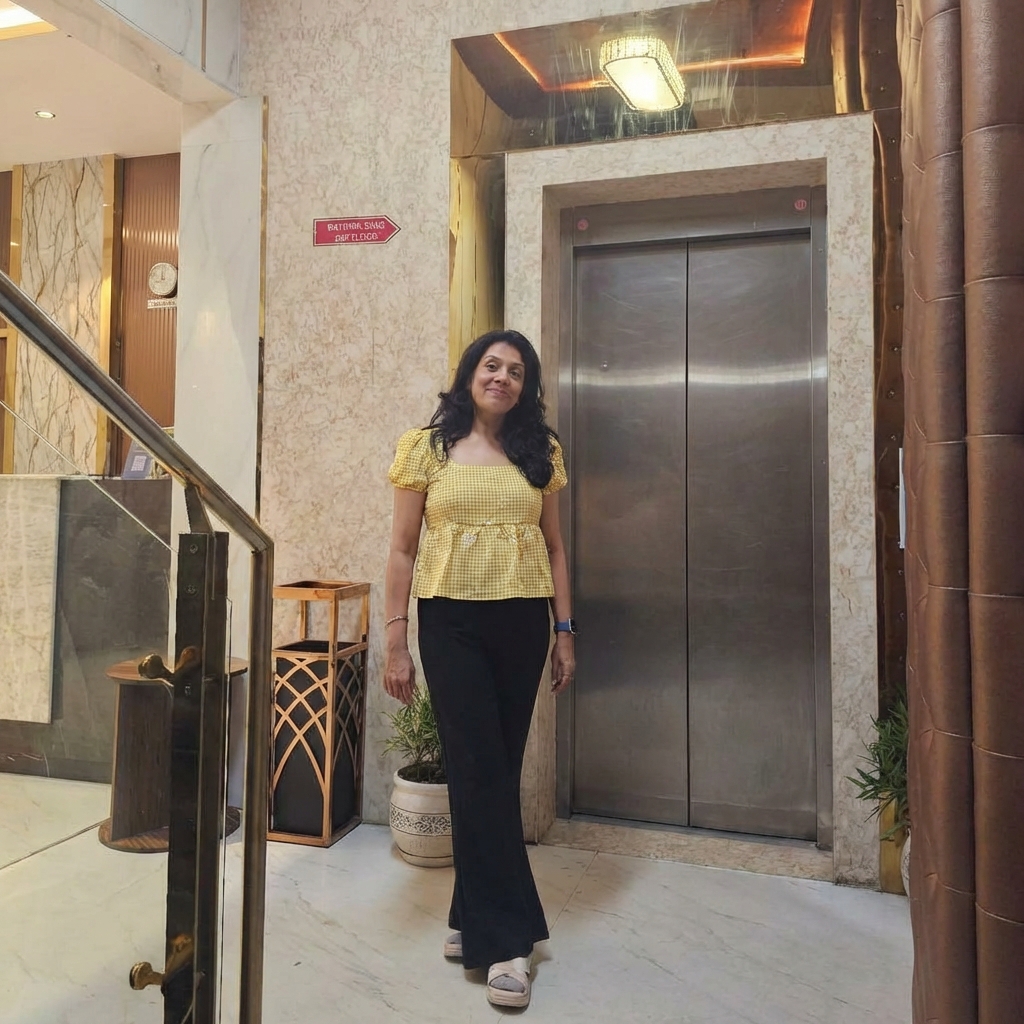
- **Hair:** The user's dark, shoulder-length hair falls over both shoulders. This hair mask must be segmented and layered *over* the new yellow gingham fabric and the newly exposed skin at the neckline.
- **Watch:** The watch on the left wrist must be preserved during the arm inpainting process.
PHASE 3: ENVIRONMENT & LIGHTING
- **Light Match:** The user is in an indoor environment with warm, overhead artificial downlighting (evident from the ceiling reflection and floor shadows). The source garment (currently flat-lit with cool light) must receive a warm tint adjustment. Shadows must be cast downwards from the bust and sleeve hems onto the torso/arms to match the room's occlusion.
- **Color Calibration:** The bright yellow and white of the gingham must be desaturated slightly and shifted toward a warmer temperature (amber hues) to match the ambient light reflected off the beige marble walls and floors. The white checks should match the white point of the hotel floor, not pure digital white.
PHASE 4: IDENTITY PROTECTION
- **Facial Lock:** Absolute pixel preservation required for the user's face (eyes, nose, mouth) and the jawline structure.
- **Body Integrity:** The user's shoulder width, waist circumference, and posture must remain unaltered. While the garment silhouette changes from a long tunic to a crop top, the underlying body mesh (volume of the torso and hips) must not be slimmed or warped.