Thinking Process
PHASE 1: VISUAL DECONSTRUCTION
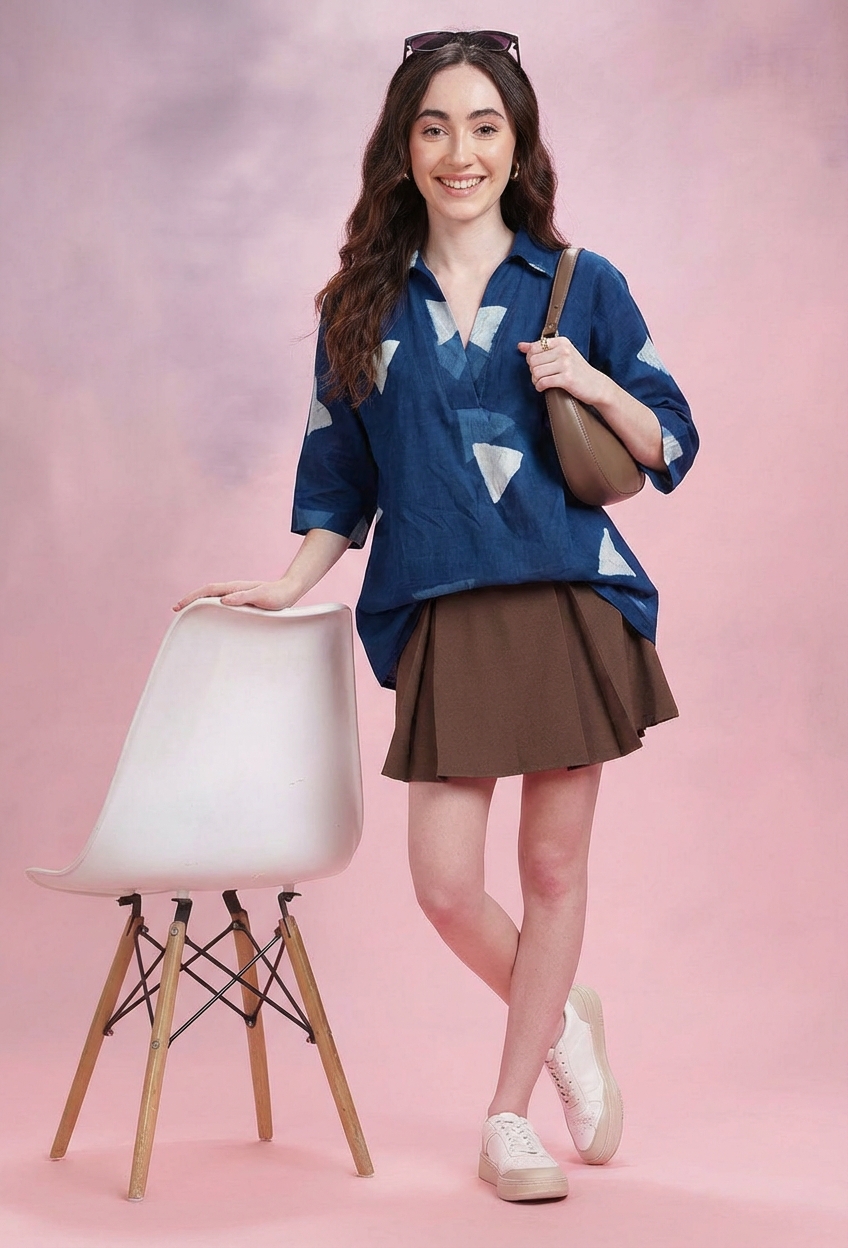
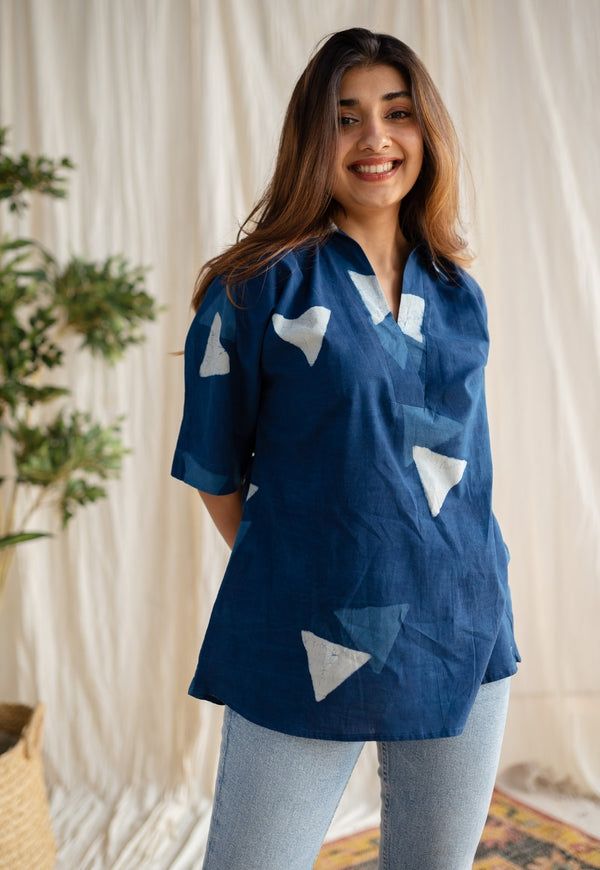
- **Fabric Physics:** The source garment is a natural fiber blend, likely cotton or linen. It possesses a matte finish with low specular reflection. The physics engine must simulate "dry" friction, meaning the cloth will hold semi-rigid folds rather than draping like liquid silk. It requires medium weight simulation to account for the stiffness of the collar placket and the block-print areas.
- **Key Features:** The indigo resist-dye pattern (white triangles on blue) is the primary visual identifier and must be preserved without distortion. The specific V-neck construction with the small standing collar and the 3/4 sleeve length are critical structural elements. The slight textural irregularities of the natural fabric weave must remain visible.
PHASE 2: FIT & DRAPE SIMULATION
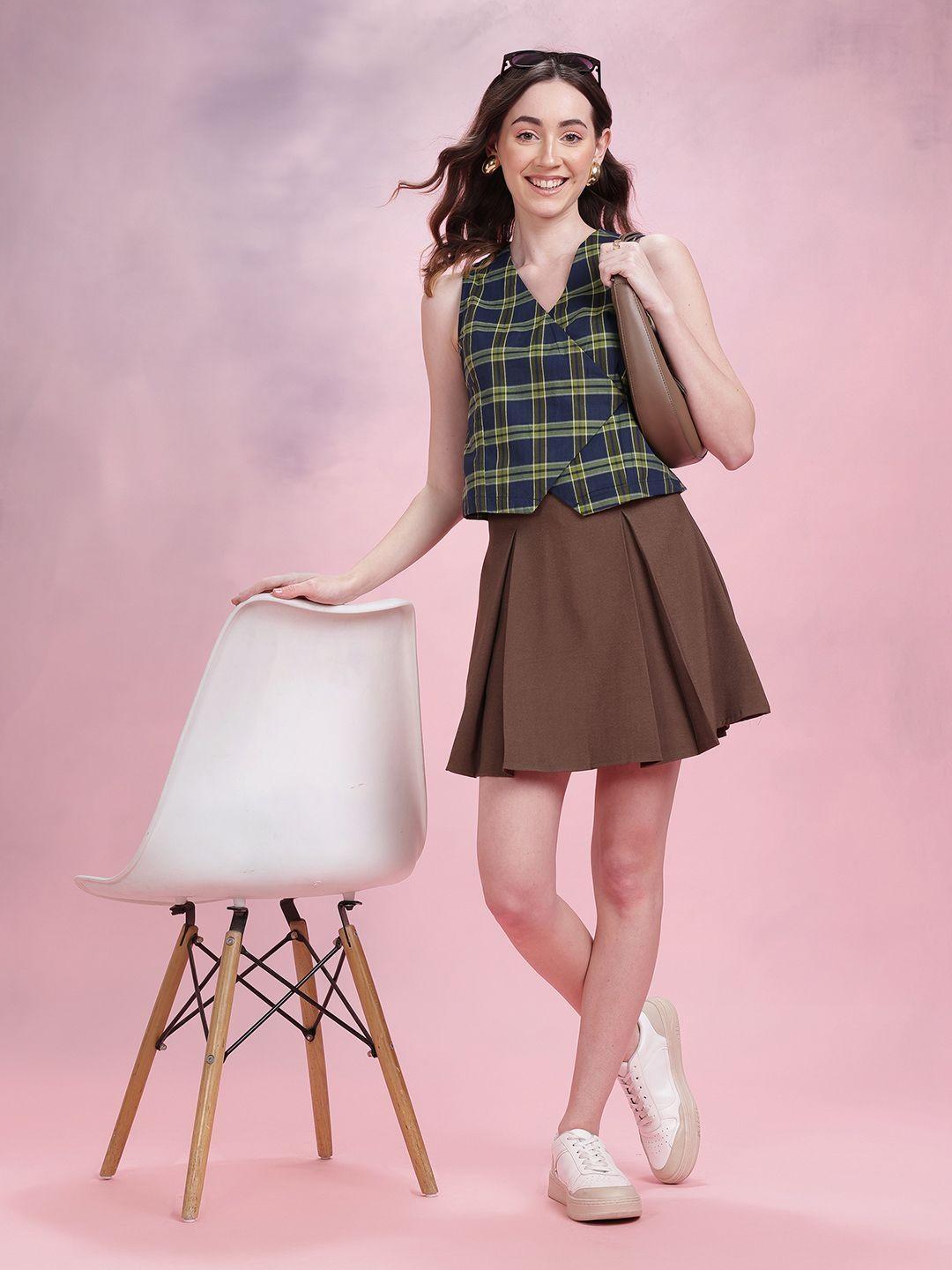
- **Body Mapping:** The source tunic is a relaxed fit. Unlike the user's current fitted vest, the new garment must hang loosely over the torso, obscuring the waist curve. On the user's right side (extended towards the chair), the fabric must stretch slightly across the axilla (armpit) and drape vertically from the shoulder. On the user's left side (bent arm), the 3/4 sleeve will bunch significantly at the inner elbow (antecubital fossa). The hemline of the tunic is long and should naturally overhang the waistband of the brown skirt, likely terminating at the upper hip.
- **Occlusion Handling:**
1. **Hair:** The loose brown waves falling over both shoulders must be segmented and layered *on top* of the blue tunic.
2. **Accessories:** The brown handbag strap crossing the left shoulder and the user's left fingers gripping the strap are critical high-priority occlusions. The garment must appear to go *under* the strap or drape naturally around it.
3. **Lower Body:** The brown skirt is a background layer relative to the tunic hem; the tunic covers the skirt's waistband.
PHASE 3: ENVIRONMENT & LIGHTING
- **Light Match:** The user is in a high-key studio setting with soft, diffuse lighting coming from the front-left, casting soft shadows to the right and rear. The source garment currently has side-lit natural lighting with deep folds. The source texture must be "delit" (albedo extraction) and then re-lit to match the user's soft, pink-tinted ambient environment.
- **Color Calibration:** The deep indigo of the tunic must be color-graded to ensure it doesn't look too cool/blue against the warm pink background. The white triangles on the shirt should pick up a subtle cast of the pink ambient light to integrate the object into the scene effectively.
PHASE 4: IDENTITY PROTECTION
- **Facial Lock:** The user's entire head, including the sunglasses perched on top, earrings, smile lines, and jawline, must remain pixel-perfectly frozen.
- **Body Integrity:** The user's arm thickness and shoulder width must remain unaltered. While the *silhouette* of the clothing will change (from fitted vest to loose tunic), the underlying body mesh—specifically the exposed skin on the arms and legs—must strictly maintain the original volume and skin tone. No digital slimming or resizing is permitted.