Thinking Process
PHASE 1: VISUAL DECONSTRUCTION
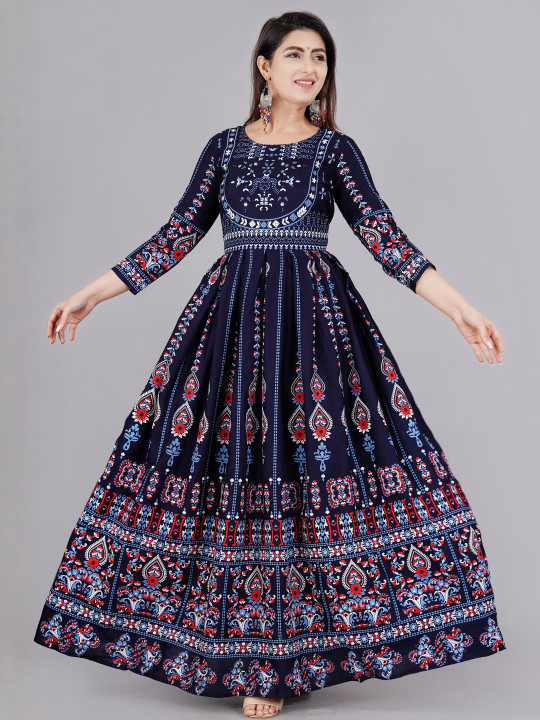
- **Fabric Physics:** The source garment appears to be a printed Rayon or Cotton blend Anarkali suit. It possesses a medium weight—heavy enough to hold the pleated structure at the waist but flowy enough to drape softly. It has a matte finish with zero specularity (non-reflective). The simulation must treat the bodice as semi-rigid and the skirt portion as high-fluidity cloth that responds readily to gravity and collision.
- **Key Features:** The high-contrast geometric and floral block prints (Navy Blue, White, Red, Cyan) must remain crisp and not blur during warping. Crucial structural elements include the distinct yoke pattern (chest area), the waistline gathering (where the pleats begin), and the printed borders on the sleeve cuffs and hemline. The round neckline shape must be preserved.
PHASE 2: FIT & DRAPE SIMULATION
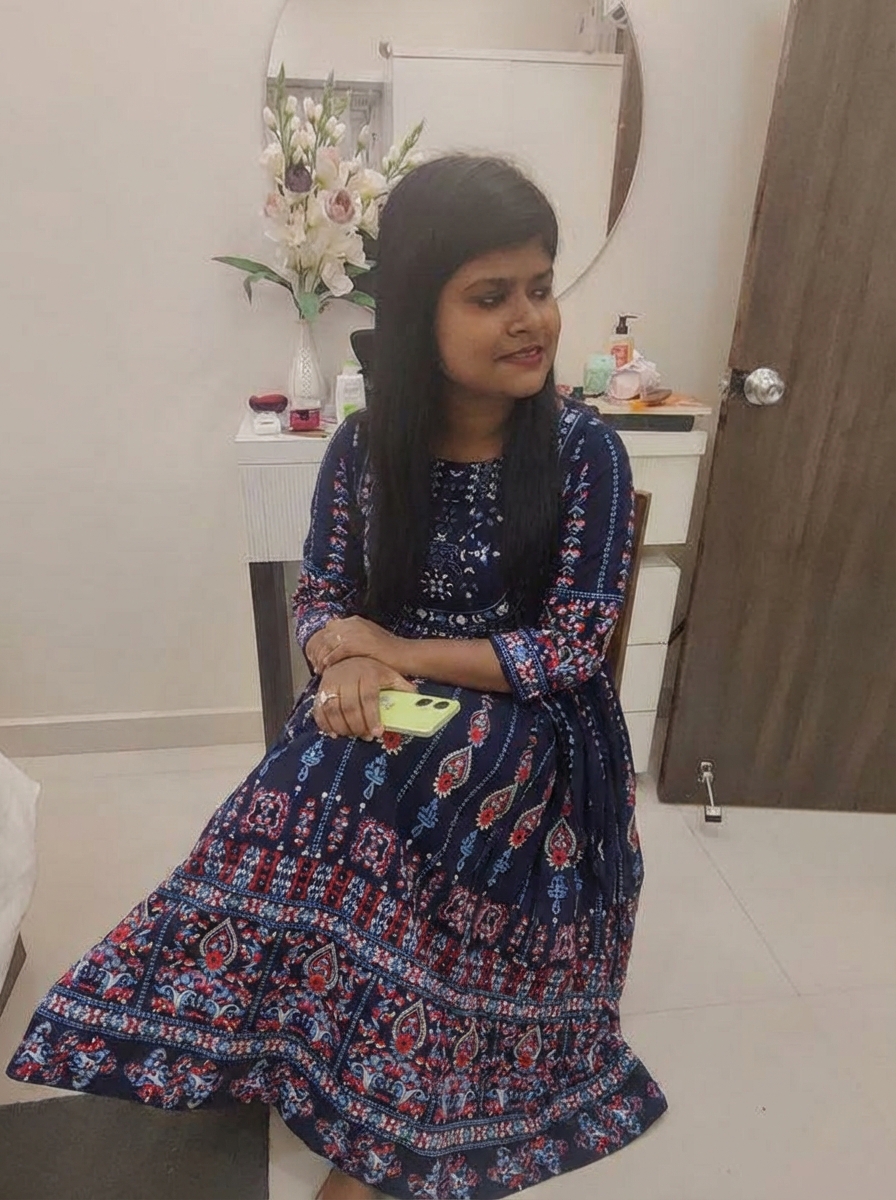
- **Body Mapping:** Since the user is seated, the physics engine must radically alter the garment's lower half from the standing source image.
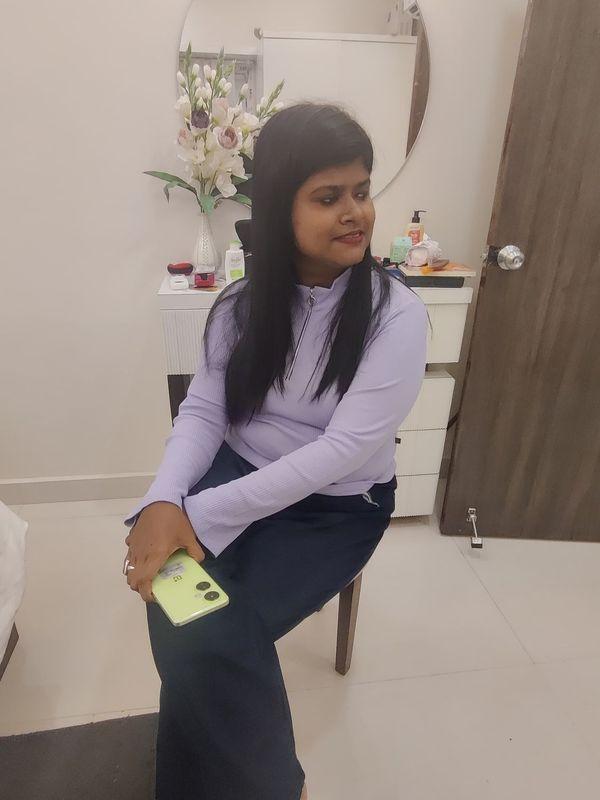
* **Torso:** The bodice should fit snugly across the shoulders and bust, mimicking the current fit of the user's lavender top but with the Anarkali's non-stretch fabric properties.
* **Waist & Hips:** The garment creates a "break" at the waist. The skirt volume must pool and drape over the user's thighs rather than hanging straight down. The fabric must bunch slightly at the hip crease created by the seated posture.
* **Arms:** The sleeves must wrinkle horizontally at the inner elbows to accommodate the user's bent arm position.
- **Occlusion Handling:**
* **Hair:** The user has long, dense black hair falling over both shoulders and the upper chest. This is a critical occlusion layer; the Anarkali pattern must be rendered *behind* the hair strands.
* **Hands & Object:** The user's hands and the lime-green smartphone are resting on the lap. The skirt fabric must be simulated to pass *underneath* the hands and phone, effectively wrapping over the thighs but being compressed by the weight of the arms/phone.
PHASE 3: ENVIRONMENT & LIGHTING
- **Light Match:** The user's environment has soft, warm-toned artificial indoor lighting, likely from an overhead source, casting soft shadows downwards. The source garment is lit by flat, cool studio flash. The blue of the dress must be color-graded to appear slightly warmer and darker to match the ambient occlusion of the room.
- **Color Calibration:** Reduce the contrast of the white patterns on the dress slightly to prevent them from looking "glowy" or superimposed. Generate drop shadows from the user's hair onto the new fabric and from the user's arms onto the torso area to ground the garment in the scene.
PHASE 4: IDENTITY PROTECTION
- **Facial Lock:** The user's face, neck area, skin tone, and specifically the hairstyle (bangs and length) are strictly frozen. No pixel manipulation is permitted above the garment's neckline.
- **Body Integrity:** The volumetric simulation of the Anarkali must adapt to the user's existing body measurements. Do not slim the waist or arms to match the model in the source image. The user's seated silhouette (width of hips/thighs on the chair) must dictate the spread of the fabric.