Thinking Process
PHASE 1: VISUAL DECONSTRUCTION
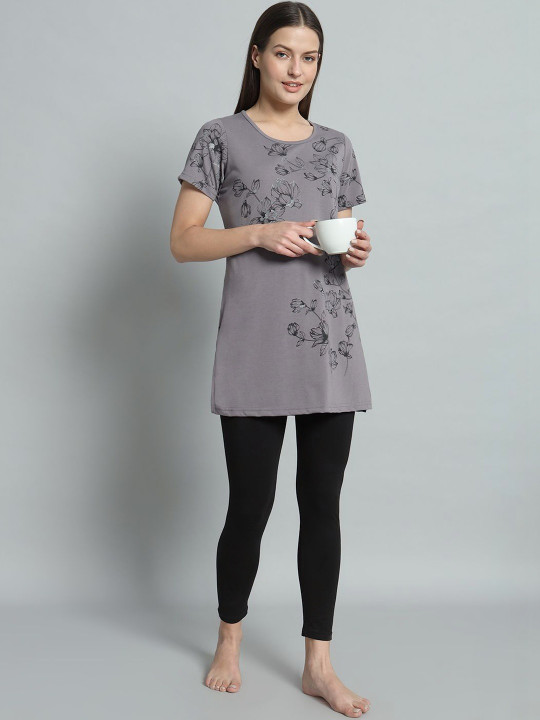
- **Fabric Physics:** The source garment consists of a soft, matte cotton-jersey blend (knit fabric). It possesses high flexibility and low specularity (absorbs light rather than reflecting it). Unlike the user's current crisp woven shirt, this material must demonstrate "micro-folds" and softer creasing around tension points.
- **Key Features:**
- **Reconstruction Required:** The source image contains a large occlusion (white cup) covering the center chest. Texture inpainting must be applied to reconstruct the grey fabric continuity in the center torso region.
- **Graphic Details:** Preserve the black floral line-art prints located on the right shoulder/sleeve and the lower left hip area.
- **Cut & Hemline:** Round neckline (scoop neck), short sleeves (mid-bicep length), and a tunic-length straight hem that hits mid-thigh.
PHASE 2: FIT & DRAPE SIMULATION
- **Body Mapping:**
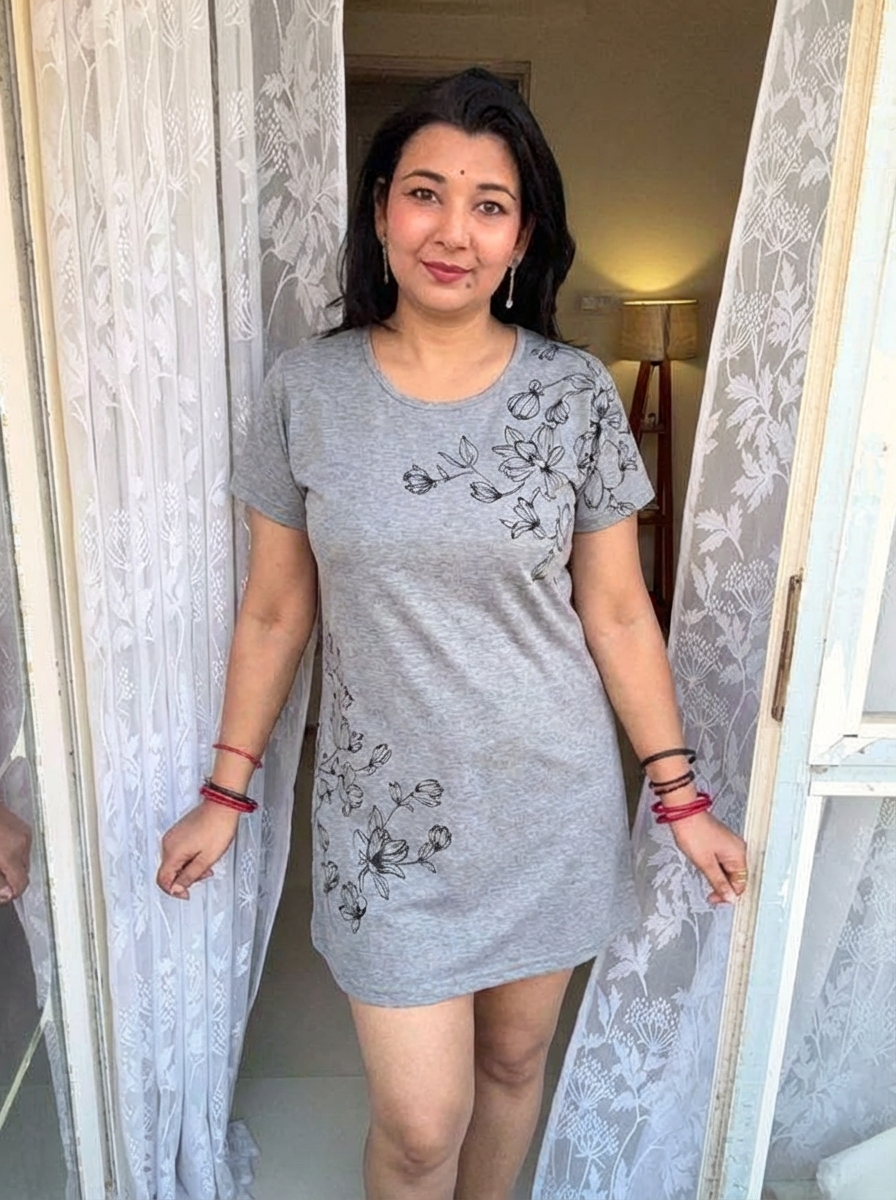
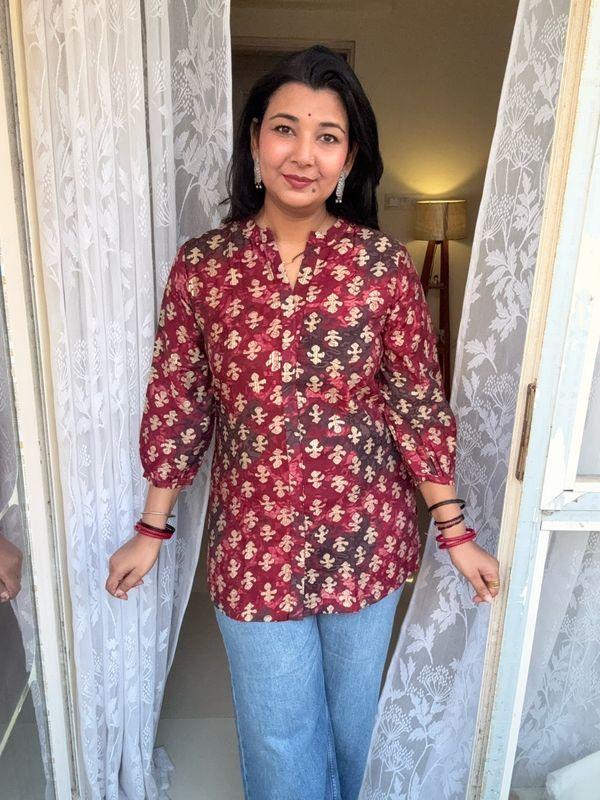
- **Sleeve Transition:** The user is currently wearing 3/4 sleeves, while the source is short-sleeved. The simulation must generate/render realistic skin texture for the user's forearms where the current maroon sleeves will be removed.
- **Torso Drape:** The garment is a tunic; it should flow past the user's waist and hips without cinching. It must hang vertically due to gravity, skimming the hips rather than hugging them, matching the relaxed fit seen on the mannequin.
- **Occlusion Handling:**
- **Hair:** The user's dark hair falls behind the neck/shoulders. The new neckline must sit *under* any stray hair strands near the nape.
- **Accessories:** The bracelets on both wrists must be preserved. Since the new sleeves are short, these bracelets will now sit on the newly generated skin of the forearm/wrist.
- **Hands:** The user's hands are positioned away from the body; the garment hem will hang freely between the torso and the arms without significant hand occlusion.
PHASE 3: ENVIRONMENT & LIGHTING
- **Light Match:** The user's environment has soft, diffused natural daylight entering from the front-right (viewer's perspective), with a warm interior tungsten lamp in the background. The new grey garment must adopt a subtle warm cast to integrate with the room's ambient temperature, moving away from the cool, clinical studio lighting of the source.
- **Color Calibration:** The grey value of the source shirt must be adjusted to account for "scene bleed." Shadows on the garment (under the bust and inside armpits) must be soft and directional, falling toward the left to match the user's facial shading.
PHASE 4: IDENTITY PROTECTION
- **Facial Lock:** Absolute freeze required for the user's face, neck structure, and hairstyle. The jawline definition must remain sharp against the new neckline.
- **Body Integrity:** Strict prohibition on warping the user's torso to match the source model's thinner frame. The digital garment must expand to fit the user's natural shoulder width and hip measurements while maintaining the intended loose tunic silhouette.